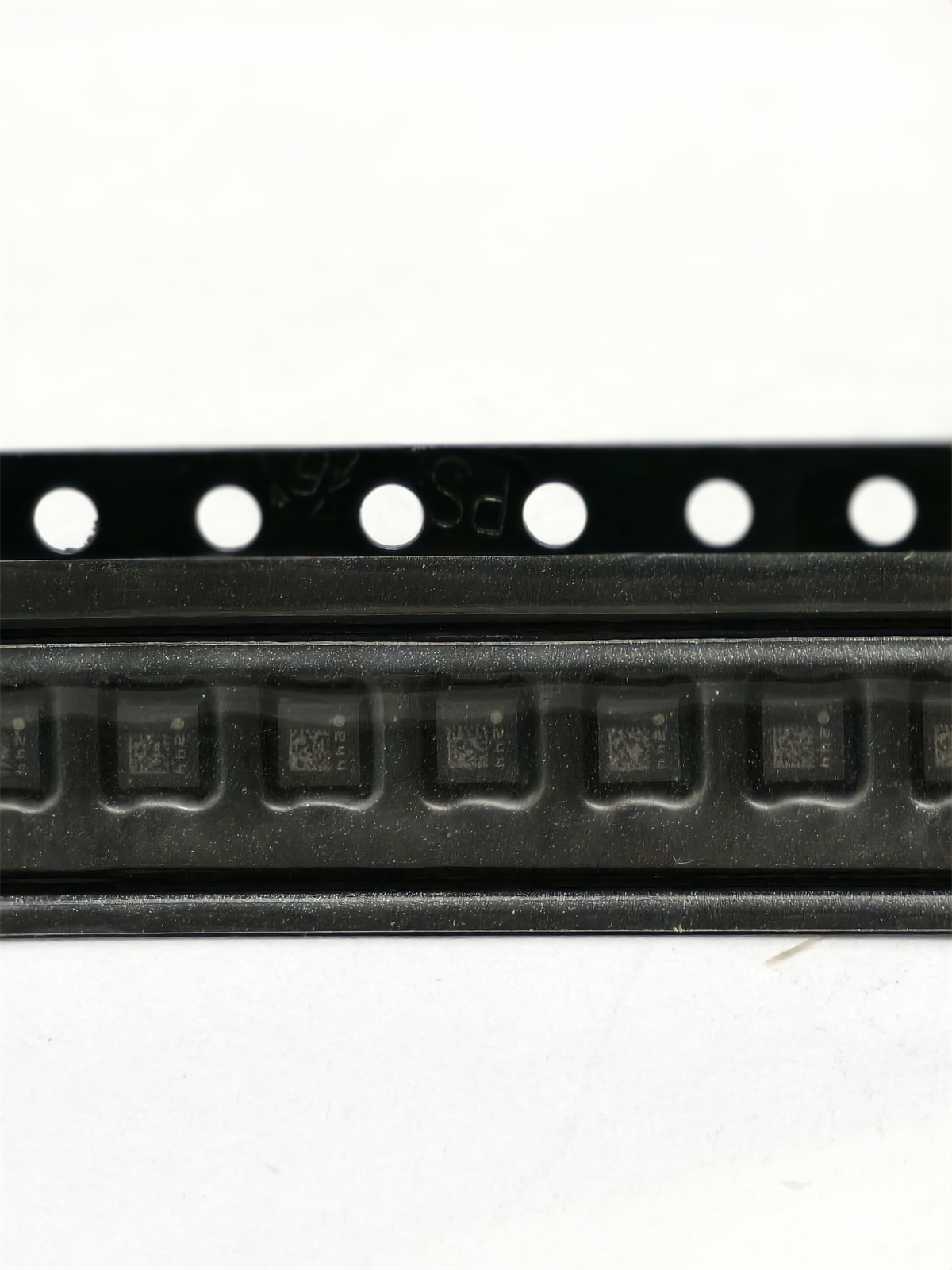


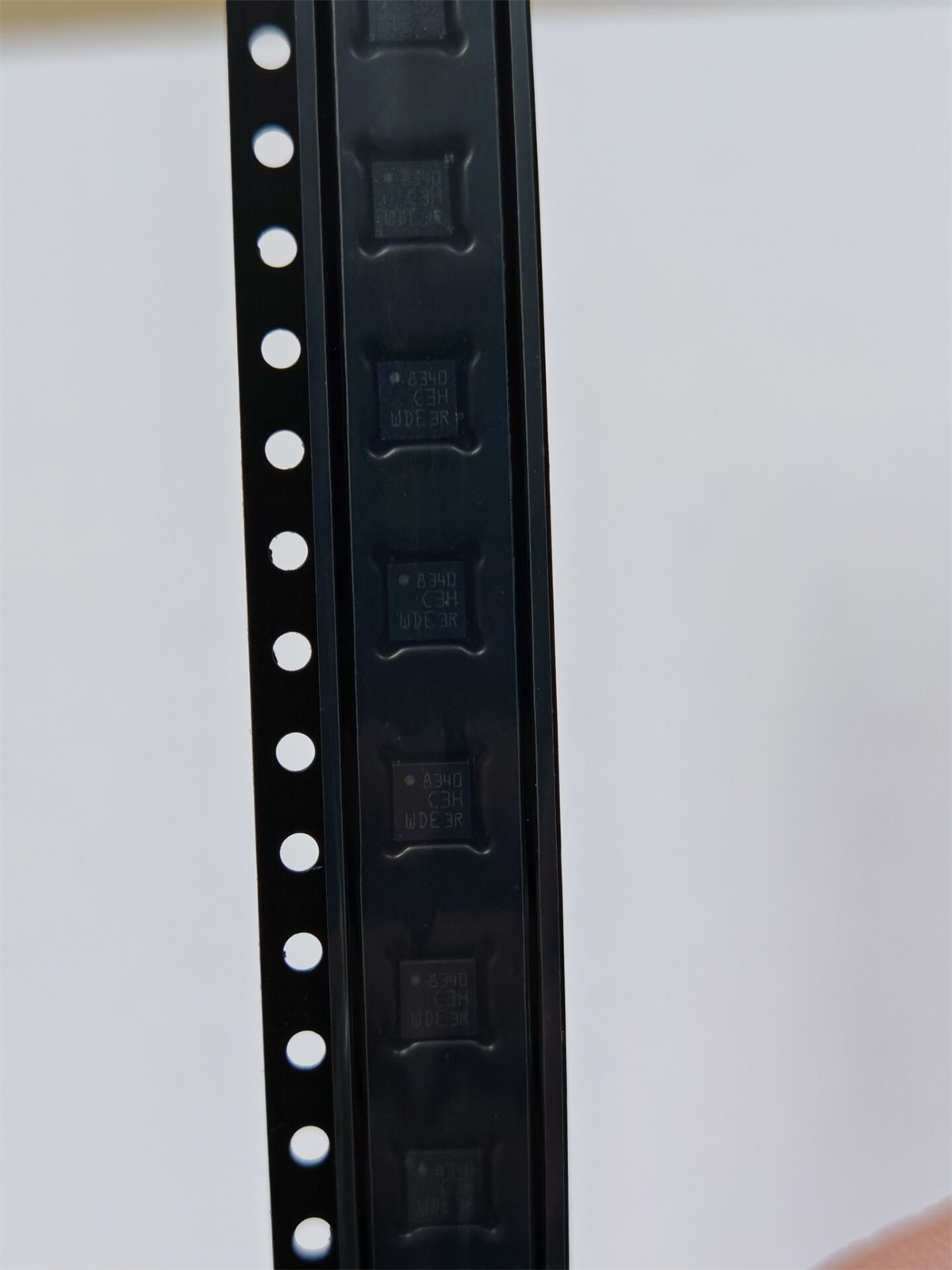
LIS3DHTR
The LIS3DHTR from STMicroelectronics is an ultra-low-power, high-performance three-axis linear MEMS accelerometer belonging to the "nano" family. With a user-selectable full scale of ±2g, ±4g, ±8g, or ±16g and 16-bit digital output, it delivers precision motion sensing across a wide dynamic range while consuming as little as 2µA in low-power mode. The device provides both I²C and SPI digital interfaces with an embedded 32-level FIFO buffer, a temperature sensor, and advanced motion-detection features — including free-fall, wake-up, 6D/4D orientation, and single/double-click recognition — enabling sophisticated motion processing without waking the host MCU. Packaged in a tiny 3mm × 3mm × 1mm 16-LGA footprint, it is optimized for battery-powered IoT devices, wearables, gaming controllers, and mobile handsets.
Product Specifications
LIS3DHTR — STMicroelectronics Ultra-Low-Power 3-Axis MEMS Accelerometer
STMicroelectronics — 3-Axis "nano" Accelerometer, ±2g–±16g, 16-bit, I²C/SPI, 2µA Low-Power Mode, 16-LGA
MFR Part #: LIS3DHTR
Superb SKU: SB-LIS3DHTR
In Stock
The LIS3DHTR from STMicroelectronics is an ultra-low-power, high-performance three-axis linear MEMS accelerometer belonging to the "nano" family. With a user-selectable full scale of ±2g, ±4g, ±8g, or ±16g and 16-bit digital output, it delivers precision motion sensing across a wide dynamic range while consuming as little as 2µA in low-power mode. The device provides both I²C and SPI digital interfaces with an embedded 32-level FIFO buffer, a temperature sensor, and advanced motion-detection features — including free-fall, wake-up, 6D/4D orientation, and single/double-click recognition — enabling sophisticated motion processing without waking the host MCU. Packaged in a tiny 3mm × 3mm × 1mm 16-LGA footprint, it is optimized for battery-powered IoT devices, wearables, gaming controllers, and mobile handsets.
Key Performance Highlights
Full Scale Range
±2g to ±16g
Power Consumption
2 µA LP Mode
Output Resolution
16-Bit Digital
Output Data Rate
1 Hz – 5.3 kHz
Interface
I²C + SPI
Package/Family
16-LGA "nano"
Technical Specifications
Source: STMicroelectronics LIS3DH datasheet (Doc ID 17530 Rev 1) & Mouser 511-LIS3DHTR
| Manufacturer | STMicroelectronics |
| MFR Part Number | LIS3DHTR |
| Sensor Type | 3-Axis Linear MEMS Accelerometer (digital output) |
| Product Family | "nano" ultra-low-power accelerometer family |
| Axes | X, Y, Z (3 axes) |
| Full Scale Range | ±2g / ±4g / ±8g / ±16g (dynamically user-selectable) |
| Output Resolution | 16-bit (left-justified) |
| Output Data Rate (ODR) | 1 Hz, 10 Hz, 25 Hz, 50 Hz, 100 Hz, 200 Hz, 400 Hz, 1.25 kHz, 2.5 kHz, 5.3 kHz |
| Digital Interface | I²C (up to 400 kHz Fast Mode) + SPI (up to 10 MHz) — pin-selectable |
| Supply Voltage (Vdd) | 1.71 V to 3.6 V |
| Supply Voltage (Vdd_IO) | 1.71 V to Vdd + 0.1 V |
| Current — Low-Power Mode | ~2 µA (1 Hz ODR) |
| Current — Normal Mode | ~11 µA (50 Hz ODR) |
| Current — High-Resolution | ~200 µA (5.3 kHz ODR, all axes) |
| Operating Temperature | -40°C to +85°C |
| Package / Case | 16-LGA (3mm × 3mm × 1mm) |
| Mounting Type | Surface Mount (SMD/SMT) |
| Packaging (this part) | Tape & Reel (TR) — 4,000 units per reel |
| Built-In FIFO | 32-level (10-bit per sample, 32 slots for X,Y,Z) |
| Embedded Features | Temperature sensor, self-test, free-fall, wake-up, 6D/4D orientation, click/double-click |
| Shock Survivability | 10,000 g for 0.1 ms |
| Equivalent / Alternate MPNs | LIS3DH (tray), LIS2DH12TR, LIS2DHTR, LIS3DSHTR |
| RoHS Compliance | Yes — RoHS Compliant |
| Mouser Part # | 511-LIS3DHTR |
Product Details
Product Description
The LIS3DHTR is a MEMS digital output motion sensor from STMicroelectronics' "nano" accelerometer family. It integrates a 3-axis sensing element with a 16-bit ADC, digital control logic, and an I²C/SPI serial interface on a single monolithic die. The sensor provides dynamically selectable full-scale ranges (±2g through ±16g) and ten output data rates from 1 Hz to 5.3 kHz, enabling designers to optimize the trade-off between resolution, bandwidth, and power consumption for each application.
Its ultra-low-power architecture is the defining advantage: the device draws just 2µA in low-power mode — low enough to run continuously from a coin cell for years. An embedded 32-level FIFO buffer reduces host MCU wake-ups, while built-in motion-detection logic (free-fall, wake-up, 6D orientation, click/double-click) offloads event processing from the application processor. The die is housed in a tiny 3mm × 3mm × 1mm 16-LGA land-grid array, compatible with standard SMT reflow profiles.
Key Applications
Wearables & Fitness Trackers — Step counting, activity recognition, gesture control
IoT Sensor Nodes — Vibration monitoring, tilt sensing, asset tracking with years of battery life
Smartphones & Tablets — Screen rotation, tap-to-wake, free-fall protection for HDD parking
Gaming Controllers — Motion input, shake detection, tilt-based game mechanics
Anti-Theft & Security — Movement alarm triggers, shock event logging
Industrial Condition Monitoring — Motor vibration analysis, predictive maintenance sensor nodes
Built-In Motion Detection Features
The LIS3DHTR includes hardware-based interrupt generators that detect motion events without waking the host MCU — a critical advantage for battery-powered designs:
Free-Fall Detection
Detects when all three axes approach 0g simultaneously (free fall). Configurable threshold and duration. Used for HDD head parking in laptops and drop-logging in handheld devices. Interrupts on INT1 or INT2 pin.
Wake-Up / Sleep-to-Wake
Device sleeps at 2µA current. When acceleration exceeds a programmable threshold on any axis, it wakes up and asserts an interrupt. MCU stays in deep sleep until motion occurs — ideal for battery-powered sensor nodes.
6D / 4D Orientation Detection
6D: detects which of the 6 orientations (X+, X−, Y+, Y−, Z+, Z−) the device is facing. 4D: detects portrait/landscape/upside-down. Used for screen auto-rotation and UI orientation switching without continuous MCU polling.
Single & Double-Click
Recognizes single-tap and double-tap events with configurable time windows, latency, and quiet periods. Double-click recognition enables "tap-to-wake" and "tap-to-pair" UI patterns without an always-on capacitive touch controller.
32-Level FIFO Buffer
Stores 32 samples (10-bit) per axis. Four modes: Bypass, FIFO, Stream, and Stream-to-FIFO. Reduces MCU wake-up frequency by 32× — instead of polling at 100 Hz, the MCU wakes once every 320 ms to read a full FIFO batch.
Embedded Temperature Sensor
On-die temperature sensor readable via I²C/SPI. 8-bit resolution, updated with ODR. Useful for temperature-compensated accelerometer calibration and environmental monitoring in IoT sensor fusion applications.
Operating Modes & Power Profiles
| Mode | Typical Current | ODR Range | Noise Density | Best For |
|---|---|---|---|---|
| Low-Power (LP) | ~2 µA @ 1 Hz | 1, 10, 25, 50, 100, 200, 400 Hz | 220 µg/√Hz | Always-on motion detection, wake-up, pedometer |
| Normal Mode | ~11 µA @ 50 Hz | 1–1.25 kHz | 220 µg/√Hz | Screen rotation, tilt sensing, basic gesture |
| High-Resolution (HR) | ~200 µA @ 5.3 kHz | 1.25, 2.5, 5.3 kHz | 150 µg/√Hz | Vibration analysis, tap detection, high-speed motion |
LIS3DHTR vs Related ST Accelerometers
| Parameter | LIS3DHTR | LIS2DH12TR | LIS2DHTR | LIS3DSHTR |
|---|---|---|---|---|
| Family | "nano" | "femto" | "femto" | "nano" |
| Full Scale Range | ±2g–±16g | ±2g–±16g | ±2g–±16g | ±2g–±16g |
| LP Mode Current | 2 µA | 2 µA | 2 µA | 5 µA |
| Max ODR | 5.3 kHz | 5.3 kHz | 1.34 kHz | 3.2 kHz |
| FIFO Buffer | 32-level | 32-level | No | No |
| Temp Sensor | Built-in | Built-in | No | Built-in |
| Package | 3×3mm LGA-16 | 2×2mm LGA-12 | 2×2mm LGA-14 | 3×3mm LGA-16 |
| Key Differentiator | FIFO + Click + Best balance | Smallest package (2×2mm) | Lowest cost option | 3-axis gyroscope inside |
Selection Guide: Choose LIS3DHTR for applications needing FIFO buffering + click detection + temperature sensing in a 3×3mm LGA. Choose LIS2DH12TR when PCB area is the primary constraint (2×2mm package). Choose LIS3DSHTR when a 3-axis gyroscope is needed alongside the accelerometer.
Why Source LIS3DHTR from Superb Automation
100% New & Original — ST trusted Channels
Every LIS3DHTR ships from ST-trusted distribution with lot traceability, date code, and certificate of conformance.
Tape & Reel for Production
Standard 4,000-unit reels for automated SMT lines. Tray (LIS3DH) packaging also available for prototyping.
Global Logistics — Same-Day Dispatch
Shenzhen and Hong Kong warehouses. FedEx/DHL/UPS express. In-stock LIS3DHTR ships same day.
MEMS Sensor PCB Expertise
LGA pad design, low-stress PCB mounting, I²C/SPI bus routing — our FAE team supports your accelerometer integration.
Competitive Volume Pricing
Prototype to high-volume: 100 pcs to 100k+ reels. Quote within hours. BOM consolidation available.
PCB & PCBA Integration
Components + PCB fabrication (16–60L, HDI) + turnkey SMT assembly for your LIS3DHTR-based designs — one supplier.
PCB Manufacturing Considerations for MEMS Accelerometer Designs
Integrating the LIS3DHTR onto a PCB requires careful attention to mechanical stress isolation, pad design, and signal integrity. Superb Automation's manufacturing capabilities address these challenges:
LGA Pad Design & Solder Paste Stencil: The 16-LGA package requires precise pad geometry and stencil apertures for consistent solder joint formation. Superb offers laser-cut stencils with step-down apertures to prevent bridging on the 0.5mm pitch LGA pads.
Low-Stress PCB Mounting: MEMS accelerometers are sensitive to board-level stress, which can introduce offset errors. We recommend ENIG surface finish and avoiding heavy copper pours directly under the LGA footprint. Slot-routing or milled reliefs around the sensor area further decouple PCB bending stress.
I²C/SPI Signal Integrity: For high-ODR operation (up to 5.3 kHz SPI), impedance-controlled traces with ground shielding between SCL/SCLK and SDA/SDO lines prevent crosstalk. Superb's controlled-impedance stackups (TU883, Megtron 6) ensure clean digital communication.
Thermal Profile for LGA: LGA packages are more sensitive to reflow profile than QFN or BGA. Superb's SMT lines use vacuum vapor-phase reflow with ramp rates below 3°C/sec, minimizing thermal shock to the MEMS element while ensuring complete solder collapse.
Frequently Asked Questions
What is the LIS3DHTR used for?
The LIS3DHTR is a 3-axis MEMS accelerometer from STMicroelectronics used for motion detection in wearables, IoT sensors, gaming controllers, and mobile devices. It provides screen rotation, tap-to-wake, free-fall detection, pedometer step counting, vibration monitoring, and 6D orientation sensing — all while consuming as little as 2µA.
LIS3DH vs LIS3DHTR: what is the difference?
LIS3DH is the base part number for the chip supplied in trays for manual assembly and prototyping. LIS3DHTR is the tape-and-reel variant (4,000 units per 13-inch reel) for automated SMT pick-and-place production lines. The silicon die, electrical specifications, and pinout are identical between the two packaging variants.
What digital interfaces does the LIS3DHTR support?
The LIS3DHTR supports both I²C and SPI. I²C operates up to 400 kHz (Fast Mode) with a 7-bit address. SPI operates up to 10 MHz in both 3-wire and 4-wire configurations. Interface selection is via the CS pin: CS=High selects I²C mode; CS=Low selects SPI mode. Both interfaces use a separate Vdd_IO supply pin for voltage-level compatibility with 1.8V and 3.3V logic.
How does the LIS3DHTR achieve such low power consumption?
The LIS3DHTR uses ST's "nano" MEMS process with three power modes. In low-power mode at 1 Hz ODR, the sensing element and ADC are duty-cycled — active for ~200µs per sample period, then shut down — yielding an average current of just 2µA. The 32-level FIFO buffer further reduces power by allowing the host MCU to stay in deep sleep and read 32 samples in a single burst rather than polling continuously.
What built-in interrupt features does the LIS3DHTR have?
The LIS3DHTR includes two independently configurable interrupt pins (INT1, INT2). Hardware interrupt generators support: free-fall detection, wake-up (motion above threshold), 6D/4D orientation detection, and single/double-click recognition. All interrupts are generated by the sensor itself — no MCU processing required — enabling true always-on motion sensing in battery-powered devices.
Is the LIS3DHTR compatible with Arduino and common MCU platforms?
Yes. The LIS3DHTR has extensive ecosystem support: Adafruit and Seeed Studio provide Arduino/CircuitPython libraries, ST offers STM32Cube expansion drivers, and the sensor is supported by the Linux IIO subsystem for embedded Linux platforms. The I²C interface makes it compatible with virtually any MCU, from 8-bit ATmega to 32-bit ARM Cortex-M and Cortex-A processors.
Related Products
Superb Automation maintains supply relationships across the STMicroelectronics MEMS sensor portfolio and complementary components:
LIS3DH
Same accelerometer in tray packaging for prototyping and low-volume assembly
LIS2DH12TR
"femto" family, smallest 2×2mm LGA-12 package, same 2µA LP mode
LIS3DSHTR
3-axis accelerometer + embedded state machine, LGA-16
LSM6DS3TR
6-DoF IMU: 3-axis accel + 3-axis gyro, always-on 0.55mA
LIS2DHTR
Entry-level "femto" accelerometer, cost-optimized, 2×2mm LGA-14
ICM-42688-P
TDK InvenSense 6-axis IMU, alternative to LSM6DS series
BMI270
Bosch Sensortec 6-axis IMU, ultra-low-power, LGA-14
ADXL345
Analog Devices 3-axis digital accelerometer, popular Arduino alternative
Need LIS3DHTR pricing, stock, or a complete BOM for your sensor project?
Send your RFQ or BOM to pcba@superb-tech.com — we respond within hours. Components + PCB + assembly, one supplier.
Send your RFQ or BOM to pcba@superb-tech.com — we respond within hours. Components + PCB + assembly, one supplier.