INA193AIDBVR
Brand: Texas Instruments
Texas Instruments INA193AIDBVR is a power management component designed for AI Servers & Low-Altitude Economy (Drone and UAV) and related applications. In stock at Superb Automation — request a quote for competitive pricing and fast delivery.
Product Specifications
INA193AIDBVR
Texas Instruments — Power Management & Signal Chain
Product Overview
The INA193AIDBVR from Texas Instruments is a power management / signal chain IC delivering high efficiency, precision regulation, and robust protection. Texas Instruments (TI) is a global leader in analog ICs, power management solutions, and embedded processors.
Superb Automation partners with leading brands including Qorvo, TI, ADI, XILINX, NVIDIA, Intel, ST, MACOM, Renesas, and Coilcraft to provide complete BOM and supply-chain solutions.
Key Features
- High-efficiency power conversion with low quiescent current
- Wide input voltage range with precision output regulation
- Integrated over-current, over-temperature, and short-circuit protection
- Small footprint packaging for space-constrained designs
- AEC-Q100 qualified options available for automotive applications
- Flexible sequencing and soft-start control
Key Specifications
| Input Voltage | V |
| Output Voltage | V |
| Output Current | A |
| Switching Frequency | kHz |
| Efficiency | % |
| Quiescent Current | µA |
| Topology | — |
| Package | — |
| Operating Temp | °C |
| Protection | — |
Applications
Industrial Automation
Automotive Electronics
Telecom Infrastructure
Server & Data Center Power
Medical Devices
Consumer Electronics
Request Quote — In Stock, 100% New & Original, Full Warranty
INA193AIDBVR: 80 V common mode shunt monitor in a five pin SOT-23
The INA193AIDBVR is the 20 V/V member of the INA193 to INA198 family, a voltage output current shunt monitor that senses across a resistor sitting anywhere between 16 V below ground and 80 V above it, independent of its own 2.7 V to 18 V supply. That window is the whole point of the family: it is wide enough to sit on a 48 V telecom bus, on a 24 V industrial rail, or on the high side of a welding supply, without a separate isolated front end. The INA193 row multiplies the shunt drop by 20, the INA194 by 50 and the INA195 by 100, and the INA196 to INA198 rows offer the same three gains in an alternative pin configuration.
The part is old enough that its specification style is worth reading carefully. Total output error is given as 3 percent maximum over temperature, which folds gain error, offset and common mode error into one number rather than separating them. Bandwidth is 500 kHz on the 20 V/V row, 300 kHz on the 50 V/V row and 200 kHz on the 100 V/V row, all with a 5 pF load, which is why the family turns up inside current control loops and not only in slow telemetry. Quiescent current is 900 uA maximum, high by modern standards and irrelevant in a chassis that already burns watts.
Key data for the INA193AIDBVR
| Gain | 20 V/V on the INA193 row, 50 V/V on the INA194 and 100 V/V on the INA195, all with a 3 percent total error limit |
| Input | Common mode 16 V below ground to 80 V above it, both directions of shunt drop, unidirectional current reading |
| Supply | 2.7 V to 18 V single supply, 900 uA maximum quiescent current, no separate reference pin |
| Bandwidth | 500 kHz at gain 20 with 5 pF load, 300 kHz at gain 50, 200 kHz at gain 100 |
| Output | Voltage output that swings to within 50 mV of the positive rail and to the negative rail on light load |
| Temperature | Minus 40 C to 125 C, specified over the full range rather than at 25 C only |
Body, marking and reel data
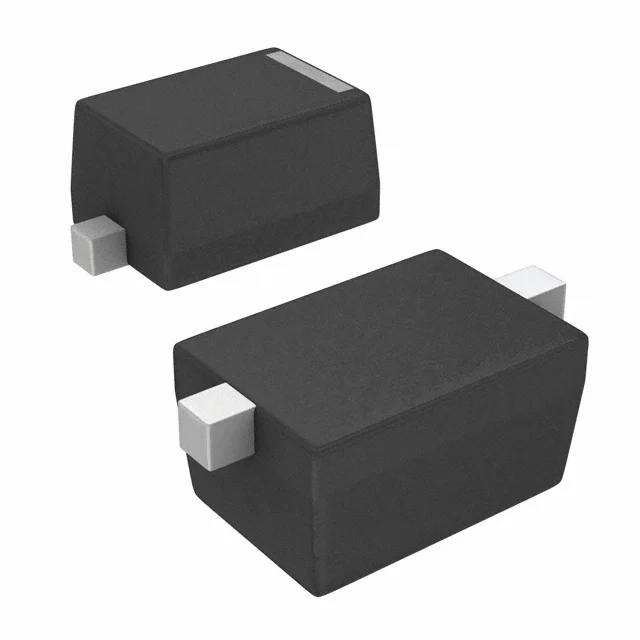
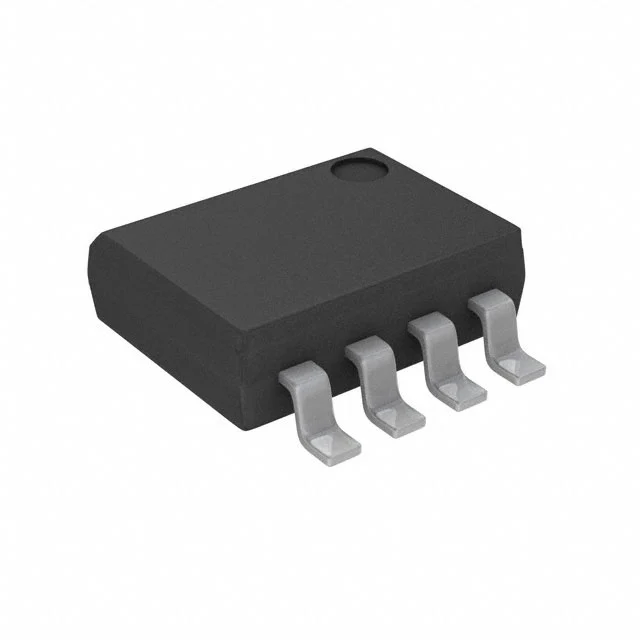
| Body | DBV, SOT-23 5 pin, 2.90 mm by 1.60 mm, one of the smallest bodies in the family |
| Reel | 3000 pieces on a large reel for the R suffix, 250 pieces on a small reel for the T suffix |
| Finish | NIPDAU or SN on the published rows, moisture level 2 at 260 C with a one year floor life |
| Marking | BJJ on the INA193 row, a three character code shared with the rest of the family table style |
| Grade | The G4 rows in the same table are a separate ordering string with the same die and the same body |
Why the 80 V window changes the front end
A 26 V monitor is enough for a laptop and not enough for a telecom shelf. On a 48 V bus the shunt sits at a common mode that is already above most amplifier supply rails, so a low voltage monitor needs a divider, a level shift, or an isolated amplifier, and each of those adds an error term and a calibration step. The INA193 family solves it by accepting the bus voltage at the input pins while running from a 5 V or 12 V housekeeping rail, so the shunt output goes straight into the ADC channel that already exists.
The cost is the error budget. Three percent over temperature is roughly two orders of magnitude worse than a zero drift part, which is fine for a breaker trip point and not fine for a battery fuel gauge. Projects that need the 80 V window and better accuracy usually move to a two stage arrangement or to a digital power monitor. Where a customer is replacing a discontinued high side monitor, our obsolete part cross reference hub carries the families sorted by common mode window, and the drop in verification note sets out the four measurements we ask for before a substitute is accepted on a live board.
Buyer questions on the INA193AIDBVR
What is the difference between the INA193 and the INA196? The gain and the die are the same, the pinout is not. The 193 to 195 rows put the output and the supply on one set of pins, the 196 to 198 rows use the alternative arrangement, so a board cannot take both without a land change.
Does the part work with the shunt below ground? Yes, down to 16 V below ground, which is what makes a low side shunt on a floating load usable. The output still referred to the device ground, so the ADC has to share that ground.
Is the 900 uA quiescent current a problem in a battery product? It is if the monitor runs continuously. At 900 uA a coin cell product loses more to the monitor than to the load, and a low power part with an enable pin is the correct answer there.
Availability and ordering notes
The R suffix is the 3000 piece reel and the T suffix the 250 piece reel, and both are active with moisture level 2 and a one year floor life, which means a reel that has been open on a shelf for a year needs a bake before reflow. The G4 rows carry the same silicon under a different ordering string, so a customer who has been buying the G4 string does not need a requalification to move to the plain one. We confirm the gain letter and the pin variant against the board before quoting, because the 193 and the 196 are the same amplifier in two different pin orders and a mixed reel is a real failure mode on a line that runs both.