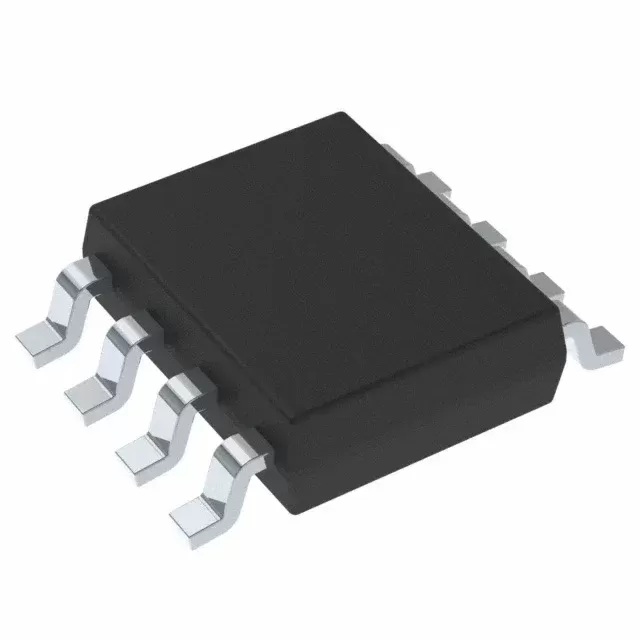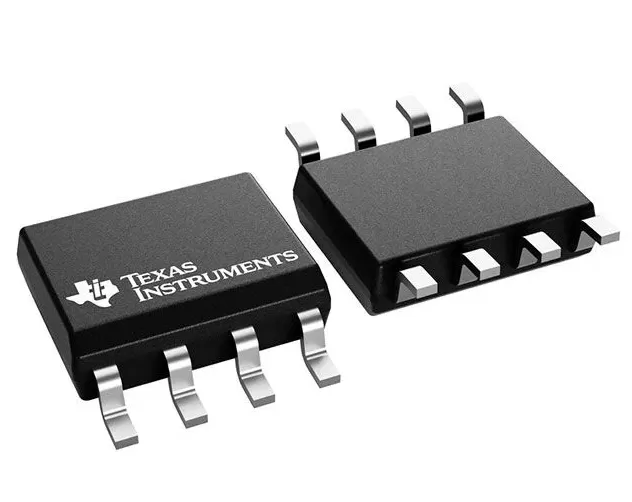

INA122UA2K5
Brand: Texas Instruments
Texas Instruments INA122UA2K5 is a power management component designed for Industrial Automation and related applications. In stock at Superb Automation — request a quote for competitive pricing and fast delivery.
Product Specifications
INA122UA2K5
Texas Instruments — Power Management & Signal Chain
Product Overview
The INA122UA2K5 from Texas Instruments is a power management / signal chain IC delivering high efficiency, precision regulation, and robust protection. Texas Instruments (TI) is a global leader in analog ICs, power management solutions, and embedded processors.
Superb Automation partners with leading brands including Qorvo, TI, ADI, XILINX, NVIDIA, Intel, ST, MACOM, Renesas, and Coilcraft to provide complete BOM and supply-chain solutions.
Key Features
- High-efficiency power conversion with low quiescent current
- Wide input voltage range with precision output regulation
- Integrated over-current, over-temperature, and short-circuit protection
- Small footprint packaging for space-constrained designs
- AEC-Q100 qualified options available for automotive applications
- Flexible sequencing and soft-start control
Key Specifications
| Input Voltage | V |
| Output Voltage | V |
| Output Current | A |
| Switching Frequency | kHz |
| Efficiency | % |
| Quiescent Current | µA |
| Topology | — |
| Package | — |
| Operating Temp | °C |
| Protection | — |
Applications
Industrial Automation
Automotive Electronics
Telecom Infrastructure
Server & Data Center Power
Medical Devices
Consumer Electronics
Request Quote — In Stock, 100% New & Original, Full Warranty
INA122UA/2K5: the A bin of the micropower amplifier on a 2500 piece reel
This string is the volume part of the family: the tighter trimmed bin, the SO-8 body, and 2500 pieces on a large reel. It is what a production build of a battery instrument should be ordering once the circuit is stable, and it removes both the grade question and the carrier question from the purchase order, because both answers are in the string.
The electrical behaviour is the family behaviour: 60 µA quiescent, 2.2 to 36 V, rail to rail output, gain 5 to 10,000, 250 µV offset maximum, 3 µV per degree drift, 25 nA bias current. The A bin tightens the offset test, and the reel removes the tube from the line.
The INA122UA/2K5 rows as the addendum publishes them
| Part class | Single supply micropower instrumentation amplifier |
| Vendor status | ACTIVE, production data |
| Data sheet | SBOS069B |
| Grade | A suffix, tighter trimmed bin |
| Catalogue string | INA122UA/2K5, stored here also as INA122UA2K5 |
| Supply range | 2.2 V to 36 V single or dual |
| Quiescent current | 60 µA |
| Gain equation | G = 5 + 200 kΩ divided by RG |
| Output swing | Rail to rail |
| Input offset voltage | 250 µV maximum, family row |
| Offset drift | 3 µV per degree maximum |
| Input bias current | 25 nA maximum |
| Body | SOIC, D outline, 8 pins |
| Carrier | 2500 pieces on a large reel |
| Tube sibling | INA122UA, tube row |
| Plain bin reel | INA122U/2K5, same reel different test limit |
| Moisture level | Level 3, 260 degrees, 168 hour floor life |
| Temperature range | Minus 40 to plus 85 degrees |
Two rows in that table are about the same body with different test limits, and the difference is invisible on the part. A distributor with both in stock will pick whichever is nearer, and a build that has specified the A bin for its zero error will receive the plain bin and never know until a unit fails its accuracy check. The receiving record should quote the label verbatim rather than the part family.
A reel, a level 3 rating and a monthly build
The moisture rating is the constraint that decides how a reel is used. At level 3 the parts have 168 hours of floor life once the reel is opened, and on a monthly build of 200 boards that is a reel opened twelve times a year with a few hours of exposure each time. The floor life is a budget rather than a limit, so the reel survives, provided somebody records the exposure. A reel that is left on the machine over a weekend because the build ran late is the case that uses a month of budget in two days.
The practical arrangement is a dry cabinet with room for a 330 mm reel, a label that records each opening and closing, and a bake step that is available when the budget runs out. None of that is expensive, and all of it is invisible in a bill of materials, which is why it is usually the assembly house's procedure rather than the customer's requirement.
Centring the channel around a 250 µV offset
Two hundred and fifty microvolts is small on a 2.5 V full scale and large on a 10 mV full scale. At a gain of 100 a 10 mV sensor produces 1 V, and the offset contributes 25 mV of that, which is 2.5 per cent. The A bin tightens the test limit but does not remove the term, so on a small full scale the channel has to either trim, AC couple or accept the error. AC coupling removes the offset and the DC information at the same time, which is fine for a vibration sensor and wrong for a pressure sensor.
Trimming at the reference pin is the cleanest option on this part, because the reference sets the output zero directly. A trim pot from the reference pin to each rail moves the output zero by a fraction of the supply, and the resolution needed is set by the offset. A 100 kΩ pot with a 1 kΩ series resistor gives a range of tens of millivolts, which is the right order for a 25 mV error.
What the two op amp topology does to a multiplexed input
A multiplexed front end switches between sources with different impedances, and a two op amp instrumentation amplifier has a signal path through the feedback network that responds to the source impedance. The result is a settling time that depends on the source, and a channel that settles quickly on one input can still be settling on the next. At 60 µA the amplifier is not fast, and a multiplexer running at 10 thousand samples a second with eight channels gives 12 microseconds per channel, which is close to the settling time of a gain of 100 channel.
The practical answer is to buffer each source or to slow the multiplexer, and the second is free. A circuit that runs the converter slower than the amplifier can settle has no crosstalk, and the loss of throughput is usually acceptable in a battery instrument where the measurement rate is set by the sensor rather than by the electronics.
Buying INA122UA/2K5
The reel is active and the tube is active, and the grade is the A bin. The purchase order should name the string with the slash if the customer's system allows it, and the stripped form otherwise. The quantity should be in pieces, because a reel is a carrier rather than a unit of measure.
For a build that has to document the grade, our component traceability report page describes what we record per reel, and the BOM scrubbing page covers how we check that the grade on the drawing matches the grade on the order.
A ten year supply plan for a battery instrument
A battery instrument is usually a product with a long service life, and the amplifier inside it will outlive the first reel. The supply plan therefore has three parts: a buffer sized against the requalification time of a substitute, a documented substitute that has been checked on the actual channel, and a date code rotation that keeps the stock inside its solderability window. None of the three is expensive, and all three are cheaper than a line stop.
The substitute check is the part that is usually skipped. A pin compatible amplifier from another family will have a different gain equation, a different minimum gain and a different reference arrangement, so a board that was laid out for a gain of 5 plus 200 kΩ divided by RG cannot take a part whose equation starts at 1 plus 50 kΩ. The check is a bench comparison of the actual channel, not a review of the data sheet, and it takes an afternoon rather than a week.
The buffer quantity follows from the qualification time. If a substitute takes three months to qualify, the buffer has to cover three months of production plus the shipping time, which for a monthly build of 200 boards is a reel of 2500 with margin. That is the arithmetic that turns a vague instruction to hold stock into a number on a purchase order.
Questions that arrive with this part number
Whether the reel can be split between two assembly houses is the first question, and it can with taping equipment, but the split loses the vendor's moisture history. Whether the plain bin can be substituted when the A bin is out of stock is the second, and technically yes at a wider offset; commercially that is a concession the customer has to sign. The third question is the 2.2 V floor, which is hard: a 1.8 V rail cannot use this part and should not try.
The fourth is the gain floor of 5. A customer who wants a buffer has to use a different part, and the explanation is the topology rather than the grade.