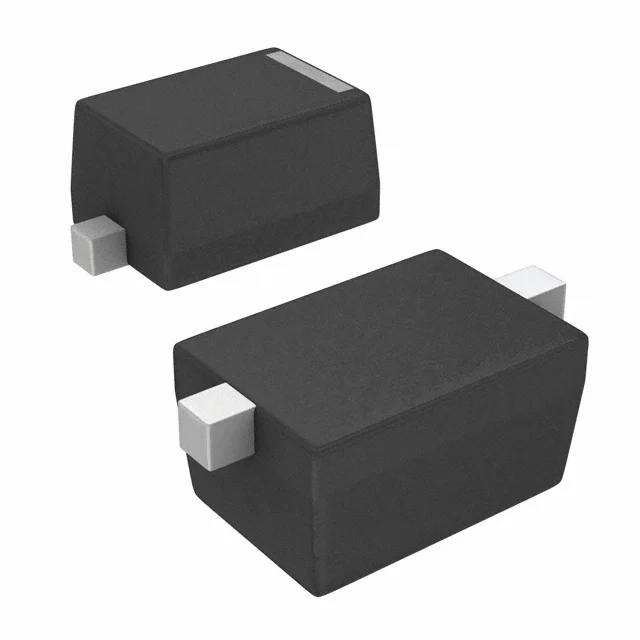
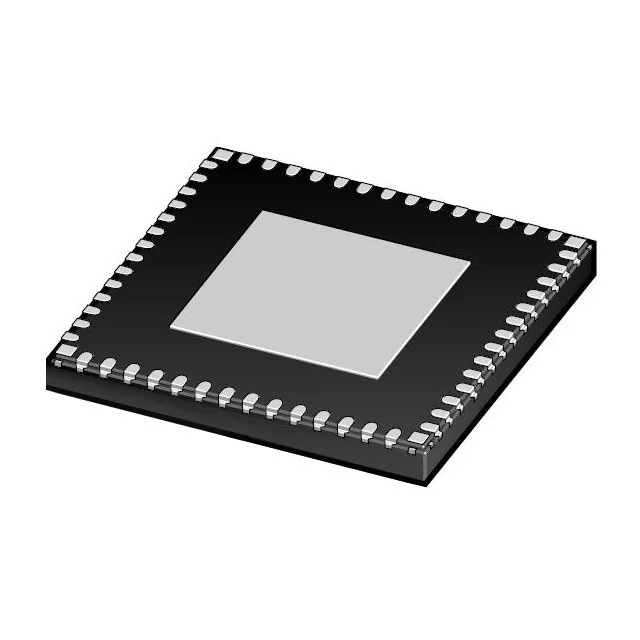
BQ27546YZFR-G1
Brand: Texas Instruments
Texas Instruments BQ27546YZFR-G1 is a power management component designed for AI Servers & Low-Altitude Economy (Drone and UAV) and related applications. In stock at Superb Automation — request a quote for competitive pricing and fast delivery.
Product Specifications
BQ27546YZFR-G1
Texas Instruments — Power Management & Signal Chain
Product Overview
The BQ27546YZFR-G1 from Texas Instruments is a power management / signal chain IC delivering high efficiency, precision regulation, and robust protection. Texas Instruments (TI) is a global leader in analog ICs, power management solutions, and embedded processors.
Superb Automation partners with leading brands including Qorvo, TI, ADI, XILINX, NVIDIA, Intel, ST, MACOM, Renesas, and Coilcraft to provide complete BOM and supply-chain solutions.
Key Features
- High-efficiency power conversion with low quiescent current
- Wide input voltage range with precision output regulation
- Integrated over-current, over-temperature, and short-circuit protection
- Small footprint packaging for space-constrained designs
- AEC-Q100 qualified options available for automotive applications
- Flexible sequencing and soft-start control
Key Specifications
| Input Voltage | V |
| Output Voltage | V |
| Output Current | A |
| Switching Frequency | kHz |
| Efficiency | % |
| Quiescent Current | µA |
| Topology | — |
| Package | — |
| Operating Temp | °C |
| Protection | — |
Applications
Industrial Automation
Automotive Electronics
Telecom Infrastructure
Server & Data Center Power
Medical Devices
Consumer Electronics
Request Quote — In Stock, 100% New & Original, Full Warranty
BQ27546YZFR-G1: single cell fuel gauge for packs up to 14,500 mAh in a fifteen ball DSBGA
BQ27546YZFR-G1 is a microcontroller peripheral that reports remaining capacity, state of charge, run time to empty and cell temperature for a one series Li-ion pack in a DSBGA body of 15 pins. The gauge runs the Impedance Track algorithm from a five to twenty milliohm sense resistor and needs almost no firmware on the host side. The YZF body is 2.61 mm by 1.96 mm, which is small enough to sit on the pack flex next to the protection FETs. Both HDQ and I2C are supported on the same die, so one part covers two host styles.
Order code and package
| BQ27546YZFR-G1 | DSBGA YZF, 15 balls, 3000 pieces on a large reel, Level-1-260C-UNLIM, marking BQ27546 |
| BQ27546YZFT-G1 | same body, 250 pieces on a small reel, Level-1-260C-UNLIM, marking BQ27546 |
| BQ27546YZFR-G1.A and .B | label rows that carry the SNAGCU ball finish, same body and same 3000 piece reel |
| Body size | 2.61 mm by 1.96 mm, fifteen balls, the Nano-Free body used across this gauge family |
| Temperature | minus 40 to plus 85 C operating free air, functional range to plus 100 C |
| Supply | REGIN 2.8 V to 5.5 V from the cell, with VCC held at 2.4 V to 2.6 V by the internal regulator |
Electrical parameters that decide the application
| Sense resistor | 5 milliohm to 20 milliohm between CELL minus and PACK minus, read across SRP and SRN |
| Sense input range | plus or minus 125 mV across SRP and SRN, which is the full scale of the coulomb counter |
| Coulomb counter | 15 bit resolution with a 14 ms conversion and 10 uV maximum input offset |
| Cell voltage channel | 14 to 15 bit conversion in 125 ms, with the BAT pin shared with the cell sense input |
| Temperature channel | external NTC on the TS pin at 0.05 V per degree and minus 2.0 mV per degree of slope |
| NORMAL mode current | 118 uA typical with the gauge awake and measuring |
| SLEEP and FULLSLEEP | 62 uA and 23 uA typical, entered automatically when the load falls below the sleep current |
| HIBERNATE current | 8 uA typical, left only by a bus transaction or by current above the wake threshold |
| Data flash | 20,000 write cycles and ten years of retention, with 64 bytes of non-volatile scratch pad |
Family variants and how they differ
| YZF against YZT | the R suffix is the 3000 piece large reel and the T suffix the 250 piece small reel, same silicon |
| HDQ against I2C | both interfaces are present, and the pack sets which one the host uses, so one part covers two platforms |
| Internal against external sensor | the TS pin takes an external NTC, and the die sensor is used when the thermistor is absent |
| Authentication | SHA-1 with HMAC keys held in the gauge, challenged by the host at every power up |
| Scratch pad | 64 bytes of non-volatile flash for pack serial number, chemistry code and build date |
| Fault reporting | internal short detection and tab disconnection detection are separate flags, not one generic error |
Points to check before this part goes on a BOM
The gauge has to learn the pack before it can be trusted. Impedance Track builds its resistance table from a full discharge at a known rate, so a pack that leaves the line with a partial learning cycle reports a capacity that drifts for the first few cycles. Put the learning cycle on the pack line and record the result in the pack record.
The sense resistor value matters less than its connection. A four wire Kelvin pair from the resistor to SRP and SRN, with both traces the same length and both kept away from the switching node of the charger, is what keeps the coulomb count clean. A shared trace with the protection FET current adds a few milliohms of unmeasured copper.
Hibernate is entered on a current threshold, not on a timer. A pack that sits on a shelf with a load below the wake threshold stops updating, and a reader then returns the last set of values. Field reports of a gauge that is frozen at a fixed percentage are usually a pack in hibernate, not a failed part.
Authentication keys have to be programmed before the pack is sealed. The SHA-1 keys live in the gauge and are read only through the authenticated interface, so a pack house that skips the step produces packs the host will refuse. Keep the key file under the same control as the pack serial numbers.
The scratch pad is flash, and flash wears. 64 bytes of non-volatile space invites a build script to write a record at every test station. The vendor rates the array at 20,000 cycles, which is generous for pack data and not generous for a log written once per charge.
An open tab and a weak cell look alike to the host. Tab disconnection detection works from an impedance step, so a marginal weld that is still conducting adds series resistance and shifts every reading instead of raising the flag. The flag is a coarse check, and the pack mechanical test is what catches the rest.
What the host has to do
The host reads the standard command set on the interface the pack selects, and that is the whole of the integration. A host that polls the gauge faster than once a second gains nothing, because the voltage and temperature channels convert in 125 ms and the coulomb counter in 14 ms.
The two places hosts go wrong are the wake current and the authentication challenge. A host that draws less than the wake threshold while idle will see a pack that looks asleep, and a host that sends the challenge at the wrong point in the boot sequence will reject a good pack.
Where the pack line loses yield
The first loss is the sense connection: a hand soldered shunt with one long trace gives a coulomb count that reads low on discharge and high on charge, and the error grows with current.
The second is the learning cycle. A pack that is charged to full, discharged to empty and then shipped without the final update to the resistance table will report a state of charge that steps rather than moves, and the customer sees it as a gauge that jumps.
Where this order code fits
Battery packs for handheld medical instruments, portable test gear, cordless power tools and asset trackers all use this class of gauge, because the pack is the part that gets replaced and the host should not have to recalibrate capacity. The authentication path also matters where a third party sells replacement packs into an installed base. Teams comparing it with a neighbouring part start from our Power Management Cross Reference page, and teams replacing a part that has gone end of life start from the Medical Device Components page.
Questions buyers ask
Does the host firmware have to run the gauging algorithm? No. The algorithm runs inside the gauge, and the host only reads standard commands for capacity, voltage, current and temperature. The host work is limited to reading the flags and, where the pack uses authentication, sending the challenge.
Can the same part serve a pack built from a different cell? Only after a new learning cycle. The resistance table belongs to the cell and to the pack construction, so a change of cell vendor or a change of the nickel strip thickness is a new pack and needs a new learning run.
Why is a five milliohm resistor allowed at all? Because the coulomb counter reads a plus or minus 125 mV window and the offset is 10 microvolts, so the resolution survives a small shunt. A small shunt costs less heat in a sealed pack, which is the reason the vendor allows it.
What happens when the pack sleeps for a month? It drops to hibernate at 8 uA typical and wakes on a bus transaction or on current above the wake threshold. The reported capacity on the first read after wake is the stored value, and the gauge corrects it after the first measurement cycle.
Is the fifteen ball body reworkable? It is a 0.5 mm pitch array on a small body, so removal needs a hot gas station and a stencil for the reball. Most pack houses treat a failed gauge as a scrapped flex rather than a rework item, which is worth knowing when a reel is suspect.
SUPERB holds and sources this line for production and repair demand, quoted against the exact ordering string with date codes, packing and country of origin stated on the offer. When a part is moving, the How to Verify a Drop in Replacement page sets out the checks that keep a substitute from failing on the bench.