
BQ24090DGQR
Brand: Texas Instruments
Texas Instruments BQ24090DGQR is a power management component designed for AI Servers & Low-Altitude Economy (Drone and UAV) and related applications. In stock at Superb Automation — request a quote for competitive pricing and fast delivery.
Product Specifications
BQ24090DGQR
Texas Instruments — Power Management & Signal Chain
Product Overview
The BQ24090DGQR from Texas Instruments is a power management / signal chain IC delivering high efficiency, precision regulation, and robust protection. Texas Instruments (TI) is a global leader in analog ICs, power management solutions, and embedded processors.
Superb Automation partners with leading brands including Qorvo, TI, ADI, XILINX, NVIDIA, Intel, ST, MACOM, Renesas, and Coilcraft to provide complete BOM and supply-chain solutions.
Key Features
- High-efficiency power conversion with low quiescent current
- Wide input voltage range with precision output regulation
- Integrated over-current, over-temperature, and short-circuit protection
- Small footprint packaging for space-constrained designs
- AEC-Q100 qualified options available for automotive applications
- Flexible sequencing and soft-start control
Key Specifications
| Input Voltage | V |
| Output Voltage | V |
| Output Current | A |
| Switching Frequency | kHz |
| Efficiency | % |
| Quiescent Current | µA |
| Topology | — |
| Package | — |
| Operating Temp | °C |
| Protection | — |
Applications
Industrial Automation
Automotive Electronics
Telecom Infrastructure
Server & Data Center Power
Medical Devices
Consumer Electronics
Request Quote — In Stock, 100% New & Original, Full Warranty
BQ24090DGQR: 1 A single input linear charger for one cell in a ten pin HVSSOP
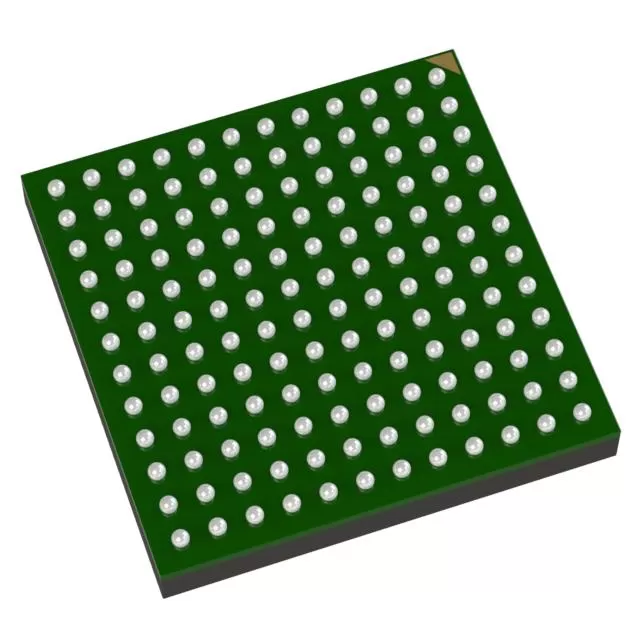
BQ24090DGQR is a linear charger that takes a USB port or an adapter, holds 4.2 V on the cell and reports charge state on two pins, with no inductor and no switching node in a HVSSOP body of 10 pins. The part charges at up to 1 A and sets the current with one resistor from ISET to ground. The family shares a die and differs in the thermistor value, in whether the JEITA window is implemented and in the regulation voltage, so a board can move between members without a board change. The DGQ body is 3.00 mm by 3.00 mm.
Order code and package
| BQ24090DGQR | HVSSOP DGQ, 10 pins, 2500 pieces on a large reel, NIPDAUAG, Level-1-260C-UNLIM, marking 24090 |
| BQ24090DGQT | same body, 250 pieces on a small reel, the row for a prototype build |
| Operating temperature on the plain row | 0 to 125 C on BQ24090DGQR, while the .B row of the same string prints minus 40 to 150 C |
| BQ24091 | same silicon with a 100 kohm thermistor window instead of 10 kohm |
| BQ24092 and BQ24093 | the two members that implement the JEITA window, hot regulation at 4.06 V |
| BQ24095 | the member that regulates at 4.35 V for a high voltage cell |
Electrical parameters that decide the application
| Input range | 3.5 V to 12 V operating, restricted by the input dynamic management and the 6.6 V overvoltage trip |
| Charge voltage | 4.16 to 4.24 V window on the 4.2 V members, held at 25 mA of load |
| Fast charge current | 10 mA to 1000 mA, set by a resistor from ISET between 540 ohm and 10.8 kohm |
| Charge current factor | KISET 480 to 540 Aohm in the 50 to 1000 mA band, and a separate factor below 50 mA |
| Accuracy | 1 per cent on the charge voltage and 10 per cent on the charge current |
| Precharge | 20 per cent of the fast charge current by default, with the ratio moved by a resistor on PRETERM |
| Precharge threshold | VLOWV 2.4 to 2.5 V, with 70 ms of deglitch on the way up and 32 ms on the way down |
| Dropout | 325 mV at 500 mA with a 540 ohm ISET resistor, which is the headroom a 5 V adapter has to supply |
| Termination | when the current falls to the ITERM threshold, with a fixed ten hour safety timer behind it |
| Thermal behaviour | regulation at 125 C and shutdown at 150 C, both on the die rather than on the board |
Family variants and how they differ
| BQ24090 against BQ24091 | only the thermistor value changes, 10 kohm against 100 kohm, and the pinout is identical |
| BQ24092 against BQ24090 | the 92 adds the JEITA window, which cuts the current in half when cold and regulates at 4.06 V when hot |
| BQ24095 against the rest | the 95 regulates at 4.35 V and carries its own KISET factors, so a resistor value from a 4.2 V build is not valid on it |
| TTDM against the safety timer | with no pack thermistor the part enters the timer disable mode instead of refusing to charge, which is what lets a board run without a battery |
| Single output against power path | this family has one output, so the system load sits in parallel with the cell and steals charge current rather than being fed first |
| DGQ against DRV | the ten pin HVSSOP here dissipates through the leads and the paddle, while the smaller bodies in the wider family need more copper |
Points to check before this part goes on a BOM
The cell and the system share one node. With a single output the load current is subtracted from the charge current, and the part terminates when the sum falls to the threshold. A product that draws 60 mA while charging a pack at 100 mA will never terminate, because the current through the sense path never falls to 10 mA. The ten hour timer is what ends that cycle, and it ends it at whatever state of charge the pack has reached.
A 325 mV dropout sets the adapter requirement. At 500 mA the part needs 325 mV between input and cell, so a 5 V adapter at 4.5 V under load still charges a 4.1 V cell and a 4.9 V adapter does not. Products that run from a 5 V rail shared with a motor or a radio should measure the rail under load rather than assume the nominal value, because the dropout is where a charger quietly turns into a resistor.
The KISET factor changes below 50 mA. The document prints separate factors for the 50 to 1000 mA band, the 25 to 50 mA band and the 10 to 25 mA band, and the numbers differ by more than ten per cent. A low current build copied from the high current formula misses the target by an amount that matters when the product is a coin cell charger or a trickle stage.
The thermistor value is a build decision, not a catalogue detail. 10 kohm and 100 kohm members exist in the same body, and a pack built with the wrong one reports a temperature that is off by tens of degrees. The part then refuses to charge in a normal room or charges into a hot pack, and both failures look like a pack problem rather than a part number problem.
The ten hour timer runs on the die. It is not programmable on this family and it is not reset by a recharge event in the same way as a programmable timer. A product that stays on a charger for a week therefore goes through repeated cycles of charge and termination, and the pack temperature rises each time, which is worth knowing when the enclosure has no vent.
The junction temperature is the limit, not the ambient. At 1 A from 5 V into a 3.6 V cell the part dissipates 1.4 W, and in a 3 mm body that is a junction rise of well over 100 C without a copper pad. Products that charge at the full 1 A in a sealed case usually have the current folded back by the thermal loop for most of the cycle, which is fine but should be planned for rather than discovered.
Where the board goes wrong
The input capacitor and the ISET resistor are the two parts that decide whether the first build works. A 1 uF capacitor at the connector with a long trace lets a hot plug event reach the die, and an ISET resistor with a 5 per cent tolerance moves the charge current by 5 per cent before the part's own 10 per cent tolerance is counted.
The second fault is a PRETERM resistor that is left unconnected. The pin then floats and the precharge ratio sits at its default, which is 20 per cent. On a large pack that is a slow recovery from deep discharge, and a product that reports a pack stuck at 3 V for an hour is usually showing a precharge current that is too small for the cell.
What to ask a supplier for
Ask for the carrier with the code. The same body is published at 2500 pieces on a large reel and 250 on a small reel, and a line that orders the small reel for a production run will stop every 250 placements.
Ask also for the moisture record. This family is printed at Level 1 with unlimited floor life, which is one of its practical advantages over the larger bodies, and a supplier who cannot state the level is likely quoting from a distributor page rather than from the vendor addendum.
Where this order code fits
Small handheld products, sensors with a rechargeable cell, headsets and portable instruments use this family because it needs no inductor and no switching node to lay out. Where the product has to run from a USB port with a strict 100 mA or 500 mA limit, the pin selectable input limit on this family is the reason it is chosen over a charger that expects an adapter. Teams comparing it with a neighbouring part start from our Power Management Cross Reference page, and teams replacing a part that has gone end of life start from the BOM Shortage Recovery page.
Questions buyers ask
Does the part need an inductor? No. It is a linear charger, so the cell voltage is dropped across a pass element and the difference between input and cell becomes heat. That is why the current rating is 1 A and why the thermal pad and the copper around it decide the real charge rate.
What is the difference between the 90 and the 92? The 92 implements the JEITA window, so it cuts the current in half when the pack is cold and holds 4.06 V when the pack is hot. The 90 has no such window, which makes it simpler and less safe on a pack that is charged outdoors.
Can two cells be charged with one part? No. The family is single cell only, and the regulation voltage is fixed at 4.2 V or 4.35 V depending on the member. A two cell pack needs a boost or a switch mode charger, not a linear part with a different resistor.
Why is the operating temperature on the plain reel row 0 to 125 C? The vendor prints that range on BQ24090DGQR and minus 40 to 150 C on the .B row of the same orderable string. A product specified for a cold start should name the row it needs, because the same code can ship against either record.
How is the charge current monitored? By the voltage at the ISET pin, which rises with the current, and by the CHG pin, which reports charging or complete. Neither is a calibrated measurement, so a product that needs a charge current reading should use a sense resistor in the path rather than the pin voltage.
SUPERB holds and sources this line for production and repair demand, quoted against the exact ordering string with date codes, packing and country of origin stated on the offer. When a part is moving, the How to Verify a Drop in Replacement page sets out the checks that keep a substitute from failing on the bench.