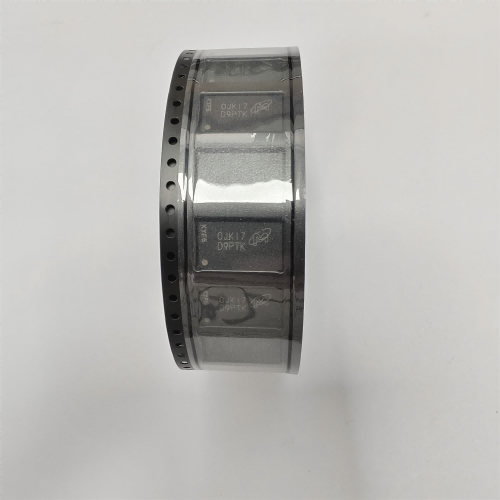
MAX4488AUT+T
Brand: Analog Devices
Analog Devices MAX4488AUT+T is a analog & mixed-signal component designed for Precision Instrumentation and related applications. In stock at Superb Automation — request a quote for competitive pricing and fast delivery.
Product Specifications
MAX4488AUT+T
Analog Devices — Analog & Mixed-Signal ICs
Product Overview
The MAX4488AUT+T from Analog Devices is a high-performance analog / mixed-signal IC providing precision signal acquisition, conversion, and conditioning. Analog Devices (ADI) is a world leader in high-performance analog, mixed-signal, and DSP ICs for instrumentation, healthcare, automotive, and communications.
Superb Automation partners with leading brands including Qorvo, TI, ADI, XILINX, NVIDIA, Intel, ST, MACOM, Renesas, and Coilcraft to provide complete BOM and supply-chain solutions.
Key Features
- High-resolution data conversion with excellent SNR and THD
- Wide dynamic range and high linearity across operating conditions
- Integrated voltage reference with low temperature drift
- Flexible digital interface — SPI, I2C, or parallel options
- Industrial/automotive temperature range with guaranteed specs
- Low power consumption with power-down modes
Key Specifications
| Resolution | bits |
| Channels | — |
| Sample Rate | kSPS |
| Interface | — |
| Supply Voltage | V |
| Operating Temp | °C |
| Package | — |
| INL | LSB |
| SNR | dB |
| THD | dB |
Applications
Precision Instrumentation
Industrial Process Control
Medical Imaging & Diagnostics
Automotive Sensor Interfaces
Communications Infrastructure
Test & Measurement
MAX4488AUT+T: a 42 MHz op amp that is only stable at a gain of five or more
What this order code is
MAX4488AUT+T is the single channel member of a wideband low noise amplifier family, in a 6-pin SOT23. Its 42 MHz gain bandwidth product comes with a condition that is easy to miss: the part is internally compensated for closed loop gains of five or more, so it is not unity gain stable. The MAX4475 to MAX4478 members of the same family run at 10 MHz and are unity gain stable, which makes them the right choice for a buffer and this part the right choice for a gain stage.
The input voltage noise density is 4.5 nanovolts per root hertz and the current noise density is 0.5 femtoamps per root hertz, which is a CMOS input. Distortion is 0.0002 percent total harmonic distortion plus noise into a 1 kilohm load. Offset is 70 microvolts, input bias current is 1 picoamp, and large signal voltage gain is 120 dB. Supply is 2.7 V to 5.5 V single ended, the output swings rail to rail into 1 kilohm, and the input common mode range includes ground. A shutdown mode drops supply current to 0.01 microamps and puts the output in a high impedance state.
Parameters as published
| Item | Value |
|---|---|
| Gain bandwidth | 42 MHz, stable for gains of 5 and above |
| Input voltage noise | 4.5 nV per root hertz |
| Input current noise | 0.5 femtoamps per root hertz |
| Distortion | 0.0002 percent total harmonic distortion plus noise, 1 kilohm load |
| Offset voltage | 70 microvolts |
| Input bias current | 1 picoamp |
| Large signal gain | 120 dB |
| Supply range | 2.7 V to 5.5 V single supply |
| Quiescent current | 2.2 mA per amplifier |
| Shutdown | 0.01 microamps, output high impedance |
| Output swing | rail to rail into 1 kilohm |
| Package | 6-pin SOT23, AEC-Q100 versions listed separately |
Numbers that decide the application
Four point five nanovolts per root hertz over a 100 kHz band is 1.42 microvolts rms and over 1 MHz it is 4.5 microvolts rms. Against a 16 bit converter on 5 V, where a count is 76.3 microvolts, those are 0.019 and 0.059 of a count, so the amplifier noise is not the limit at 16 bits in either band. The 70 microvolt offset is 0.92 of a count, which is a different statement: at 16 bits this part needs an offset trim or an auto zero stage in front of it, and at 12 bits it needs nothing.
The gain restriction is the practical constraint. At a closed loop gain of five the 42 MHz product leaves 8.4 MHz of bandwidth, and at a gain of ten it leaves 4.2 MHz. A follower built from this part will oscillate, and the usual symptom is a stage that works on one board and not on the next because the load capacitance differs. The 10 MHz unity gain stable members of the same family are the answer when a buffer is needed, and they sit in the same package family.
One picoamp of bias current into 1 megohm is 1 microvolt, which is fourteen times below the offset, so the input can be used with high impedance sources without a bias current term. That is the reason to choose a CMOS input here rather than a bipolar part with better voltage noise: at a 100 kilohm source the 4.5 nanovolts is still the dominant term and the current noise of a bipolar part would not be.
Two point two milliamps at 5 V is 11 mW per amplifier, and at 2.7 V it is 5.9 mW, so a four channel board built from singles spends 44 mW. Shutdown at 0.01 microamps is what makes that acceptable in a portable instrument that can power the amplifier down between measurements.
Selection and cross reference notes
The family splits on bandwidth and stability, not on package: 10 MHz unity gain stable parts and 42 MHz gain of five parts. A substitute has to match the stability condition first, because a part with more bandwidth and unconditional stability is a different part and a part with the same bandwidth and the same restriction is a drop in.
Distortion at 0.0002 percent is minus 114 dB, which is about 18 effective bits. That figure is quoted into 1 kilohm; into 600 ohms it will be worse, and into a capacitive load the output stage will need a series resistor. The AEC-Q100 qualification applies to specific order codes in the ordering table, not to the family name.
Where it fits
ADC buffers, DAC output amplifiers, low noise microphone preamplifiers, medical instrumentation, strain gauge amplifiers and digital scale front ends are the vendor's listed uses. The combination of a CMOS input, low voltage noise and a gain of five or more suits a sensor amplifier with a high impedance source and a modest gain. Buyers comparing amplifiers can start at the amplifier cross reference page, and medical instrument builds usually reference the medical device components page.
Buying notes
AUT+T is the 6-pin SOT23 body in tape and reel. The same family is offered in TDFN and microMAX bodies with different suffixes, and the automotive grades carry a V in the ordering table. Because the part number does not encode the gain stability condition, a quotation for MAX4488 has to be checked against the datasheet for the specific family member rather than assumed from the bandwidth.
Sourcing notes and next step
For an amplifier like this the questions are the body, the grade and whether the board can live with the gain restriction. We quote the exact code and confirm the body before shipping. Send the codes and quantities through the BOM shortage recovery page and we will answer with availability and, where the code is short, which family member is a genuine substitute.
Request Quote — In Stock, 100% New & Original, Full Warranty