


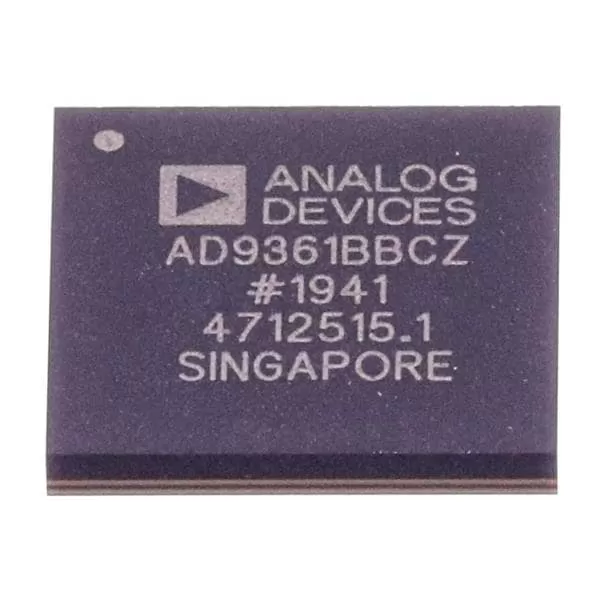

LTC6101BIS5#TRPBF
Brand: Analog Devices
Analog Devices LTC6101BIS5#TRPBF is a analog & mixed-signal component designed for Precision Instrumentation and related applications. In stock at Superb Automation — request a quote for competitive pricing and fast delivery.
Product Specifications
LTC6101BIS5#TRPBF
Analog Devices — Analog & Mixed-Signal ICs
Product Overview
The LTC6101BIS5#TRPBF from Analog Devices is a high-performance analog / mixed-signal IC providing precision signal acquisition, conversion, and conditioning. Analog Devices (ADI) is a world leader in high-performance analog, mixed-signal, and DSP ICs for instrumentation, healthcare, automotive, and communications.
Superb Automation partners with leading brands including Qorvo, TI, ADI, XILINX, NVIDIA, Intel, ST, MACOM, Renesas, and Coilcraft to provide complete BOM and supply-chain solutions.
Key Features
- High-resolution data conversion with excellent SNR and THD
- Wide dynamic range and high linearity across operating conditions
- Integrated voltage reference with low temperature drift
- Flexible digital interface — SPI, I2C, or parallel options
- Industrial/automotive temperature range with guaranteed specs
- Low power consumption with power-down modes
Key Specifications
| Resolution | bits |
| Channels | — |
| Sample Rate | kSPS |
| Interface | — |
| Supply Voltage | V |
| Operating Temp | °C |
| Package | — |
| INL | LSB |
| SNR | dB |
| THD | dB |
Applications
Precision Instrumentation
Industrial Process Control
Medical Imaging & Diagnostics
Automotive Sensor Interfaces
Communications Infrastructure
Test & Measurement
LTC6101BIS5 on a hot 36 V rail
The LTC6101BIS5 is the B grade letter with the I temperature letter on the plain 4 V to 60 V member of the family, in the five lead SOT-23 with a 70 V absolute maximum. It is the combination for a 36 V battery system inside a sealed box: the operating ceiling clears a 45 V charger by 15 V and the I letter is the window that holds its guarantee to 125 C.
Where the 60 V ceiling lands on a battery system
A 36 V lead acid string at absorption is 43.2 V to 44.1 V, and a 48 V nominal lithium string at full charge is 54.6 V for thirteen cells. Both are inside 60 V. The absolute maximum of 70 V leaves 15.4 V of transient headroom on the lithium case and 25.9 V on the lead acid case, which is enough for a cable inductance kick and not enough for a load dump. A charger that can regenerate into the bus is the case to check, because the rail can be pushed above nominal by the battery itself.
The errors at 44 V of common mode
The 118 dB minimum rejection leaves 60 uV referred to the input at 48 V and 55 uV at 44 V. On a 50 mV sense drop that is about 0.11 percent, so the common mode term stays an order of magnitude below a 1 percent shunt. The offset limit of 300 uV is 0.6 percent of the same drop, and the 170 nA of bias into a 1 kohm gain resistor is 170 uV, or 0.34 percent. The three terms together are about 0.7 percent, which is the number to put next to the shunt tolerance before deciding whether a tighter grade is worth anything here.
Output current, headroom and fault behaviour
| Rated current | Shunt | Sense drop | Gain for 1 V | Output current |
|---|---|---|---|---|
| 20 A | 1 mohm | 20 mV | 50 | 1 mA at the limit |
| 10 A | 2 mohm | 20 mV | 50 | 1 mA at the limit |
| 5 A | 10 mohm | 50 mV | 20 | 1 mA at the limit |
| 2 A | 25 mohm | 50 mV | 20 | 1 mA at the limit |
Every row reaches 1 mA at rated current if the output is 1 V across 1 kohm, which is the family limit. The right move is to set the resistor at 2 kohm so rated current sits at half the limit, or to lower the gain, because a fault at twice rated current would otherwise drive the stage into its limit and the controller would read a flat value instead of a rising one. On a battery system the fault case is a shorted pack, which is exactly when the reading has to stay proportional.
Supply current and standby
250 uA at 12 V is 2.19 Ah over a year and 375 uA at 60 V is 3.29 Ah, so a monitor that is never switched off is a real line in a battery budget. There is no shutdown pin on this body, so the only way to remove that current is to gate the supply, and a gated supply needs the output to settle before the ADC reads it: 1 us for a full scale step is the number that sets the delay.
Where this code fits
36 V and 48 V battery systems, charger output monitoring, 24 V motor drives in a hot enclosure, and any channel that needs the plain 60 V ceiling with a guarantee above 85 C. The 1 us response supports a comparator trip inside a switching period.
Sourcing notes and next step
Check the temperature letter before the grade letter on this code, because a B grade at the wrong temperature is a worse outcome than an A grade at the right one. The family page gives -40 to 125 C as the specified range and -55 to 125 C as the operating range, with each letter's guarantee in the ordering information. Our ADI second source page lists the codes we can quote, the lead time page covers the schedule case, and the analog and mixed signal category holds the rest of the family.
Request Quote — In Stock, 100% New & Original, Full Warranty