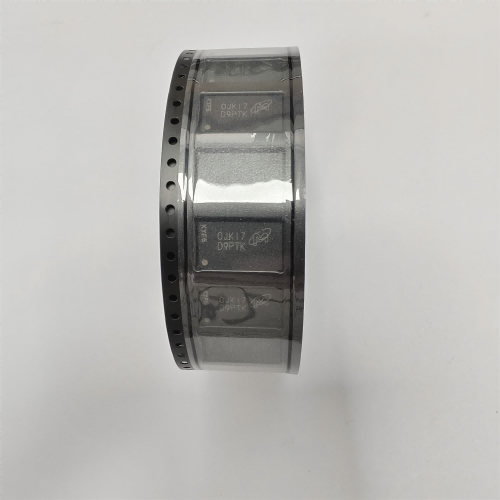
LTC4007EGN#TRPBF
Brand: Analog Devices
Analog Devices LTC4007EGN#TRPBF is a analog & mixed-signal component designed for Precision Instrumentation and related applications. In stock at Superb Automation — request a quote for competitive pricing and fast delivery.
Product Specifications
LTC4007EGN#TRPBF
Analog Devices — Analog & Mixed-Signal ICs
Product Overview
The LTC4007EGN#TRPBF from Analog Devices is a high-performance analog / mixed-signal IC providing precision signal acquisition, conversion, and conditioning. Analog Devices (ADI) is a world leader in high-performance analog, mixed-signal, and DSP ICs for instrumentation, healthcare, automotive, and communications.
Superb Automation partners with leading brands including Qorvo, TI, ADI, XILINX, NVIDIA, Intel, ST, MACOM, Renesas, and Coilcraft to provide complete BOM and supply-chain solutions.
Key Features
- High-resolution data conversion with excellent SNR and THD
- Wide dynamic range and high linearity across operating conditions
- Integrated voltage reference with low temperature drift
- Flexible digital interface — SPI, I2C, or parallel options
- Industrial/automotive temperature range with guaranteed specs
- Low power consumption with power-down modes
Key Specifications
| Resolution | bits |
| Channels | — |
| Sample Rate | kSPS |
| Interface | — |
| Supply Voltage | V |
| Operating Temp | °C |
| Package | — |
| INL | LSB |
| SNR | dB |
| THD | dB |
Applications
Precision Instrumentation
Industrial Process Control
Medical Imaging & Diagnostics
Automotive Sensor Interfaces
Communications Infrastructure
Test & Measurement
LTC4007EGN#TRPBF: A Four Amp Three or Four Cell Charger With 0.8 Percent Float
The LTC4007EGN#TRPBF is a constant current and constant voltage charger controller for three or four cell lithium ion packs, with an input range of 6 V to 28 V, output currents above 4 A, conversion efficiency up to 96 percent, charging voltage accuracy of plus or minus 0.8 percent, and 0.5 V of dropout at a 98 percent maximum duty cycle. The PWM stage is synchronous with a quasi constant frequency, constant off time architecture that does not produce audible noise with ceramic capacitors, the charge current is programmable to plus or minus 4 percent, the float voltage is pin programmed for cell count and for 4.2 V or 4.1 V chemistry, an external resistor sets the termination timer, charging restarts when a cell falls below 3.9 V, and a thermistor input suspends charging outside a safe temperature. Status outputs cover charging, C/10 detection, adapter present, low battery, input current limiting and faults, and the package is a 24-pin narrow SSOP.
This is the controller for a notebook pack, a portable instrument or a battery backup unit, where the charger has to be efficient because the pack is charged inside a sealed enclosure and every watt of loss heats the cells it is charging.
0.8 percent is 101 mV on a 12.6 V pack and 134 mV on 16.8 V
Plus or minus 0.8 percent on a three cell 12.6 V float is 101 mV, and on a four cell 16.8 V float it is 134 mV. That is the total error the pack sees, which is why the divider setting the float voltage has to be a 0.1 percent pair and why the reference inside the controller is not the only term. A pack charged 100 mV high loses cycle life, and one charged 100 mV low loses capacity, so this tolerance is a product life decision rather than a datasheet detail.
The current accuracy of plus or minus 4 percent at a 4 A rate is 160 mA, which the pack sees as charge time rather than as stress. The termination is at C/10, which on a 4 A rate is 400 mA, and the restart threshold of 3.9 V per cell is what keeps a laptop on mains from cycling the charger every time the pack self-discharges a little.
96 percent at 4 A into 16.8 V is 67.2 W out and 2.8 W of loss
Four amps into 16.8 V is 67.2 W delivered, and at 96 percent efficiency the input power is 70 W, so 2.8 W is dissipated in the converter, the inductor and the sense resistor. In a sealed enclosure that 2.8 W raises the pack temperature, and the thermistor input is what stops the charger from adding heat to a pack that is already warm. A linear charger in the same position would dissipate the input to output difference, which at 19 V in and 16.8 V out is small but at 19 V in and a deeply discharged 9 V pack is 40 W.
The constant off time architecture is why the part can use ceramic output capacitors without audible noise. A fixed frequency converter in the audible band can make a ceramic capacitor sing, and the quasi constant frequency scheme moves the switching frequency away from a fixed tone as the load changes. For a product that sits on a desk, that is a real specification.
| Function | Synchronous constant current and constant voltage charger controller |
| Cells | Three or four lithium ion cells, 4.2 V or 4.1 V per cell by pin |
| Input | 6 V to 28 V, adapter current limiting |
| Output current | Above 4 A, programmable to plus or minus 4 percent |
| Float accuracy | Plus or minus 0.8 percent, 101 mV at 12.6 V, 134 mV at 16.8 V |
| Efficiency | Up to 96 percent, 2.8 W of loss at 67.2 W out |
| Dropout and duty | 0.5 V dropout, 98 percent maximum duty cycle |
| Termination | Timer set by a resistor, C/10 detection, restart below 3.9 V per cell |
| Safety | Thermistor input, low battery indicator, fault output |
| Package | 24-pin narrow SSOP |
Two questions buyers ask
What happens with a deeply discharged pack?
Below 2.5 V per cell the low battery indicator asserts and can be used to program a trickle current. If the condition persists for more than a quarter of the total charge time the fault pin asserts and charging terminates. That behaviour is what keeps a pack with a shorted cell from being charged at 4 A.
Is the LTC4007-1 different?
Yes, in two ways. The low battery threshold moves from 2.5 V to 3.25 V per cell, and the automatic restart is disabled. A product that must not restart charging without a host command uses the -1; one that has to keep a pack topped up uses the plain part.
Ordering and supply
The EGN suffix is the 24-pin narrow SSOP body on the industrial grade, and TRPBF is tape and reel, lead free. The -1 variant is a separate code with a different body and a different restart behaviour. Because the float voltage and the cell count are set by pins rather than by the order code, one code covers several pack configurations, which is convenient for a product family with more than one battery option.
We supply this family for production and for repair. Start at the analog mixed signal ICs family page, compare a candidate against the power management cross reference, and where a charger has to be found against a production date, the recovery sequence in BOM shortage recovery covers the controller and the power stage as one group.
Request Quote — In Stock, 100% New & Original, Full Warranty