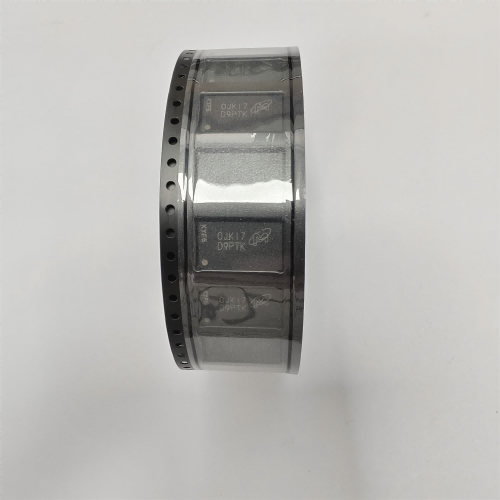
LT3789EUFD#TRPBF
Brand: Analog Devices
Analog Devices LT3789EUFD#TRPBF is a analog & mixed-signal component designed for Precision Instrumentation and related applications. In stock at Superb Automation — request a quote for competitive pricing and fast delivery.
Product Specifications
LT3789EUFD#TRPBF
Analog Devices — Analog & Mixed-Signal ICs
Product Overview
The LT3789EUFD#TRPBF from Analog Devices is a high-performance analog / mixed-signal IC providing precision signal acquisition, conversion, and conditioning. Analog Devices (ADI) is a world leader in high-performance analog, mixed-signal, and DSP ICs for instrumentation, healthcare, automotive, and communications.
Superb Automation partners with leading brands including Qorvo, TI, ADI, XILINX, NVIDIA, Intel, ST, MACOM, Renesas, and Coilcraft to provide complete BOM and supply-chain solutions.
Key Features
- High-resolution data conversion with excellent SNR and THD
- Wide dynamic range and high linearity across operating conditions
- Integrated voltage reference with low temperature drift
- Flexible digital interface — SPI, I2C, or parallel options
- Industrial/automotive temperature range with guaranteed specs
- Low power consumption with power-down modes
Key Specifications
| Resolution | bits |
| Channels | — |
| Sample Rate | kSPS |
| Interface | — |
| Supply Voltage | V |
| Operating Temp | °C |
| Package | — |
| INL | LSB |
| SNR | dB |
| THD | dB |
Applications
Precision Instrumentation
Industrial Process Control
Medical Imaging & Diagnostics
Automotive Sensor Interfaces
Communications Infrastructure
Test & Measurement
Request Quote — In Stock, 100% New & Original, Full Warranty
LTC3789EUFD#TRPBF: the E grade four switch buck boost on reel
LTC3789EUFD#TRPBF is the E grade of the same four switch controller in the 4 mm by 5 mm QFN, on tape and reel. It is the version to specify when the product is a rack unit or a bench instrument that never starts below 0 C: the guarantee covers 0 C to 85 C, the rest of the range is assured by characterisation, and the reference window is narrower than the industrial grade.
Published values
| Parameter | Value |
|---|---|
| Grade | E, guaranteed from 0 C to 85 C, wider range assured by characterisation |
| Reference at 25 C | 0.8 V, 0.792 V to 0.808 V |
| Reference over 0 to 85 C | a 16 mV window, 2 percent |
| Output window at 12 V | 240 mV |
| Input voltage | 4 V to 38 V |
| Output voltage | 0.8 V to 38 V |
| Peak efficiency | 98 percent |
| Switching frequency | 200 kHz to 600 kHz |
| Power good | plus or minus 10 percent, 20 us mask |
| Thermal resistance | 34 C/W junction to ambient |
| Packing | tape and reel |
| Isolation of the output in shutdown | output disconnected from the input |
| Start up | true soft start, no reverse current |
| Package | 28-lead 4 mm by 5 mm QFN |
What the narrower reference window is worth
A 16 mV window around 0.8 V is 2 percent, which is 240 mV at a 12 V output. The industrial grade publishes 24 mV, which is 360 mV at the same output. On a 12 V rail that feeds a motor driver the difference is irrelevant; on a rail that feeds an ADC reference or a sensor bridge it is the whole error budget.
The window also tells a buyer where the money went. A part tested over 0 C to 85 C is cheaper than one tested to 125 C, and the tighter window is a by product of the narrower test range rather than a better silicon.
The crossover is the reason to pay for four switches
A telecom rack holds a 12 V bus that sags to 10 V on a battery event and rises to 14 V on charge. A buck regulator drops out at 10 V and passes the sag through; a boost regulator cannot start into a 14 V input without a bypass path. The four switch stage covers both ends with one inductor and one compensation network.
The efficiency curve is flat through the crossover because the inductor current simply reverses direction, and the published 98 percent peak belongs to that region. At 60 W the difference between 95 percent and 98 percent is 3.2 W against 1.2 W of loss, which is the difference between a heatsink and no heatsink in a 1U chassis.
Where the 90 percent boost ceiling bites
4 V in and 38 V out is 89.5 percent duty, half a point below the published ceiling. That means the part can do it only with an input at the top of its tolerance and no allowance for switch drop, so a specification that starts at 4 V is a specification with no margin.
The usual fix is to raise the minimum input to 6 V or to split the conversion into two stages. Either is cheaper than a controller that cannot reach the duty the arithmetic asks for at the bottom of the battery curve.
When an order code in this family cannot be found, component obsolescence management lists what else does the same job, the power management cross reference covers what to check before a part is dropped into an existing board, and OEM procurement is the route we take on a live shortage.
Two questions buyers ask
Is the E grade unusable below 0 C? It is usable; it is not guaranteed by test below 0 C. The data sheet says the wider range is assured by characterisation, which is a documented engineering statement rather than a test limit, and that distinction matters in a qualification file.
Why does the order code say UFD? UFD is the vendor package code for the 28-lead 4 mm by 5 mm QFN. GN is the narrow SSOP. Both are offered in E and I grades, and only the QFN has the 34 C/W thermal number.