


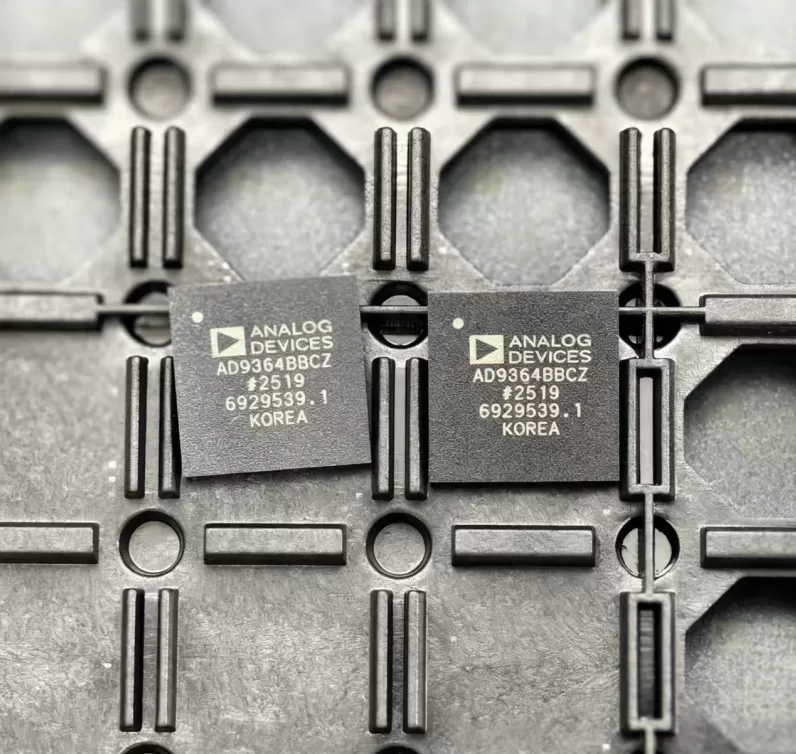

LT3088EST#TRPBF
Brand: Analog Devices
Analog Devices LT3088EST#TRPBF is a analog & mixed-signal component designed for Precision Instrumentation and related applications. In stock at Superb Automation — request a quote for competitive pricing and fast delivery.
Product Specifications
LT3088EST#TRPBF
Analog Devices — Analog & Mixed-Signal ICs
Product Overview
The LT3088EST#TRPBF from Analog Devices is a high-performance analog / mixed-signal IC providing precision signal acquisition, conversion, and conditioning. Analog Devices (ADI) is a world leader in high-performance analog, mixed-signal, and DSP ICs for instrumentation, healthcare, automotive, and communications.
Superb Automation partners with leading brands including Qorvo, TI, ADI, XILINX, NVIDIA, Intel, ST, MACOM, Renesas, and Coilcraft to provide complete BOM and supply-chain solutions.
Key Features
- High-resolution data conversion with excellent SNR and THD
- Wide dynamic range and high linearity across operating conditions
- Integrated voltage reference with low temperature drift
- Flexible digital interface — SPI, I2C, or parallel options
- Industrial/automotive temperature range with guaranteed specs
- Low power consumption with power-down modes
Key Specifications
| Resolution | bits |
| Channels | — |
| Sample Rate | kSPS |
| Interface | — |
| Supply Voltage | V |
| Operating Temp | °C |
| Package | — |
| INL | LSB |
| SNR | dB |
| THD | dB |
Applications
Precision Instrumentation
Industrial Process Control
Medical Imaging & Diagnostics
Automotive Sensor Interfaces
Communications Infrastructure
Test & Measurement
Request Quote — In Stock, 100% New & Original, Full Warranty
LT3088EST#TRPBF: extended grade 800 mA regulator, SOT-223, for volume builds
The LT3088EST#TRPBF is the extended grade of the 800 mA single resistor regulator in the 3-lead SOT-223, tape and reel, rated -40 C to 125 C. It shares the family table with the other grades: 1.2 V to 36 V input, output adjustable from 0 V to 34.5 V with one resistor, a 50 uA SET reference at 1 percent initial accuracy, 27 uV RMS noise, typical load regulation under 1 mV independent of the output setting, and stability with or without input and output capacitors. This is the code most often quoted for instrument and industrial builds that do not need the 150 C or -55 C windows.
Published values
| Parameter | Value |
|---|---|
| Input voltage | 1.2 V to 36 V |
| Output voltage | 0 V to 34.5 V, one resistor |
| Output current | 800 mA |
| SET pin current | 50 uA, 1 percent initial accuracy |
| Output noise | 27 uV RMS |
| Load regulation | under 1 mV typical |
| Line regulation | 0.001 percent per volt |
| Capacitors | stable with or without |
| Protection | reverse battery, reverse current, current limit, thermal limit |
| Package | 3-lead SOT-223, tape and reel |
| Temperature range | -40 C to 125 C |
One resistor, any output
The output is set by a resistor from SET to ground, with the value derived from the 50 uA reference. Because the reference is a current source and not a voltage reference, the regulation loop does not change gain when the resistor changes, so load regulation and noise stay the same whether the output is 0.9 V or 24 V. That is the property that makes this part attractive to a product family with several output variants: one device, one footprint, and a different resistor per variant. It also means a wrong resistor value produces a wrong rail rather than a broken part, which is a common first article failure that is easy to read from a voltage measurement.
Where the extended grade is enough
The E grade covers -40 C to 125 C, which handles outdoor cabinets in most climates, machine tools, instrumentation and telecom line cards. It is the volume grade, so it is the code with the widest distribution coverage and the shortest lead time. When the ambient inside the box climbs above 85 C the calculation has to be redone, and the H grade at 150 C is the answer. When the product has to start below -40 C the MP grade is the answer. Choosing E for everything and derating is a common and expensive mistake in the other direction, because a part run at 120 C junction for years ages faster than the data sheet's life curve suggests.
The capacitors the board already has
Because the part is stable with or without external capacitors, a build can keep the 10 uF ceramic that the switching stage already uses and skip the tantalum that older three terminal regulators demanded. That is a real cost line on a board with several rails, and it also removes a component with a limited life. The trade is high frequency rejection: with no output capacitor the loop depends on the load, so a rail that feeds a fast digital block still wants the ceramic even though the regulator does not need it.
Ordering notes
EST is the extended grade in the SOT-223 body, tape and reel. E, I, H and MP versions of the same body differ only in the specified window, and the DD-Pak and DFN bodies carry the same electrical table with a different thermal path. For a file that carries several of these rails, our power management cross reference keeps the codes together, the one stop BOM sourcing page covers consolidation, and the lead time page shows schedules for each grade.