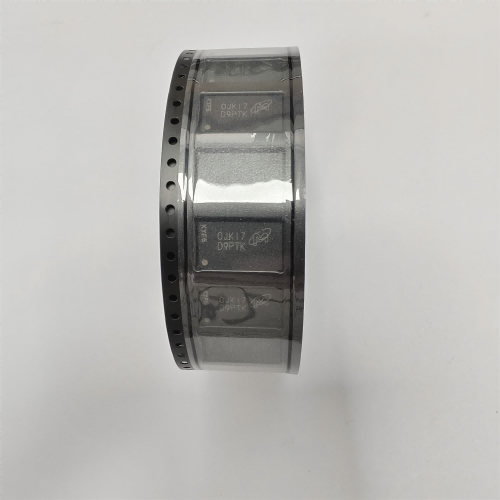
LT3082EST#TRPBF
Brand: Analog Devices
Analog Devices LT3082EST#TRPBF is a analog & mixed-signal component designed for Precision Instrumentation and related applications. In stock at Superb Automation — request a quote for competitive pricing and fast delivery.
Product Specifications
LT3082EST#TRPBF
Analog Devices — Analog & Mixed-Signal ICs
Product Overview
The LT3082EST#TRPBF from Analog Devices is a high-performance analog / mixed-signal IC providing precision signal acquisition, conversion, and conditioning. Analog Devices (ADI) is a world leader in high-performance analog, mixed-signal, and DSP ICs for instrumentation, healthcare, automotive, and communications.
Superb Automation partners with leading brands including Qorvo, TI, ADI, XILINX, NVIDIA, Intel, ST, MACOM, Renesas, and Coilcraft to provide complete BOM and supply-chain solutions.
Key Features
- High-resolution data conversion with excellent SNR and THD
- Wide dynamic range and high linearity across operating conditions
- Integrated voltage reference with low temperature drift
- Flexible digital interface — SPI, I2C, or parallel options
- Industrial/automotive temperature range with guaranteed specs
- Low power consumption with power-down modes
Key Specifications
| Resolution | bits |
| Channels | — |
| Sample Rate | kSPS |
| Interface | — |
| Supply Voltage | V |
| Operating Temp | °C |
| Package | — |
| INL | LSB |
| SNR | dB |
| THD | dB |
Applications
Precision Instrumentation
Industrial Process Control
Medical Imaging & Diagnostics
Automotive Sensor Interfaces
Communications Infrastructure
Test & Measurement
Request Quote — In Stock, 100% New & Original, Full Warranty
LT3082EST#TRPBF: a 200 mA post regulator for a noisy analog rail
The LT3082EST#TRPBF is the extended grade of the 200 mA regulator in the 3-lead SOT-223, on tape and reel and rated -40 C to 125 C. It is the version most often used as a post regulator: a switching converter provides the bulk of the voltage, and this part removes the switching residue before it reaches an analog load. The rejection figures are what make that work, 90 dB at 120 Hz, 75 dB at 10 kHz and 20 dB at 1 MHz, and the 33 uV RMS output noise is what is left after the filter.
Published values
| Parameter | Value |
|---|---|
| Input voltage | 1.2 V to 40 V |
| Output voltage | 0 V to 38.5 V, one resistor on SET |
| Output current | 200 mA |
| SET pin current | 10 uA, 1 percent |
| Ripple rejection | 90 dB at 120 Hz, 75 dB at 10 kHz, 20 dB at 1 MHz |
| Output noise | 33 uV RMS, 10 Hz to 100 kHz |
| Line regulation | Under 0.001 percent per volt typical |
| Thermal regulation | 0.003 percent per watt |
| Minimum output capacitor | 2.2 uF ceramic |
| Minimum load current | 0.5 mA |
| Thermal resistance | 20 C/W junction to ambient on 2500 square millimetres |
| Package and grade | 3-lead SOT-223, -40 C to 125 C, tape and reel |
How much rejection is needed at 1 MHz
A 1 MHz switching converter with 20 mV of output ripple feeding this part leaves 200 uV at the regulator output, because 20 dB is a factor of ten. On a 3.3 V rail that is 0.006 percent, which is below the noise floor of most 12 to 16 bit converters and below the 33 uV RMS broadband noise of the regulator itself. The arithmetic is worth doing in that order, because it tells you whether the linear stage is the limiting element or whether the switching frequency needs to be moved instead. At 300 kHz the rejection is higher, closer to 40 dB, and the same converter would leave 200 uV before the regulator's own noise is considered.
The three lead body and its thermal tab
The tab of the SOT-223 is the output, and with 2500 square millimetres of copper the junction to ambient figure is 20 C/W. In a post regulator application the input to output differential is small, often 300 to 600 mV, so at 200 mA the dissipation is 60 to 120 mW and the rise is 1 to 3 C. That is a part running far below its thermal limit, which is exactly the condition where a linear post regulator is a good idea: the efficiency loss is small and the noise improvement is large.
What the extended grade changes
On this family the E and I codes share the -40 C to 125 C window and the same electrical table, so the difference is test flow rather than performance. The MP code reaches -55 C to 125 C and is only offered in this package. For a product sold into a market that specifies -40 C, the E grade is sufficient and is usually the cheaper line item; the MP code exists for equipment that must start at -55 C, which is a different qualification entirely.
Order code and stock
EST is the extended grade SOT-223 on tape and reel, IST the industrial grade of the same body, MPST the -55 C version, and the 8-lead DFN and SOT-23 bodies cover the smaller footprints. All four share the 10 uA SET current and the 2.2 uF output requirement, so the passive parts do not change. The power management cross reference maps the bodies, the lead time page carries the SOT-223 schedule, and the one stop BOM page covers ordering the regulator with its passives on one line.