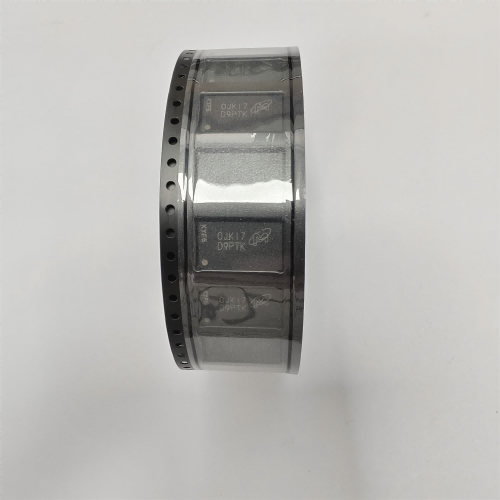
LT1790BCS6-2.048#TRPBF
Brand: Analog Devices
Analog Devices LT1790BCS6-2.048#TRPBF is a analog & mixed-signal component designed for Precision Instrumentation and related applications. In stock at Superb Automation — request a quote for competitive pricing and fast delivery.
Product Specifications
LT1790BCS6-2.048#TRPBF
Analog Devices — Analog & Mixed-Signal ICs
Product Overview
The LT1790BCS6-2.048#TRPBF from Analog Devices is a high-performance analog / mixed-signal IC providing precision signal acquisition, conversion, and conditioning. Analog Devices (ADI) is a world leader in high-performance analog, mixed-signal, and DSP ICs for instrumentation, healthcare, automotive, and communications.
Superb Automation partners with leading brands including Qorvo, TI, ADI, XILINX, NVIDIA, Intel, ST, MACOM, Renesas, and Coilcraft to provide complete BOM and supply-chain solutions.
Key Features
- High-resolution data conversion with excellent SNR and THD
- Wide dynamic range and high linearity across operating conditions
- Integrated voltage reference with low temperature drift
- Flexible digital interface — SPI, I2C, or parallel options
- Industrial/automotive temperature range with guaranteed specs
- Low power consumption with power-down modes
Key Specifications
| Resolution | bits |
| Channels | — |
| Sample Rate | kSPS |
| Interface | — |
| Supply Voltage | V |
| Operating Temp | °C |
| Package | — |
| INL | LSB |
| SNR | dB |
| THD | dB |
Applications
Precision Instrumentation
Industrial Process Control
Medical Imaging & Diagnostics
Automotive Sensor Interfaces
Communications Infrastructure
Test & Measurement
LT1790BCS6-2.048#TRPBF: the binary reference whose 12 bit code is exactly 500 uV
What this order code is
LT1790BCS6-2.048#TRPBF is the 2.048 V member of the LT1790 series in the 6-lead SOT-23 body, B accuracy grade, tape and reel, lead free. It is the same die and the same 60 uA supply current, 18 V ceiling and sinking output as the rest of the family, with a trimmed 2.048 V output instead of 1.25 V.
2.048 V is not an arbitrary number. It is 2 to the power 11 millivolts, so a 12 bit converter referenced to it has a code size of exactly 500 uV, a 16 bit converter has 31.25 uV and an 18 bit converter has 7.81 uV. Any arithmetic done by hand, by a calibration rig or by firmware in fixed point stays exact, and that is the practical reason this option outsells the others in data acquisition work.
Parameters as published
| Item | Value |
|---|---|
| Output voltage | 2.048 V |
| Code size at 12 bit | 500 uV exactly |
| Code size at 16 bit | 31.25 uV exactly |
| Initial accuracy, B grade | 0.1 percent maximum |
| Drift, B grade | 25 ppm per degree C maximum |
| Thermal hysteresis | 40 ppm typical, -40 C to 85 C |
| Supply current | 60 uA maximum |
| Supply voltage | up to 18 V |
| Output current | sinks and sources |
| Guaranteed operating range | -40 C to 125 C, per the family table |
| Body | 6-lead SOT-23, 1 mm profile |
| Packing | tape and reel, lead free |
Numbers that decide the application
The initial error is 0.1 percent of 2.048 V, which is 2.048 mV, or 4.1 codes at 12 bits and 65.5 codes at 16 bits on the same full scale. Drift of 25 ppm per degree C over the full -40 to 125 C span is 4,125 ppm, which is 8.45 mV, 16.9 codes at 12 bits and 270 codes at 16 bits. The pattern is the same as everywhere in this family: the drift term is about four times the term the part is bought for, so a 2.048 V B grade reference is a 12 bit part across temperature and a 16 bit part at a controlled temperature.
Thermal hysteresis of 40 ppm typical is 82 uV on this output, which is 0.16 of a 12 bit code and 2.6 codes at 16 bits. That is small enough to ignore at 12 bits and large enough to matter in a 16 bit absolute measurement that is calibrated once and then power cycled. Hysteresis is a property of the die and the package stress, so it is not improved by a better grade letter: both A and B codes publish the same 40 ppm typical figure.
Because the part sinks as well as sources current, it can serve a converter whose reference pin needs to be pulled below ground for a bipolar range, within the small sink current the data sheet allows. The supply headroom is generous, up to 18 V, so a 2.048 V reference can sit on a 12 V or 15 V analog rail with a series resistor dropping the excess, at the cost of the 60 uA supply current and the drop across that resistor. The 60 uA maximum is 526 mAh over a year and matters only in a battery instrument, where the 1 mm package and the 60 uA together are the reason this family exists.
Where it fits and where it does not
It fits 12 bit and 16 bit data acquisition, a 4 to 20 mA transmitter, a bridge amplifier with a 2 V full scale, a comparator window and any circuit that wants a binary-friendly reference in a three terminal package. It does not fit a 4.096 V or 5 V converter input without gain, a load that draws more current than the reference can supply, or a 16 bit absolute measurement over the industrial range without calibration against a better reference.
Supply and second source questions
Buyers confuse this code with the 2.5 V option, which is a 2.500 V output and not a binary value, and with the 2.048 V A grade, which shares the voltage and differs in drift by a factor of 2.5. A substitute that offers 2.048 V at 50 ppm per degree C will meet a 12 bit requirement at 25 C and will not meet it at 85 C, where the drift term alone is 147 codes at 16 bits. Vendors that publish accuracy without a temperature range are publishing a 25 C number. The reference families with the same pinout and their grades are listed on the ADI part second source page.
Sourcing notes and next step
We quote the exact code, including the B and the temperature letter, because the same 2.048 V output ships in four combinations of grade and temperature range. Send the line items with quantities and the required date through the BOM shortage recovery page and we will answer with availability. The wider converter and reference list sits on the analog and mixed signal IC page.
Request Quote — In Stock, 100% New & Original, Full Warranty