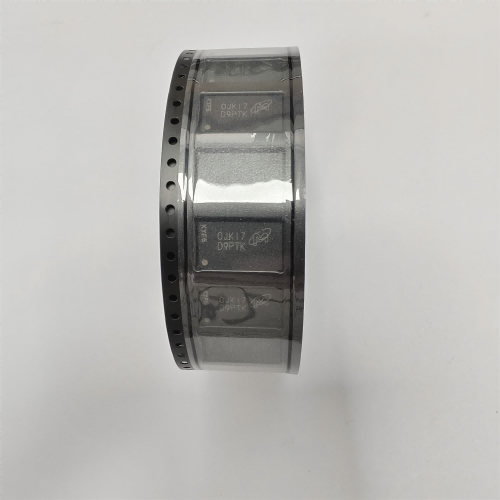
LT1413S8#TRPBF
Brand: Analog Devices
Analog Devices LT1413S8#TRPBF is a analog & mixed-signal component designed for Precision Instrumentation and related applications. In stock at Superb Automation — request a quote for competitive pricing and fast delivery.
Product Specifications
LT1413S8#TRPBF
Analog Devices — Analog & Mixed-Signal ICs
Product Overview
The LT1413S8#TRPBF from Analog Devices is a high-performance analog / mixed-signal IC providing precision signal acquisition, conversion, and conditioning. Analog Devices (ADI) is a world leader in high-performance analog, mixed-signal, and DSP ICs for instrumentation, healthcare, automotive, and communications.
Superb Automation partners with leading brands including Qorvo, TI, ADI, XILINX, NVIDIA, Intel, ST, MACOM, Renesas, and Coilcraft to provide complete BOM and supply-chain solutions.
Key Features
- High-resolution data conversion with excellent SNR and THD
- Wide dynamic range and high linearity across operating conditions
- Integrated voltage reference with low temperature drift
- Flexible digital interface — SPI, I2C, or parallel options
- Industrial/automotive temperature range with guaranteed specs
- Low power consumption with power-down modes
Key Specifications
| Resolution | bits |
| Channels | — |
| Sample Rate | kSPS |
| Interface | — |
| Supply Voltage | V |
| Operating Temp | °C |
| Package | — |
| INL | LSB |
| SNR | dB |
| THD | dB |
Applications
Precision Instrumentation
Industrial Process Control
Medical Imaging & Diagnostics
Automotive Sensor Interfaces
Communications Infrastructure
Test & Measurement
LT1413S8#TRPBF: A Single Supply Dual Op Amp Where the S8 Package Has Its Own Offset Limit
The LT1413S8#TRPBF is a dual precision operational amplifier intended for single 5 V supplies, with an input that goes below ground, an output that swings to ground while sinking current, no pull-down resistors needed and phase reversal protection. On a 5 V supply the offset voltage is 280 uV maximum, except in the S8 package where the data sheet gives 380 uV, the offset current is 0.8 nA maximum, supply current is 480 uA maximum per amplifier, drift is 0.5 uV per degree C, open loop gain is 1.4 million and the gain bandwidth product is 950 kHz. Low frequency noise is 0.55 uV peak to peak from 0.1 Hz to 10 Hz. The order code reads S8 for the 8-lead SO and TRPBF for tape and reel, lead free.
The package changes the offset limit
Two hundred and eighty microvolts is the headline, and the S8 column carries 380 uV, which is the package this order code ships in. At 5 V and 16 bits one LSB is 76 uV, so the offset is 5 LSB, and the drift over 125 degrees is 62.5 uV, 16 percent of the offset and under one LSB. A board that was specified against the 280 uV figure is working with a limit 36 percent wider than the one it assumed, which is the kind of difference that shows up in a yield report rather than on the bench.
| Function | Dual precision op amp for single supply operation |
| Offset voltage | 280 uV maximum, 380 uV maximum in the S8 package |
| Offset current | 0.8 nA maximum |
| Drift | 0.5 uV per degree C |
| Supply current | 480 uA maximum per amplifier, 4.8 mW for the pair at 5 V |
| Gain bandwidth | 950 kHz, open loop gain 1.4 million, 122.9 dB |
| Low frequency noise | 0.55 uV peak to peak, 0.1 Hz to 10 Hz |
| Input and output | Input below ground, output to ground sinking current |
Speed read against the gain it is used at
Nine hundred and fifty kilohertz of gain bandwidth at a gain of 100 leaves 9.5 kHz of closed loop bandwidth, and at a gain of 1000 it leaves 950 Hz. The part is for strain gauge bridges, active filters and instrumentation amplifiers built from two or three amplifiers, not for anything that has to settle quickly. The 0.55 uV peak to peak noise is 0.083 uV RMS, which is 0.001 LSB at 16 bits on a 5 V span, so noise is not the limitation: offset and drift are, and they are set by the package and the grade rather than by the circuit.
The supply current figure is worth reading per amplifier. Four hundred and eighty microamps for each of two amplifiers is 4.8 mW at 5 V, which is a low power part by the standards of a precision bipolar amplifier but not a micropower one. Where a battery product needs microamps rather than milliamps, the family offers the LT1078 at ten times lower supply current with about a 4.5 fold speed penalty, and that trade is stated by the vendor rather than left to the reader.
The single supply behaviour is the reason to choose it
An input that goes below ground and an output that reaches ground while sinking current means a single 5 V rail can handle signals that sit at zero, which is the normal case for a current sense resistor or a bridge with one end grounded. Without that, a negative supply or a rail splitting network is needed, and both add parts and error. The 1.4 million open loop gain keeps the gain error small enough that a two amplifier instrumentation stage can be built without trimming.
Two questions buyers ask
Is 380 uV really the limit for this order code?
Yes, the S8 column of the data sheet is the one that applies to the SO package, and the 280 uV figure belongs to the other packages. A specification written against the smaller number has to be rechecked before it is used for a purchase decision.
How much output current is available?
The vendor states more than 10 mA of output current at 330 uA of supply current as a typical result, and the guaranteed limits are in the electrical table. A load that draws more than a few milliamps belongs on a different part.
Two and three amplifier instrumentation stages
The classic instrumentation amplifier built from three operational amplifiers depends on the matching of the input pair rather than on resistor tolerance for its common mode rejection, and a 0.8 nA offset current is what keeps that rejection intact when the source impedances are not identical. Into 10 kohm the offset current produces 8 uV, and into 100 kohm it produces 80 uV, which is 21 percent of the 380 uV offset. Above about 50 kohm of source impedance the offset current rather than the offset voltage sets the error.
An open loop gain of 1.4 million at 5 V means the gain error of a closed loop stage at a gain of 100 is about 0.007 percent, which is small enough that a two amplifier stage needs no trimming. That, plus an input that goes below ground and an output that reaches ground while sinking current, is what makes a single 5 V rail enough for a bridge sensor front end that would otherwise need a negative supply.
Ordering and supply
The LT1413S8#TRPBF is the 8-lead SO, tape and reel code. The family also carries an A grade and a plastic DIP option, so the grade letter and the package suffix both have to be read from the order line rather than from a distributor summary.
We hold and source this family for production and repair quantities. Start from the family page for analog mixed signal ICs, check a proposed alternative against the amplifier cross reference, and if the driver is price rather than availability, the component cost reduction page covers what can be re-qualified without touching the board.
Request Quote — In Stock, 100% New & Original, Full Warranty