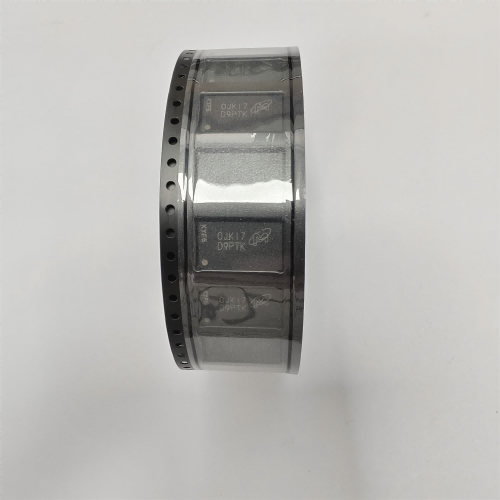
ADXL373BCCZ-RL7
Brand: Analog Devices
Analog Devices ADXL373BCCZ-RL7 is a analog & mixed-signal component designed for Precision Instrumentation and related applications. In stock at Superb Automation — request a quote for competitive pricing and fast delivery.
Product Specifications
ADXL373BCCZ-RL7
Analog Devices — Analog & Mixed-Signal ICs
Product Overview
The ADXL373BCCZ-RL7 from Analog Devices is a high-performance analog / mixed-signal IC providing precision signal acquisition, conversion, and conditioning. Analog Devices (ADI) is a world leader in high-performance analog, mixed-signal, and DSP ICs for instrumentation, healthcare, automotive, and communications.
Superb Automation partners with leading brands including Qorvo, TI, ADI, XILINX, NVIDIA, Intel, ST, MACOM, Renesas, and Coilcraft to provide complete BOM and supply-chain solutions.
Key Features
- High-resolution data conversion with excellent SNR and THD
- Wide dynamic range and high linearity across operating conditions
- Integrated voltage reference with low temperature drift
- Flexible digital interface — SPI, I2C, or parallel options
- Industrial/automotive temperature range with guaranteed specs
- Low power consumption with power-down modes
Key Specifications
| Resolution | bits |
| Channels | — |
| Sample Rate | kSPS |
| Interface | — |
| Supply Voltage | V |
| Operating Temp | °C |
| Package | — |
| INL | LSB |
| SNR | dB |
| THD | dB |
Applications
Precision Instrumentation
Industrial Process Control
Medical Imaging & Diagnostics
Automotive Sensor Interfaces
Communications Infrastructure
Test & Measurement
ADXL373BCCZ-RL7: 400 g on a coin cell
The ADXL373BCCZ-RL7 is a three-axis MEMS accelerometer with a plus or minus 400 g range, a 12-bit output at 200 mg per LSB, and a supply range of 1.6 V to 3.5 V, in a 3.00 mm by 3.25 mm by 1.06 mm LGA. It draws 19 uA at a 2560 Hz output data rate on a 2.5 V supply, 1.4 uA in the wake-up mode with an adjustable threshold, and 0.1 uA in standby. Bandwidth is selectable from 160 Hz to 2560 Hz with a four-pole antialiasing filter, the oversampling ratio is selectable, a high-pass filter is adjustable, and the interface is SPI or I2C. It covers -40 C to +105 C. It is listed in the analog and mixed-signal IC line card with the rest of the sensor range.
Four hundred g at 200 mg per code
Twelve bits over a plus or minus 400 g range means 4096 codes across 800 g, which is 200 mg per code and about 2000 codes to reach the full scale:
| Quantity | Figure | Consequence |
|---|---|---|
| Full scale | plus or minus 400 g | 2000 codes of the 4096 available |
| Resolution | 200 mg per LSB | the whole 800 g span is 819 g of code range |
| Output data rate | up to 2560 Hz | 390.6 us per sample |
| A 1 ms impact | 2.6 samples captured | |
| Supply current at 2560 Hz | 19 uA at 2.5 V | 166 mAh over a year |
| Wake-up mode current | 1.4 uA | 12.3 mAh over a year |
| Standby current | 0.1 uA | 876 uAh over a year |
The sample rate is the number that decides whether an impact is captured. At 2560 Hz a one millisecond event produces 2.6 samples, so the peak of a short shock can fall between samples and read low. The antialiasing filter is four pole at that rate, which is what stops a high frequency shock from folding into a low frequency reading, and the oversampling ratio trades noise against rate.
Two operating modes for one battery
Nineteen microamps is low enough for a coin cell, but the more useful number is 1.4 uA: the wake-up mode runs an activity threshold and wakes the host only when something exceeds it. A condition monitor that watches a machine and records impacts can spend most of its life at 1.4 uA and switch to 19 uA only around an event, which turns a one year battery into several years.
The 200 mg per code resolution is coarse for a tilt or a vibration measurement, and that is the trade the plus or minus 400 g range makes. The same line card carries parts with a 15 g range and microgram resolution for the measurements that this part cannot resolve.
Selection notes
- The adjustable high-pass filter removes the dc gravity term, which is what allows the part to see an impact on a structure that is also tilted.
- Activity and inactivity detection both run without the host, so a product can log a machine that starts and stops on its own schedule.
- SPI and I2C both work from 1.6 V, so the part can sit on a 1.8 V logic bus as well as a 3.3 V one.
- The LGA is 1.06 mm tall, which allows it to be mounted on the reverse of a board that has other components on the front.
Questions buyers ask
Is 200 mg per code enough to see a vibration? For a machine vibration that is tens of g, yes. For a tilt or a low level vibration it is not, and a 15 g part with microgram resolution is the appropriate choice.
Will it catch a short impact? At 2560 Hz the sample interval is 390.6 us, so a one millisecond impact is two or three samples. A shorter event can be missed or read low, which is why the antialiasing filter and the rate have to match the mechanical event.
What should a quote request include? The order code, the supply, the interface, the bandwidth and the expected impact level. Send the BOM line to the medical and instrumentation range when the product is a monitor with a calibration requirement, and to the lead time desk when the build date is tied to the sensor reel.
Request Quote — In Stock, 100% New & Original, Full Warranty