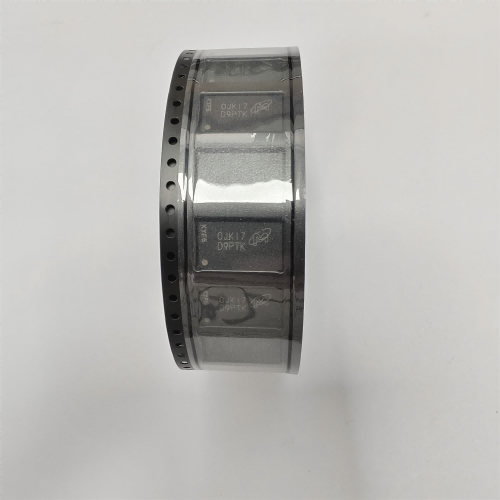
ADUM3210TRZ-RL7
Brand: Analog Devices
Analog Devices ADUM3210TRZ-RL7 is a analog & mixed-signal component designed for Precision Instrumentation and related applications. In stock at Superb Automation — request a quote for competitive pricing and fast delivery.
Product Specifications
ADUM3210TRZ-RL7
Analog Devices — Analog & Mixed-Signal ICs
Product Overview
The ADUM3210TRZ-RL7 from Analog Devices is a high-performance analog / mixed-signal IC providing precision signal acquisition, conversion, and conditioning. Analog Devices (ADI) is a world leader in high-performance analog, mixed-signal, and DSP ICs for instrumentation, healthcare, automotive, and communications.
Superb Automation partners with leading brands including Qorvo, TI, ADI, XILINX, NVIDIA, Intel, ST, MACOM, Renesas, and Coilcraft to provide complete BOM and supply-chain solutions.
Key Features
- High-resolution data conversion with excellent SNR and THD
- Wide dynamic range and high linearity across operating conditions
- Integrated voltage reference with low temperature drift
- Flexible digital interface — SPI, I2C, or parallel options
- Industrial/automotive temperature range with guaranteed specs
- Low power consumption with power-down modes
Key Specifications
| Resolution | bits |
| Channels | — |
| Sample Rate | kSPS |
| Interface | — |
| Supply Voltage | V |
| Operating Temp | °C |
| Package | — |
| INL | LSB |
| SNR | dB |
| THD | dB |
Applications
Precision Instrumentation
Industrial Process Control
Medical Imaging & Diagnostics
Automotive Sensor Interfaces
Communications Infrastructure
Test & Measurement
ADUM3210TRZ-RL7: Two Isolated Channels at 25 Megabits per Second
What this part is
The ADuM3210 is a two channel digital isolator built on transformer coupling rather than on an LED and a photodiode. Both channels run in the same direction in this member of the pair, the output defaults to low when the input side is unpowered, and the part carries an enhanced system level electrostatic discharge rating against the IEC 61000-4 series for discharge, burst and surge. Because there is no light emitting diode, the current transfer ratio, the ageing and the temperature dependence that go with it are absent from the specification.
Each side can run at 3.3 V or 5 V independently, so the part also translates levels across the barrier. The data rate is direct current to 25 Mbps in non return to zero coding, the body is an 8 lead narrow small outline, and the temperature grade reaches 125 degrees C. An enhanced product version is available to the military temperature range of minus 55 to plus 125 degrees C with a controlled baseline, and the automotive grade is qualified for 125 degrees C operation.
Published figures that matter to a buyer
| Channels | 2, both in the same direction |
| Data rate | direct current to 25 Mbps, non return to zero |
| Default output | low |
| Supply each side | 3.3 V or 5 V, independently |
| Level translation | across the barrier, by the two supplies |
| System level discharge | enhanced, per IEC 61000-4 series |
| Temperature | up to 125 degrees C |
| Body | 8 lead narrow small outline |
| Power | one tenth to one sixth of an optocoupler at comparable rates |
| Enhanced version | minus 55 to plus 125 degrees C, controlled baseline |
Where the headline numbers stop
Twenty five megabits per second is a 40 nanosecond bit, and the propagation delay of the part has to be read against that bit rather than against the clock rate. A channel that runs at 25 Mbps has no room for a delay of more than a fraction of a bit in a closed loop, and the timing specifications in the data sheet, not the data rate, decide whether a serial bus will close timing at the far end.
The default output state is the specification that decides what happens at power up and at a brownout. This part defaults low; the ADuM3200 and ADuM3201 in the same family default high. On a motor drive or a relay driver that difference is the difference between a safe state and a pulse at power up, and it is the one field that a cross reference most often gets wrong because both parts look identical on a bill of materials.
The power claim of one tenth to one sixth of an optocoupler is a ratio at comparable data rates and it depends on the optocoupler. At low rates, where an optocoupler runs at a milliamp or two, the ratio narrows; at high rates, where the optocoupler needs a large drive current to switch fast, it widens. The internal oscillator of an isolator draws current whether or not data is moving, so an idle channel is not free.
Applications where it fits
- Isolated serial ports for RS485, RS232 and controller area network interfaces.
- Gate drive channels where the high side reference moves with the bridge.
- Industrial input modules and programmable logic controller IO.
- Medical and laboratory instruments that need a barrier between a patient circuit and the digital side.
- Military and aerospace harnesses, where the enhanced temperature version is the one to specify.
Two questions buyers ask
What is the difference between the ADuM3210 and the ADuM3211? The channel direction. The 3210 has both channels in the same direction and the 3211 has one in each direction, so a full duplex port needs the 3211 while a pair of unidirectional signals needs the 3210. Both have the same body and the same data rate.
Does the IEC rating replace a transient suppressor? No. The enhanced rating is a system level capability that depends on the board and the copper around the part, which the vendor states explicitly and covers in its application note on isolation and latch up. A port that faces a cable still needs its own protection, and the isolator rating is what survives after that protection has done its work.
Sourcing notes and next step
ADuM3210TRZ-RL7 is the tape and reel packing of the 8 lead narrow body in the 125 degrees C grade. The T in the code is the temperature grade field, and the enhanced and automotive versions are separate order codes with separate qualification data. The BOM shortage recovery page covers the route when an isolator is quoted long, the pin to pin cross reference page sets out what must match before another isolator is offered, and the analog and mixed signal IC family page lists the rest of the interface line.
Request Quote — In Stock, 100% New & Original, Full Warranty