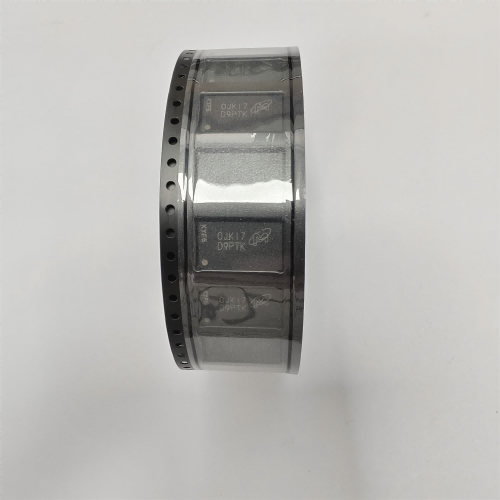
ADUCM361BCPZ128
Brand: Analog Devices
Analog Devices ADUCM361BCPZ128 is a analog & mixed-signal component designed for Instrumentation and related applications. In stock at Superb Automation — request a quote for competitive pricing and fast delivery.
Product Specifications
ADUCM361BCPZ128
Analog Devices — Analog & Mixed-Signal ICs
Product Overview
The ADUCM361BCPZ128 from Analog Devices is a high-performance analog / mixed-signal IC providing precision signal acquisition, conversion, and conditioning. Analog Devices (ADI) is a world leader in high-performance analog, mixed-signal, and DSP ICs for instrumentation, healthcare, automotive, and communications.
Superb Automation partners with leading brands including Qorvo, TI, ADI, XILINX, NVIDIA, Intel, ST, MACOM, Renesas, and Coilcraft to provide complete BOM and supply-chain solutions.
Key Features
- High-resolution data conversion with excellent SNR and THD
- Wide dynamic range and high linearity across operating conditions
- Integrated voltage reference with low temperature drift
- Flexible digital interface — SPI, I2C, or parallel options
- Industrial/automotive temperature range with guaranteed specs
- Low power consumption with power-down modes
Key Specifications
| Resolution | bits |
| Channels | — |
| Sample Rate | kSPS |
| Interface | — |
| Supply Voltage | V |
| Operating Temp | °C |
| Package | — |
| INL | LSB |
| SNR | dB |
| THD | dB |
Applications
Precision Instrumentation
Industrial Process Control
Medical Imaging & Diagnostics
Automotive Sensor Interfaces
Communications Infrastructure
Test & Measurement
Request Quote — In Stock, 100% New & Original, Full Warranty
ADUCM361BCPZ128: One 24-Bit Converter, Not Two, and That Is the Whole Family Difference
The ADuCM360 and ADuCM361 are precision analogue microcontrollers with a Cortex-M3 core, 128 kB of flash, 8 kB of SRAM, programmable gain instrumentation front ends and sigma-delta converters, running from 1.8 V to 3.6 V. The difference between the two is in the number: the ADuCM360 has two 24-bit converters and the ADuCM361 has one. The BCPZ128 code here is the 361 with 128 kB of flash, so a board that needs the second converter channel for a second sensor has the wrong part even though every pin and every tool chain is identical. That single difference is worth checking before the board is frozen, because the two parts are priced and stocked separately.
Twenty four bits and how much of it survives
The converter noise is quoted as 52 nV rms at 3.53 Hz output rate and 200 nV rms at 50 Hz. With a 1.2 V reference and a gain of 128 the input span is about 18.75 mV, so a full 24-bit step is 1.12 nV and 52 nV of noise is 46 steps: about 18.5 effective bits at the slow rate, dropping to about 16.5 bits at 50 Hz. The 24-bit resolution is therefore real at the slow end and nominal at the fast end, which is normal for a sigma-delta front end and is why the output rate is a set-up parameter rather than a convenience.
| Item | Published value | What it decides |
|---|---|---|
| Converter count | One 24-bit ADC on the 361 | Channel count and per channel cost |
| Output rate | 3.5 Hz to 3.906 kHz | Resolution against update rate |
| Noise | 52 nV rms at 3.53 Hz | About 18.5 effective bits at gain 128 |
| Gain range | 1 to 128 | Direct bridge and thermocouple connection |
| Power at 500 kHz core | 1.0 mA system | Loop powered and battery budgets |
| Power down | 4 uA with wake up timer | Duty cycled sensor nodes |
| Supply | 1.8 V to 3.6 V, analogue to digital within 0.3 V | Rail sequencing and level shifting |
Rejection of both mains frequencies at once
The converter rejects 50 Hz and 60 Hz simultaneously, which is a rare and useful property: a product built for one market and shipped to another does not need a different output rate. At 50 samples per second in continuous conversion mode and at 16.67 samples per second in single conversion mode the rejection holds, so a load cell weighing scale can use either rate without picking up mains hum. Changing the rate away from those points loses the rejection, and that is the usual cause of a reading that wanders by a few counts in a cabinet full of contactors.
The analogue extras that remove parts
Two programmable excitation current sources drive a bridge or an RTD directly, a 12-bit voltage output converter with an NPN mode drives a 4 mA to 20 mA loop, and an internal 1.2 V reference removes the external reference from the bill. Six differential or twelve single ended inputs go through the multiplexer, and the four internal channels monitor the converter, the temperature sensor and the two supply rails. A 4 mA to 20 mA transmitter built around this part is essentially the microcontroller, a few passives and the loop transistor, which is why it appears in loop powered pressure and temperature products.
The precision analogue part in a long life product
The core runs at 290 uA per MHz and the whole system at 500 kHz with the converter running is about 1 mA, so the power budget leaves room for the loop current. The MCU cross reference page covers the family, the medical device components page covers the patient monitoring case, and lot checks follow the incoming inspection plan.