Microcontroller lines are retired more quietly than analogue parts. A family that has been in production for fifteen years is moved to end of life, a last time buy window closes, and the next build of a board that has not changed arrives at a sourcing desk with a part number that can no longer be bought. An MCU cross reference request usually arrives at that moment, with a production slot already booked.
The first answer people expect is a pin compatible part from the same family. That is right perhaps half the time; the other half hides a difference in the peripheral mapping, the memory map, the clock tree or the boot behaviour, and it appears when the first board comes back from test.
Where MCU cross references fail
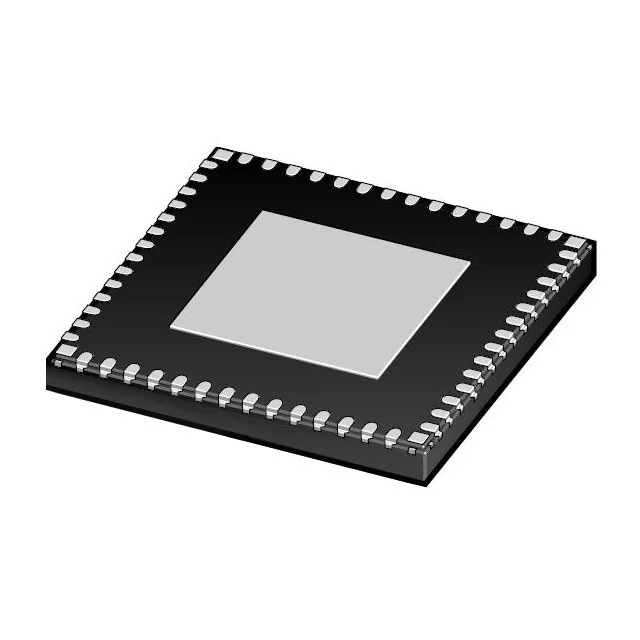
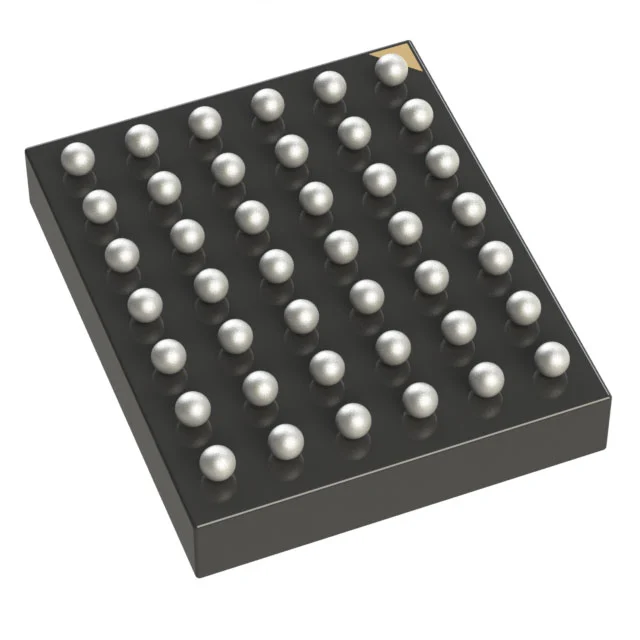
The package is checked first and it is the easiest item to get right, which is why it creates false confidence. Two parts can share a 64 pin LQFP body and still differ in which pin carries the crystal, where the boot strap sits, and which pins are shared with the debug port.
The second failure is memory. Flash and RAM are quoted in the summary, but what matters is how the memory is organised: sector size for erase, the location of the option bytes, and whether the part keeps a separate data flash area. Code that erases a page in the middle of a running control loop notices a larger sector immediately.
The third is timing. The clock tree, the PLL ranges, the maximum frequency at a given supply voltage and the accuracy of the internal oscillator decide whether the existing crystal and the existing timing loops still work. A replacement that needs a different crystal is a board change, not a component change.
The fourth is the peripheral set, and it is where most schedules are lost. A CAN controller that moves to another pin group, an ADC that loses a channel, a UART that shares a pin with the boot loader, a comparator that disappears from the analogue block: each of these is a small change on paper and a new test plan in practice.
The parameters that decide an MCU cross reference
| Parameter | Why it decides the outcome | What a weak comparison looks like |
|---|---|---|
| Core and maximum clock | Sets the headroom the existing loops and interrupt loads were tuned around | Same core name quoted, maximum frequency at the board supply not compared |
| Flash and RAM organisation | Sector size, option bytes and data flash decide the erase strategy | Same capacity, different sector map, a page erase reaches live data |
| Pinout and package | Pin function, boot straps and debug pins decide whether the board can be reused | Same body size, pin function table not read line by line |
| Supply and IO levels | Rail range, IO thresholds and five volt tolerance decide the interface | Values matched, IO tolerance different from the parts already on the board |
| Analogue peripherals | ADC channels, resolution, reference and sampling time decide the sensing path | Channel count matched, reference and sampling time not compared |
| Communication peripherals | CAN, USART, SPI, I2C, USB and Ethernet decide the protocol side | Count matched, one block moved to a pin that is already used |
| Timers and PWM | Timer width, dead time and capture inputs decide motor and power control | Timer count matched, dead time resolution not compared |
| Boot, debug and protection | Boot mode, readout protection and watchdog behaviour decide start up | Boot mode assumed identical, start up fault appears in the field |
| Grade and longevity | Temperature grade, screening and remaining production life decide the risk | Commercial grade offered where the board runs hot |
How SUPERB PCBA handles an MCU change
Send the original part number, the board it sits on, the annual quantity and the peripheral list the board actually uses. The reply is a line by line comparison against the table above, with every difference marked as compatible, needs a check, or needs a board change, and with any point the datasheet leaves open returned as a question plus the condition that closes it.
Where the original is already end of life, the routes are collected in the obsolete part cross reference hub. Candidate families are listed under MCU and embedded processors and DSP and microcontrollers, so the comparison starts from parts that are already supported rather than from a search engine. Where a candidate is pin compatible on paper, the procedure in pin to pin cross reference confirms the pin map before anything is ordered.
Provenance comes before the sample. Reels are counted by X-ray, markings and package finish are inspected, and decapsulation is used where the risk justifies it. Verified lots carry a 730 day warranty, and a substitution only enters the BOM after written approval from your side.
SUPERB Assembly then proves the change on hardware: first article inspection against released data, fine pitch placement down to 01005, 3D SPI before reflow and 3D AOI after it, X-ray inspection in 2D and CT mode with voiding below 5 percent, in circuit and functional test on fixtures approved by your team, under IPC-A-610 Class 2 and Class 3, IPC-7095 for area array work, ISO 9001, and ISO 13485 for medical programmes. Boards in the same build are supported from 500 MHz to 77 GHz with lines down to 0.05/0.05 mm, impedance held to plus or minus 5 percent and to plus or minus 2 percent where the circuit needs it, and up to 68 layers.
SUPERB Tech keeps the comparison, the approval and the test data against the build, so the next revision or the next audit starts from a record rather than from a memory.
What to send before a candidate is ordered
Three items make the difference between a guess and a comparison: the peripheral list the code uses, the crystal on the board, and the temperature the board sees inside the enclosure. With those, the candidate list can be short and honest.
MCU cross reference questions
Can an MCU from another brand drop into the same footprint?
Sometimes. Body size and pin count are only the first filter. The pin function table, the boot straps and the debug pins have to be read line by line before the board is reused.
Does a larger flash always make the replacement easier?
Not on its own. Erase sector size and option byte layout decide how the existing code behaves, and a larger device with a coarser sector map can make an in field update harder.
What if the replacement needs a different crystal?
Then it is a board change and it is quoted as one. The clock source, the load capacitors and the timing loops around the part are qualified together, and the change is tested rather than assumed.
Who approves a substitution?
Your engineering team, in writing. SUPERB supplies the comparison and the test evidence, and the decision and the released BOM stay with you.
Next step
Send the original microcontroller part number, the board reference, the annual quantity and the peripheral list. You get the comparison with each difference marked, the candidate list with availability, and the test plan needed to release the change.