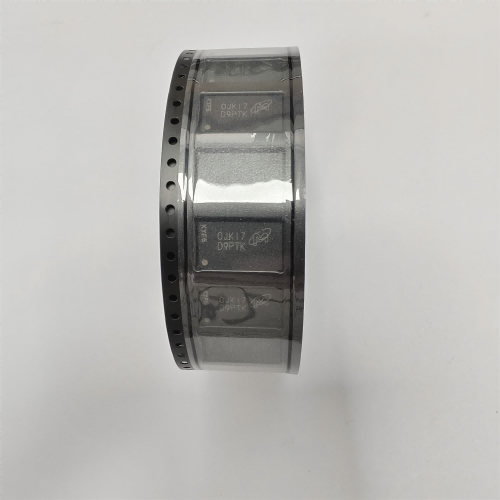
ADP3330ARTZ-2.5-R7
Brand: Analog Devices
Analog Devices ADP3330ARTZ-2.5-R7 is a analog & mixed-signal component designed for Precision Instrumentation and related applications. In stock at Superb Automation — request a quote for competitive pricing and fast delivery.
Product Specifications
ADP3330ARTZ-2.5-R7
Analog Devices — Analog & Mixed-Signal ICs
Product Overview
The ADP3330ARTZ-2.5-R7 from Analog Devices is a high-performance analog / mixed-signal IC providing precision signal acquisition, conversion, and conditioning. Analog Devices (ADI) is a world leader in high-performance analog, mixed-signal, and DSP ICs for instrumentation, healthcare, automotive, and communications.
Superb Automation partners with leading brands including Qorvo, TI, ADI, XILINX, NVIDIA, Intel, ST, MACOM, Renesas, and Coilcraft to provide complete BOM and supply-chain solutions.
Key Features
- High-resolution data conversion with excellent SNR and THD
- Wide dynamic range and high linearity across operating conditions
- Integrated voltage reference with low temperature drift
- Flexible digital interface — SPI, I2C, or parallel options
- Industrial/automotive temperature range with guaranteed specs
- Low power consumption with power-down modes
Key Specifications
| Resolution | bits |
| Channels | — |
| Sample Rate | kSPS |
| Interface | — |
| Supply Voltage | V |
| Operating Temp | °C |
| Package | — |
| INL | LSB |
| SNR | dB |
| THD | dB |
Applications
Precision Instrumentation
Industrial Process Control
Medical Imaging & Diagnostics
Automotive Sensor Interfaces
Communications Infrastructure
Test & Measurement
ADP3330ARTZ-2.5-R7: A 200 mA LDO That Stays Stable With Any Output Capacitor
The ADP3330ARTZ-2.5-R7 is a 200 mA low dropout regulator with a 2.5 V fixed output, 0.7 percent accuracy at room temperature and a dropout of 140 mV at full load. The feature that keeps it in production is the output capacitor: it is stable with any capacitor type including a 0.47 microfarad multilayer ceramic, so there is no tantalum bead to obsolesce and no minimum ESR window to hit. Buyers reach this page from instrumentation, isolated interfaces and analog rails that have to survive a supply that sags.
What the part contains
A PNP pass element with a trimmed reference, current and thermal limiting, and a shutdown pin that draws under 2 microamps. The input range is 2.9 V to 12 V, accuracy is plus and minus 0.7 percent at 25 C and plus and minus 1.4 percent over the full temperature range, and the output needs only 0.47 microfarads for stability. Noise is low enough for a converter reference buffer, which is why the vendor lists it in isolated RS-485 and data acquisition reference circuits. The package is a 6-lead thermally enhanced SOT-23 over -40 C to +85 C ambient.
Key parameters
| Parameter | Value |
|---|---|
| Output voltage | 2.5 V fixed |
| Output current | 200 mA |
| Accuracy at 25 C | Plus and minus 0.7 percent |
| Accuracy over temperature | Plus and minus 1.4 percent |
| Dropout at 200 mA | 140 mV typical |
| Minimum input at full load | 2.64 V |
| Output capacitor | 0.47 microfarads, any type |
| Shutdown current | Below 2 microamps |
| Input range | 2.9 V to 12 V |
| Package | 6-lead SOT-23, thermally enhanced |
| Temperature range | -40 C to +85 C ambient |
What the numbers mean on a board
A 140 mV dropout at 200 mA sets the minimum input at 2.64 V, so a 2.5 V rail can hold regulation from a 3.3 V supply that has sagged to 2.9 V. That 0.26 V of margin is what a battery powered instrument actually uses, and it is the reason to choose this part over a regulator with 300 mV of dropout when the input is a 3.3 V rail with 5 percent tolerance.
Accuracy of plus and minus 1.4 percent on 2.5 V is 35 mV over temperature. In a 12 bit system with a 2.5 V reference that is 57 codes of offset, which is acceptable when the regulator feeds a sensor bridge but not when it feeds the reference pin of a converter. In that case the regulator's drift adds directly to the conversion error and a dedicated reference is the correct choice.
The dissipation limit is the real constraint. Dropping 5 V to 2.5 V at 200 mA burns 0.5 W in a SOT-23, and the thermally enhanced lead frame only helps if the copper under it is large. The data sheet derating curve, not the 200 mA headline, decides how much current is available at 85 C ambient. For a 12 V to 2.5 V drop the part should not be used at 200 mA at all: at 9.5 V across it, even 50 mA is 0.48 W.
Where it is used
- Analog rails in isolated RS-485 and field bus interfaces
- Reference supply for data acquisition boards
- Battery instruments that need a 2.5 V rail from a sagging cell
- Post regulation after a switching converter where noise matters
- Sensor bridge excitation
Capacitor choice, noise and the thermal pad
Stability with any output capacitor does not mean any capacitor is equally good. A 0.47 microfarad ceramic has almost no ESR, and the regulator's loop is compensated for that, so adding a large tantalum in parallel creates a resonance between the two and can make the loop ring. If a bulk capacitor is needed for a load transient, keep it behind a small series resistor or accept a slower transient response. The 0.47 microfarad part should be an X5R or X7R close to the output pin, not a Y5V that loses most of its capacitance at 2.5 V bias.
Noise is low but not zero, and for a converter reference the regulator is not a substitute for a reference. Use it for the analog rail and a dedicated reference for the conversion. The thermally enhanced package needs copper: the lead frame tab is the only path out of a 0.5 W dissipation, so a pad of at least 100 square millimetres on the board, with vias if there is an inner plane, is what the derating curve assumes.
Sourcing notes and next step
The fixed output voltage is part of the order code, so a 2.5 V part cannot substitute for a 3.0 V or 3.3 V line even though the silicon is the same family. The 6-lead SOT-23 is a common package and stock is normally good, but the thermally enhanced version and the plain version are different body styles with different derating. Check the suffix before a build that runs close to the thermal limit.
Regulator and reference alternatives for an analog rail are collected on the amplifier cross reference page, and complete power and converter sets for a build are in BOM shortage recovery. The rest of the catalogue is on the analog and mixed signal family page. Send the input rail, the load current and the ambient temperature and we confirm stock and date code.
Request Quote — In Stock, 100% New & Original, Full Warranty