


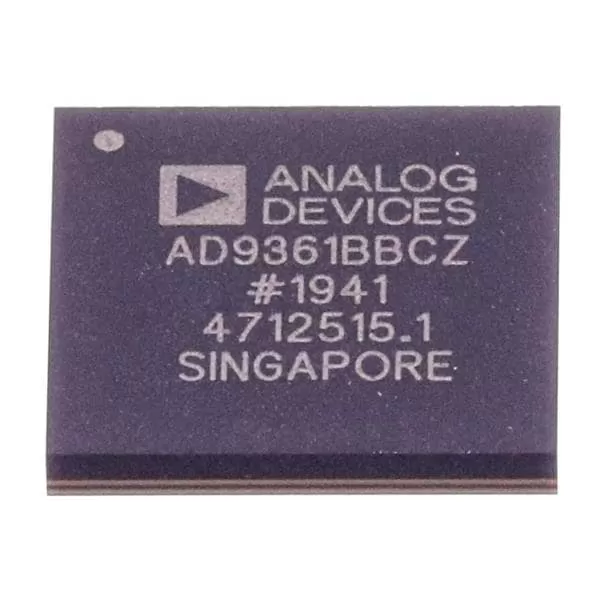

AD8657ARMZ-R7
Brand: Analog Devices
Analog Devices AD8657ARMZ-R7 is a analog & mixed-signal component designed for Precision Instrumentation and related applications. In stock at Superb Automation — request a quote for competitive pricing and fast delivery.
Product Specifications
AD8657ARMZ-R7
Analog Devices — Analog & Mixed-Signal ICs
Product Overview
The AD8657ARMZ-R7 from Analog Devices is a high-performance analog / mixed-signal IC providing precision signal acquisition, conversion, and conditioning. Analog Devices (ADI) is a world leader in high-performance analog, mixed-signal, and DSP ICs for instrumentation, healthcare, automotive, and communications.
Superb Automation partners with leading brands including Qorvo, TI, ADI, XILINX, NVIDIA, Intel, ST, MACOM, Renesas, and Coilcraft to provide complete BOM and supply-chain solutions.
Key Features
- High-resolution data conversion with excellent SNR and THD
- Wide dynamic range and high linearity across operating conditions
- Integrated voltage reference with low temperature drift
- Flexible digital interface — SPI, I2C, or parallel options
- Industrial/automotive temperature range with guaranteed specs
- Low power consumption with power-down modes
Key Specifications
| Resolution | bits |
| Channels | — |
| Sample Rate | kSPS |
| Interface | — |
| Supply Voltage | V |
| Operating Temp | °C |
| Package | — |
| INL | LSB |
| SNR | dB |
| THD | dB |
Applications
Precision Instrumentation
Industrial Process Control
Medical Imaging & Diagnostics
Automotive Sensor Interfaces
Communications Infrastructure
Test & Measurement
AD8657ARMZ-R7: a 22 microamp dual amplifier that works up to 18 volts
What this order code is
AD8657ARMZ-R7 is the dual member of the AD8657 and AD8659 pair, micropower precision amplifiers with rail to rail input and output that run from 2.7 V to 18 V single supply, or plus and minus 1.35 V to plus and minus 9 V split. The quiescent current is 18 microamps typical and 22 microamps maximum, the offset is 350 microvolts maximum, and the input bias current is 20 picoamps maximum. ARMZ is the 8-lead MSOP body and R7 is the reel.
The part uses the vendor trimming process to hold the offset without laser trimming, and the data sheet also claims high immunity to electromagnetic interference, which is a practical qualification in a motor drive cabinet rather than a laboratory one. The gain bandwidth product is 230 kHz at a gain of 100, the unity gain crossover is 230 kHz and the closed loop bandwidth at minus 3 dB is 305 kHz, so the amplifier is deliberately slow and stable rather than fast.
Parameters as published
| Item | Value |
|---|---|
| Supply range, single | 2.7 V to 18 V |
| Supply range, dual | plus or minus 1.35 V to plus or minus 9 V |
| Quiescent current | 18 microamps typical, 22 microamps maximum |
| Offset voltage | 350 microvolts maximum |
| Input bias current | 20 picoamps maximum |
| Gain bandwidth at a gain of 100 | 230 kHz |
| Unity gain crossover | 230 kHz |
| Closed loop bandwidth at minus 3 dB | 305 kHz |
| Input and output range | rail to rail |
| Stability | unity gain stable |
| Immunity | high electromagnetic interference immunity claimed |
| Package | 8-lead MSOP, 8-lead LFCSP alternative |
Numbers that decide the application
The point of the part is the product of supply voltage and current. 22 microamps at 18 V is 396 microwatts per amplifier, and a dual running from a 24 V industrial rail through a regulator still draws 192.7 mAh across a year at 18 V. A 1 microamp amplifier would be lower, and it would also be limited to 5.5 V, so the trade is a rail that goes where the signal goes against a current that is ten times lower.
Offset of 350 microvolts is 4.59 counts of a 16 bit converter on a 5 V range, so the part is not a 16 bit dc amplifier and the data sheet does not claim it is. Bias current of 20 picoamps across a 10 megohm source is 200 microvolts, which is the same size as the offset, so above about 10 megohms the bias term is the one that decides the error and a CMOS amplifier with lower bias at low voltage would not help because it could not take the rail.
Bandwidth is the term that has to be matched to the job. 230 kHz at a gain of 100 falls to 2.3 kHz of closed loop bandwidth, which suits a temperature or pressure loop and rules out anything that needs to follow a 100 kHz signal. Where the part is used as a current monitor or a 4 to 20 mA loop driver, that bandwidth is more than enough and the 18 V rail is what makes the loop possible at all.
Selection and cross reference notes
The comparison against a 5 V CMOS micropower amplifier is a rail comparison first: a part rated to 5.5 V cannot be substituted into an 18 V socket, and the protection network that would be needed to use it costs more current than the amplifier saves. Against a bipolar precision amplifier, this part wins on bias current and loses on noise, so a low impedance source favours the bipolar part and a high impedance sensor favours this one.
The 305 kHz closed loop bandwidth and the 230 kHz unity gain crossover are different measurements, and a substitution table that lists only the gain bandwidth product hides the difference. The dual and quad members have the same electrical core, so a board that needs four channels can use the quad code and keep the same per channel numbers, which is usually the cheaper route.
Where it fits
Portable operating systems, current monitors, 4 to 20 mA loop drivers, buffer and level shifting, multipole filters, remote and wireless sensors and low power transimpedance amplifiers are the applications named on the product page. The 18 V rail and the 20 picoamp bias together are what make the part useful in a 4 to 20 mA transmitter, where the loop supply is the only rail available and the sensor may be a high impedance bridge. Buyers who need the family view can start at the analog and mixed signal category page, and teams working on process control loops usually go through the medical and industrial components page.
Buying notes
ARMZ is the 8-lead MSOP body and R7 is the reel; the LFCSP body and the quad member carry different codes. There is no grade letter for offset on this family, so the body and the packing are the fields that vary between sellers, and the automotive qualification status of any substitute needs to be checked separately rather than assumed from the family name.
Sourcing notes and next step
The questions that come back are the rail voltage at the amplifier, the source impedance and the loop bandwidth the application actually needs. We quote the AD8657 codes against a bill of materials and confirm the body and reel against the line. Send the codes, quantities and required date through the BOM shortage recovery page and we will answer with availability and the cross reference where the exact body is short.
Request Quote — In Stock, 100% New & Original, Full Warranty