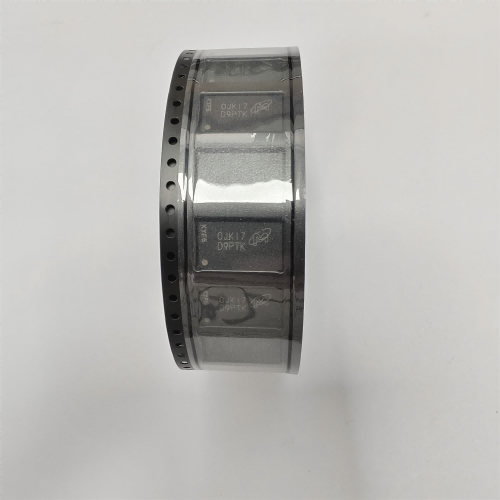
AD8628ARZ-REEL7
Brand: Analog Devices
Analog Devices AD8628ARZ-REEL7 is a analog & mixed-signal component designed for Precision Instrumentation and related applications. In stock at Superb Automation — request a quote for competitive pricing and fast delivery.
Product Specifications
AD8628ARZ-REEL7
Analog Devices — Analog & Mixed-Signal ICs
Product Overview
The AD8628ARZ-REEL7 from Analog Devices is a high-performance analog / mixed-signal IC providing precision signal acquisition, conversion, and conditioning. Analog Devices (ADI) is a world leader in high-performance analog, mixed-signal, and DSP ICs for instrumentation, healthcare, automotive, and communications.
Superb Automation partners with leading brands including Qorvo, TI, ADI, XILINX, NVIDIA, Intel, ST, MACOM, Renesas, and Coilcraft to provide complete BOM and supply-chain solutions.
Key Features
- High-resolution data conversion with excellent SNR and THD
- Wide dynamic range and high linearity across operating conditions
- Integrated voltage reference with low temperature drift
- Flexible digital interface — SPI, I2C, or parallel options
- Industrial/automotive temperature range with guaranteed specs
- Low power consumption with power-down modes
Key Specifications
| Resolution | bits |
| Channels | — |
| Sample Rate | kSPS |
| Interface | — |
| Supply Voltage | V |
| Operating Temp | °C |
| Package | — |
| INL | LSB |
| SNR | dB |
| THD | dB |
Applications
Precision Instrumentation
Industrial Process Control
Medical Imaging & Diagnostics
Automotive Sensor Interfaces
Communications Infrastructure
Test & Measurement
AD8628ARZ-REEL7: One Microvolt of Offset from a Zero Drift Amplifier
What this part is
The AD8628 is a single zero drift amplifier with a rail to rail input and output, a 1 microvolt offset, 0.002 microvolts per degree C of drift and 100 picoamps of maximum input bias current. It runs from 2.7 V to 5 V single supply, or plus and minus 1.35 V to plus and minus 2.5 V, and it needs no external capacitor for the auto zero loop, which is the detail that separates it from the chopper amplifiers that came before it and that needed a hold capacitor and brought switching noise with it.
Gain, common mode rejection and supply rejection are each 130 dB, the supply current is 1.0 mA, and the overload recovery time is 50 microseconds. Low frequency noise is 0.5 microvolts peak to peak from 0.1 Hz to 10 Hz, which for a zero drift part at this offset is the figure that matters in a direct current measurement. The ARZ suffix is the 8 lead small outline body, and the part is qualified for automotive applications.
Published figures that matter to a buyer
| Offset voltage | 1 microvolt |
| Offset drift | 0.002 microvolts per degree C |
| Low frequency noise | 0.5 microvolts peak to peak, 0.1 Hz to 10 Hz |
| Input bias current | 100 picoamps maximum |
| Gain, common mode and supply rejection | 130 dB each |
| Supply current | 1.0 mA |
| Overload recovery | 50 microseconds |
| Supply | 2.7 V to 5 V single, plus and minus 1.35 V to 2.5 V dual |
| Input and output | rail to rail |
| External components | none required |
| Temperature | minus 40 to plus 125 degrees C |
Where the headline numbers stop
One microvolt on a 5 V rail is 0.2 ppm, which is far below any converter that will follow it, so the offset stops being the limit and the input bias current becomes the one. One hundred picoamps through a 10 megohm source resistance is 1 mV, which is 1,000 times the offset: a high impedance sensor is limited by bias current and by the source impedance, not by the amplifier offset, and a part with a better offset would not help.
The drift of 0.002 microvolts per degree C over the full 165 degree span is 0.33 microvolts, which is a third of the offset and is why the offset holds over temperature rather than only at room. The low frequency noise of 0.5 microvolts peak to peak is half the offset, so in a direct current channel a single reading carries more noise than offset, and the offset is the part that can be calibrated out while the noise cannot.
At 1 mA from 5 V the part dissipates 5 mW, which is 25 times the power of a micropower amplifier and is the cost of the zero drift loop. A battery channel that measures once a minute should consider whether the amplifier can be powered down between measurements, because 5 mW continuous is more than the rest of a small signal chain.
Applications where it fits
- Pressure and position sensor amplifiers, where a slow zero walk is the failure mode.
- Strain gauge and load cell channels.
- Thermocouple and thermopile amplifiers, where the signal is tens of microvolts.
- Precision current sensing on a shunt.
- Photodiode amplifiers in a direct current light measurement.
- Medical instrumentation that cannot be re-zeroed in service.
Two questions buyers ask
What is the difference between this and the AD8629 or AD8630? They are the same amplifier in dual and quad form, so the difference is channel count and package. A single channel board cannot use the dual as a substitute without changing the footprint, and the offset and drift figures are common across the three.
Does overload recovery matter in a multiplexed channel? Yes, and it is the figure most often missed. Fifty microseconds is how long the amplifier takes to return after being driven out of range, and in a scanner that switches between a small signal and a large one, that time sits inside the settling budget of every channel change. A channel that assumes the amplifier is instant will show a first sample error after each switch.
Sourcing notes and next step
AD8628ARZ-REEL7 is the 8 lead small outline body on tape and reel; the same die is offered in a 5 lead TSOT and a 5 lead SOT-23, which are different order codes and different footprints. The amplifier cross reference page sets out the fields to compare across an operational amplifier substitution, the drop in replacement verification page covers the checks before a substitute is accepted, and the analog and mixed signal IC family page lists the rest of the amplifier line.
Request Quote — In Stock, 100% New & Original, Full Warranty