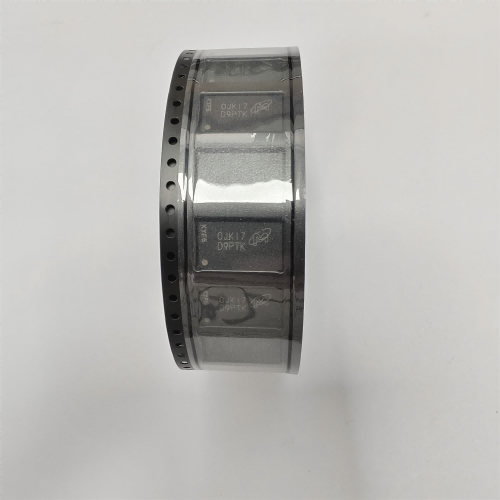
AD8616ARMZ-REEL
Brand: Analog Devices
Analog Devices AD8616ARMZ-REEL is a analog & mixed-signal component designed for Precision Instrumentation and related applications. In stock at Superb Automation — request a quote for competitive pricing and fast delivery.
Product Specifications
AD8616ARMZ-REEL
Analog Devices — Analog & Mixed-Signal ICs
Product Overview
The AD8616ARMZ-REEL from Analog Devices is a high-performance analog / mixed-signal IC providing precision signal acquisition, conversion, and conditioning. Analog Devices (ADI) is a world leader in high-performance analog, mixed-signal, and DSP ICs for instrumentation, healthcare, automotive, and communications.
Superb Automation partners with leading brands including Qorvo, TI, ADI, XILINX, NVIDIA, Intel, ST, MACOM, Renesas, and Coilcraft to provide complete BOM and supply-chain solutions.
Key Features
- High-resolution data conversion with excellent SNR and THD
- Wide dynamic range and high linearity across operating conditions
- Integrated voltage reference with low temperature drift
- Flexible digital interface — SPI, I2C, or parallel options
- Industrial/automotive temperature range with guaranteed specs
- Low power consumption with power-down modes
Key Specifications
| Resolution | bits |
| Channels | — |
| Sample Rate | kSPS |
| Interface | — |
| Supply Voltage | V |
| Operating Temp | °C |
| Package | — |
| INL | LSB |
| SNR | dB |
| THD | dB |
Applications
Precision Instrumentation
Industrial Process Control
Medical Imaging & Diagnostics
Automotive Sensor Interfaces
Communications Infrastructure
Test & Measurement
AD8616ARMZ-REEL: 20 MHz, 300 microvolts and 8 nanovolts, and what each of them costs
The AD8616 is a dual precision CMOS amplifier with rail to rail input and output, specified from 2.7 V to 5 V single supply, with 20 MHz of bandwidth, a 12 V per microsecond slew rate, 80 microvolts typical and 300 microvolts maximum offset, and 8 nanovolts per root hertz of voltage noise. Input bias current is low, the part is unity gain stable, it does not phase reverse, and it is the dual member of the AD8615 single and AD8618 quad. The order code reads RM for the 8-lead MSOP, Z for RoHS and REEL for the reel. It is specified over the industrial temperature range.
What the vendor page states
| Parameter | Value |
|---|---|
| Channels | two |
| Supply | 2.7 V to 5 V single |
| Bandwidth | 20 MHz |
| Slew rate | 12 V per microsecond |
| Offset | 80 microvolts typical, 300 microvolts maximum |
| Noise density | 8 nanovolts per root hertz |
| Input and output | rail to rail, no phase reversal, unity gain stable |
| Package | 8-lead MSOP, also SOIC and other bodies across the family |
Twenty megahertz at unity gain is 2 MHz at a gain of ten
The 20 MHz figure is measured at unity gain, so a stage closed at a gain of 10 has roughly 2 MHz and one at a gain of 100 has roughly 200 kHz. That is the number that decides whether the amplifier can sit in front of a 1 Msps converter with a multiplexer ahead of it, where the settling window is a few hundred nanoseconds, or whether it belongs in a slower filter. A part sold on 20 MHz and used at a gain of 50 is a 400 kHz amplifier, and the datasheet's bandwidth line does not say so.
Twelve volts per microsecond gives 1.91 MHz at 2 V peak to peak
The slew rate sets a second, harder limit: a 2 V peak to peak sine needs the output to move 1 V each way, and at 12 V per microsecond the ceiling is 1.91 MHz. At 5 V peak to peak the ceiling falls to 0.76 MHz. Whichever limit is lower wins, so a gain of one stage swinging 2 V peak to peak runs out of slew at 1.91 MHz, well before the 20 MHz small signal figure. This is the gap between the two numbers on the front page of every amplifier datasheet, and it is where most unexpected distortion comes from.
300 microvolts is a quarter of a 12-bit step and four 16-bit steps
On a 5 V range a 12-bit step is 1.22 mV, so the 300 microvolt maximum offset is 0.246 of a step and the 80 microvolt typical part is 0.066 of a step. On a 16-bit converter with a 76.3 microvolt step the same 300 microvolts is 3.9 steps, which is why a 16-bit system needs either a chopper amplifier or a calibration at the input of each channel. The offset is the parameter that decides which converter this part can drive, more than the bandwidth does.
8 nanovolts over 20 MHz is 45 microvolts rms, over 2 MHz it is 14
Integrated over the full 20 MHz the noise density gives 44.8 microvolts rms, which is 0.04 of a 12-bit step on a 5 V range; over a 2 MHz bandwidth it is 14.2 microvolts, which is 0.01 of a step. The filter after the amplifier therefore does as much for the noise as the amplifier choice does, and a note that specifies 8 nanovolts without limiting the bandwidth has not yet said what the converter will see. For a photodiode or a high impedance sensor the low bias current matters as much as the noise, since a bias current flowing through the source impedance appears as an offset that no amount of filtering removes.
One family, three channel counts
The single, dual and quad versions share the die and the specifications, so a channel count change does not reopen the accuracy analysis. The amplifier cross reference lists the parts that share this pinout, the BOM shortage recovery page covers substitution within the family, and the analog and mixed signal category page holds the rest of the precision amplifier range.
Request Quote — In Stock, 100% New & Original, Full Warranty