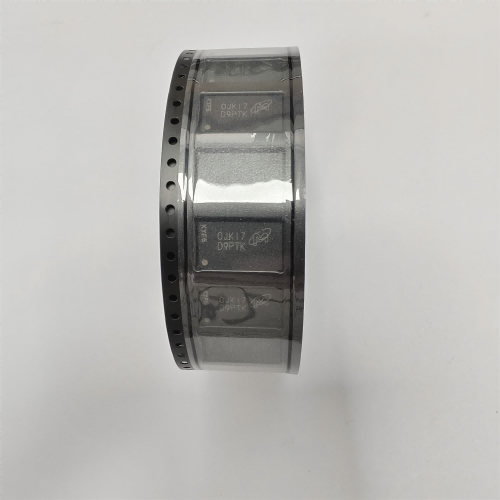
AD8613AUJZ-REEL7
Brand: Analog Devices
Analog Devices AD8613AUJZ-REEL7 is a analog & mixed-signal component designed for Precision Instrumentation and related applications. In stock at Superb Automation — request a quote for competitive pricing and fast delivery.
Product Specifications
AD8613AUJZ-REEL7
Analog Devices — Analog & Mixed-Signal ICs
Product Overview
The AD8613AUJZ-REEL7 from Analog Devices is a high-performance analog / mixed-signal IC providing precision signal acquisition, conversion, and conditioning. Analog Devices (ADI) is a world leader in high-performance analog, mixed-signal, and DSP ICs for instrumentation, healthcare, automotive, and communications.
Superb Automation partners with leading brands including Qorvo, TI, ADI, XILINX, NVIDIA, Intel, ST, MACOM, Renesas, and Coilcraft to provide complete BOM and supply-chain solutions.
Key Features
- High-resolution data conversion with excellent SNR and THD
- Wide dynamic range and high linearity across operating conditions
- Integrated voltage reference with low temperature drift
- Flexible digital interface — SPI, I2C, or parallel options
- Industrial/automotive temperature range with guaranteed specs
- Low power consumption with power-down modes
Key Specifications
| Resolution | bits |
| Channels | — |
| Sample Rate | kSPS |
| Interface | — |
| Supply Voltage | V |
| Operating Temp | °C |
| Package | — |
| INL | LSB |
| SNR | dB |
| THD | dB |
Applications
Precision Instrumentation
Industrial Process Control
Medical Imaging & Diagnostics
Automotive Sensor Interfaces
Communications Infrastructure
Test & Measurement
AD8613AUJZ-REEL7: a micropower rail to rail amplifier that draws 50 microamps
What this order code is
AD8613AUJZ-REEL7 is the single member of the AD8613, AD8617 and AD8619 family, micropower rail to rail input and output amplifiers with a maximum supply current of 50 microamps per amplifier over temperature. The supply range is 1.8 V to 5.5 V single ended or plus and minus 0.9 V to plus and minus 2.5 V, the input bias current is 1 pA maximum, the offset voltage is 2.2 mV maximum and the voltage noise is 22 nV per root hertz. The single is offered in a 5-lead SC70 and a 5-lead TSOT-23 body.
The family splits into single, dual and quad as AD8613, AD8617 and AD8619, and there are W versions of the dual and quad that are qualified for automotive applications. The input and output both swing to the rails and there is no phase reversal when the input is driven beyond them, which is what allows the part to sit directly on a sensor that is powered from the same rail.
Parameters as published
| Item | Value |
|---|---|
| Supply range | 1.8 V to 5.5 V single supply |
| Supply current | 50 microamps per amplifier maximum over temperature |
| Input offset voltage | 2.2 mV maximum |
| Input bias current | 1 pA maximum |
| Voltage noise | 22 nV per root hertz |
| Input and output range | rail to rail |
| Phase reversal | none on input overdrive |
| Stability | unity gain stable |
| Body, this code | 5-lead SC70 |
| Automotive versions | AD8617W and AD8619W |
| Temperature range | minus 40 C to plus 125 C |
Numbers that decide the application
The 50 microamp figure is what the family is bought for, and it is a maximum over temperature rather than a typical at 25 C. Fifty microamps for a year is 438 milliamp hours, so a single amplifier left powered on a 225 milliamp hour coin cell would take it flat in about six months, which means the part is micropower for a system that samples and sleeps rather than for an always on node. Three amplifiers at this current still fit inside the budget of a loop powered 4 to 20 mA transmitter, where the whole circuit has 4 mA to work with.
The offset and the noise have to be read together. The 2.2 mV maximum offset is 28.8 least significant bits of a 16 bit converter on a 5 V range, so this is not a precision part in absolute terms. The noise of 22 nV per root hertz over a 10 kHz band is 2.2 microvolts RMS, over 1 kHz it is 0.7 microvolts, and at a gain of 100 the 10 kHz figure becomes 220 microvolts at the output. The 1 pA bias current matters above about 10 Mohm, where it produces 10 microvolts, still small against the offset.
What the part buys at this current is the input range: both inputs reach both rails on a 1.8 V supply, and the output does the same, so a signal that spans the full rail can be buffered without a charge pump or a second supply. The absence of phase reversal means the amplifier recovers cleanly when a sensor is powered down and its output sags below the rail, which is a common failure mode in battery instruments.
Where it fits and where it does not
It fits battery powered instrumentation, multipole filters, current shunt sensing, ADC predrivers, DAC output buffers and level shifters in portable equipment, and any 1.8 V logic system that needs an analogue stage on the same rail. It does not fit a 16 bit absolute measurement without calibration, a signal path that needs more than about 100 kHz at unity gain, or a channel where 2.2 mV of offset would be a significant part of the full scale.
Supply and second source questions
The questions we get are about the maximum current at temperature, the input range at 1.8 V and the difference between the SC70 and the TSOT-23 bodies, which are both 5-lead and not interchangeable on a board. The automotive versions are separate order codes, and a W part is not the same device as the industrial part in the same body. The micropower parts in this class are listed on the amplifier cross reference page.
Sourcing notes and next step
We quote this code against the bill of materials and check the body, the packing and whether the line needs the automotive version, since the two are often confused in a search result. For a portable instrument we also ask what the sleep current of the whole board is, because an amplifier at 50 microamps is not the dominant term in a system that leaves a regulator and a reference powered. Send the line items, quantities and required date through the BOM shortage recovery page, and for medical or diagnostic channels that need the same part over a long production life, the medical device components page covers what we keep available.
Request Quote — In Stock, 100% New & Original, Full Warranty