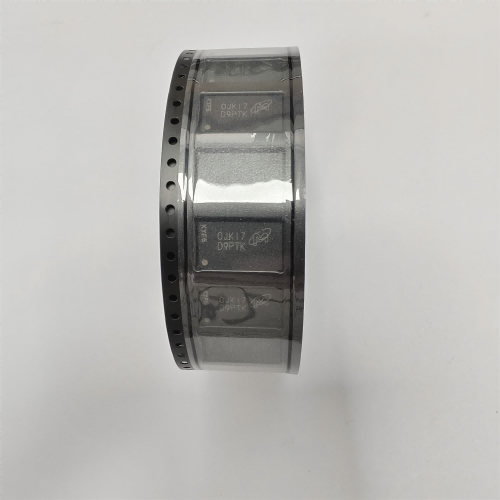
AD8421BRZ
Brand: Analog Devices
Analog Devices AD8421BRZ is a analog & mixed-signal component designed for Instrumentation and related applications. In stock at Superb Automation — request a quote for competitive pricing and fast delivery.
Product Specifications
AD8421BRZ
Analog Devices — Analog & Mixed-Signal ICs
Product Overview
The AD8421BRZ from Analog Devices is a high-performance analog / mixed-signal IC providing precision signal acquisition, conversion, and conditioning. Analog Devices (ADI) is a world leader in high-performance analog, mixed-signal, and DSP ICs for instrumentation, healthcare, automotive, and communications.
Superb Automation partners with leading brands including Qorvo, TI, ADI, XILINX, NVIDIA, Intel, ST, MACOM, Renesas, and Coilcraft to provide complete BOM and supply-chain solutions.
Key Features
- High-resolution data conversion with excellent SNR and THD
- Wide dynamic range and high linearity across operating conditions
- Integrated voltage reference with low temperature drift
- Flexible digital interface — SPI, I2C, or parallel options
- Industrial/automotive temperature range with guaranteed specs
- Low power consumption with power-down modes
Key Specifications
| Resolution | bits |
| Channels | — |
| Sample Rate | kSPS |
| Interface | — |
| Supply Voltage | V |
| Operating Temp | °C |
| Package | — |
| INL | LSB |
| SNR | dB |
| THD | dB |
Applications
Precision Instrumentation
Industrial Process Control
Medical Imaging & Diagnostics
Automotive Sensor Interfaces
Communications Infrastructure
Test & Measurement
Request Quote — In Stock, 100% New & Original, Full Warranty
AD8421BRZ: the B grade in-amp, and where the extra money goes
The AD8421BRZ is the B grade of the 3 nV instrumentation amplifier in the 8-lead SOIC. Noise, bandwidth, slew rate and supply current are identical to the A grade: 3.2 nV per root hertz, 10 MHz at unity gain, 35 V per microsecond, 2.3 mA maximum. What the grade buys is dc accuracy: 25 microvolts of input offset instead of 60, 45 instead of 86 over -40 to +85 degrees, 0.2 microvolts per degree of drift instead of 0.4, 250 microvolts of output offset instead of 350, and 94 dB of CMRR at unity gain instead of 86.
Published values
| Parameter | Value |
|---|---|
| Input offset | 25 microvolts maximum, 45 over -40 to +85 |
| Offset drift | 0.2 microvolts per degree maximum |
| Output offset | 250 microvolts maximum, 0.45 mV over temperature |
| CMRR | 94 dB minimum at a gain of 1, 134 dB at a gain of 100 |
| Noise | 3.2 nV per root hertz input, 60 nV per root hertz output |
| Bandwidth | 10 MHz at unity gain, 0.2 MHz at a gain of 1000 |
| Settling to 0.001 percent | 1 microsecond at a gain of 1, 6 at 1000 |
| Supply current | 2.3 mA maximum |
| Supply range | plus or minus 2.5 V to plus or minus 18 V |
| Input bias current | 0.5 nA maximum, 6 nA over temperature |
| Gain error | 0.01 percent at unity gain, 0.1 percent from 10 to 1000 |
| Gain nonlinearity | 1 ppm with a 2 kohm load at a gain of 1 |
| Package | 8-lead SOIC |
Twenty five microvolts and what it is worth
On a 10 V output swing at a gain of 1, 25 microvolts of offset is 2.5 ppm of full scale, which is 0.4 LSB of a 16-bit converter. The A grade at 60 microvolts is 1 LSB. Neither needs trimming for a 16-bit system, and both do for a 20-bit one. That is the honest boundary this grade sits on.
At a gain of 1000 the same input offset becomes 25 mV at the output, which is 1.5 percent of a 1.6 V span. No grade of this amplifier removes that, and a chopper stabilized part is the answer when the offset has to survive gain. The B grade is not a substitute for a zero drift topology; it is a tighter version of the same bipolar input stage.
Drift is the number that decides a grade after a month
0.2 microvolts per degree over a 125 degree industrial span is 25 microvolts, equal to the room temperature offset itself. The A grade at 0.4 adds 50 microvolts to its 60, so a unit that was inside specification on the bench is at 110 microvolts in a hot cabinet. A calibration performed at 25 degrees does not help, because the drift is not a fixed offset.
The 0.2 microvolts per degree belongs to the input offset. The output offset has its own 5 microvolts per degree, which at unity gain adds directly and at a gain of 100 is divided by the gain. A high gain channel therefore sees only the input drift, and a buffer sees both.
Pairs of channels and the CMRR that follows
94 dB at unity gain is 20 microvolts of input referred error per volt of common mode, so a 5 V common mode step becomes 100 microvolts, four times the offset. Above unity gain the CMRR rises quickly, 114 dB at 10 and 134 at 100, which is why an instrumentation amplifier is used at gain even when the signal is large enough not to need it.
The CMRR at 20 kHz is 80 dB at unity gain for both grades, a drop of 14 dB from the dc figure for the B grade. That is the source impedance imbalance acting through the input capacitance, so a matched pair of source resistances and a short, symmetric input path are worth more at high frequency than the grade premium.
Where a customer needs a second position on this part, the amplifier cross reference is the starting point, the ADC and DAC cross reference sets out the checks a substitution has to pass, and vendor consolidation is the short lead time route we quote against.
Two questions buyers ask about the B grade
Is the B grade available in the MSOP? The order table lists the B grade in the SOIC and LFCSP bodies. A board that needs the MSOP with B grade accuracy should confirm the order code before release.
Does the B grade cost much more? Typically 30 to 60 percent more than the A grade, and lead time is the bigger question in a shortage. The 20 microvolts of extra accuracy is the only thing bought.