


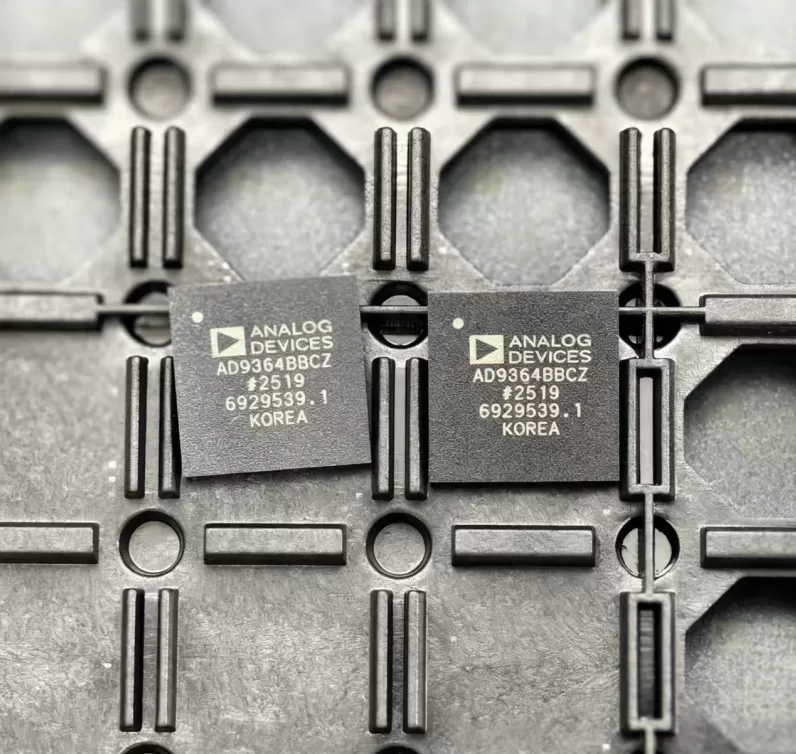

AD8276ARZ-R7
Brand: Analog Devices
Analog Devices AD8276ARZ-R7 is a analog & mixed-signal component designed for Precision Instrumentation and related applications. In stock at Superb Automation — request a quote for competitive pricing and fast delivery.
Product Specifications
AD8276ARZ-R7
Analog Devices — Analog & Mixed-Signal ICs
Product Overview
The AD8276ARZ-R7 from Analog Devices is a high-performance analog / mixed-signal IC providing precision signal acquisition, conversion, and conditioning. Analog Devices (ADI) is a world leader in high-performance analog, mixed-signal, and DSP ICs for instrumentation, healthcare, automotive, and communications.
Superb Automation partners with leading brands including Qorvo, TI, ADI, XILINX, NVIDIA, Intel, ST, MACOM, Renesas, and Coilcraft to provide complete BOM and supply-chain solutions.
Key Features
- High-resolution data conversion with excellent SNR and THD
- Wide dynamic range and high linearity across operating conditions
- Integrated voltage reference with low temperature drift
- Flexible digital interface — SPI, I2C, or parallel options
- Industrial/automotive temperature range with guaranteed specs
- Low power consumption with power-down modes
Key Specifications
| Resolution | bits |
| Channels | — |
| Sample Rate | kSPS |
| Interface | — |
| Supply Voltage | V |
| Operating Temp | °C |
| Package | — |
| INL | LSB |
| SNR | dB |
| THD | dB |
Applications
Precision Instrumentation
Industrial Process Control
Medical Imaging & Diagnostics
Automotive Sensor Interfaces
Communications Infrastructure
Test & Measurement
AD8276ARZ-R7: a unity gain difference amplifier that runs on 200 microamps
The AD8276 is a unity gain difference amplifier with laser trimmed on chip resistors, a maximum supply current of 200 microamps per channel and a common mode range that extends beyond the supply rails. The order code reads AR for the eight lead SOIC, Z for RoHS and R7 for the 750 unit reel. The vendor page quotes 550 kHz of bandwidth, 86 dB of common mode rejection from dc to 10 kHz, 1.1 volts per microsecond of slew rate and a supply range of 2.0 V to 36 V single or plus or minus 2 V to plus or minus 18 V dual. Its purpose is high side and low side current sensing plus voltage monitoring on rails far above the logic supply, where a discrete difference stage would need four matched resistors and a trim.
What the vendor page states
| Parameter | Value |
|---|---|
| Function | unity gain difference amplifier, on chip trimmed resistors |
| Supply current | 200 microamps maximum per channel |
| Power at 2.7 V | 0.54 mW |
| Bandwidth | 550 kHz |
| Common mode rejection | 86 dB minimum, dc to 10 kHz |
| System offset drift | plus or minus 2 microvolts per degree C maximum, B grade |
| Gain drift | 1 ppm per degree C maximum, B grade |
| Slew rate | 1.1 volts per microsecond |
| Supply | 2.0 V to 36 V single, plus or minus 2 V to plus or minus 18 V dual |
| Common mode range | extends to almost twice the supply voltage |
| Packages | 8-lead MSOP, 8-lead SOIC and die |
86 dB of rejection is 50 microvolts per volt
The minimum rejection figure converts to 50 microvolts of output error for every volt of common mode. On a 48 V rail that is 2.4 mV of error, which is small against a 100 mV shunt drop but large against a 10 mV one. That is the honest limit of the part: it is built for current sense signals of tens of millivolts, and the rejection, not the offset, sets the floor. The B grade improves the drift terms rather than the rejection, with a 2 microvolt per degree C system offset drift and 1 ppm per degree C gain drift, which over a 125 degree span is 125 ppm or 0.0125 percent of reading.
Power at both ends of the supply range
The 200 microamp maximum is quoted per channel, so the part draws 0.54 mW at 2.7 V and 7.2 mW at 36 V. That spread matters: the same part used as a battery rail monitor and as a 36 V industrial sense amplifier has a power budget that differs by a factor of thirteen, and only the second one needs a thermal thought. At the low end the 200 microamp figure is what makes the part usable in a coin cell instrument that has to keep watching its own supply.
A common mode range beyond the rails is the reason to choose it
The input common mode extends to almost double the supply voltage, so a 5 V supplied difference amplifier can monitor a 12 V or a 24 V rail directly, without a divider that would load the rail and without a second supply. The on chip input resistors and the ESD structure also give overvoltage protection to the amplifier inputs, which the vendor lists as a feature rather than an afterthought. In a high side current sense application this is what removes the usual external divider and its tolerance contribution.
550 kHz of bandwidth against a 1.1 volt per microsecond slew rate
The small signal bandwidth is 550 kHz, and the slew rate puts the full power bandwidth at 350 kHz for a 1 V peak to peak output. A current sense channel used for overcurrent protection rarely needs more than a few tens of kilohertz, so the part has headroom; a channel used to watch a switching converter's ripple needs the full band, and there the 550 kHz is the limit. Because the gain is fixed at unity, a small shunt signal has to be amplified after the difference stage, and that second stage, not this one, sets the noise floor of the chain.
Where the part lands
High side current sense, rail monitoring, a differential output instrumentation front end and portable battery equipment are the four applications the vendor lists, and all four share one requirement: a difference has to be taken without a precision resistor network. The amplifier cross reference lists the two channel AD8277 in the same family, the power management cross reference covers the monitors and references that sit next to it on a rail, and the analog and mixed signal category page holds the rest of the signal conditioning family.
Request Quote — In Stock, 100% New & Original, Full Warranty