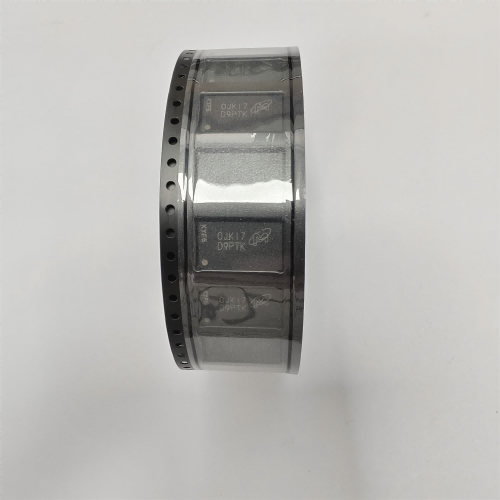
AD7980ARMZRL7
Brand: Analog Devices
Analog Devices AD7980ARMZRL7 is a analog & mixed-signal component designed for Instrumentation and related applications. In stock at Superb Automation — request a quote for competitive pricing and fast delivery.
Product Specifications
AD7980ARMZRL7
Analog Devices — Analog & Mixed-Signal ICs
Product Overview
The AD7980ARMZRL7 from Analog Devices is a high-performance analog / mixed-signal IC providing precision signal acquisition, conversion, and conditioning. Analog Devices (ADI) is a world leader in high-performance analog, mixed-signal, and DSP ICs for instrumentation, healthcare, automotive, and communications.
Superb Automation partners with leading brands including Qorvo, TI, ADI, XILINX, NVIDIA, Intel, ST, MACOM, Renesas, and Coilcraft to provide complete BOM and supply-chain solutions.
Key Features
- High-resolution data conversion with excellent SNR and THD
- Wide dynamic range and high linearity across operating conditions
- Integrated voltage reference with low temperature drift
- Flexible digital interface — SPI, I2C, or parallel options
- Industrial/automotive temperature range with guaranteed specs
- Low power consumption with power-down modes
Key Specifications
| Resolution | bits |
| Channels | — |
| Sample Rate | kSPS |
| Interface | — |
| Supply Voltage | V |
| Operating Temp | °C |
| Package | — |
| INL | LSB |
| SNR | dB |
| THD | dB |
Applications
Precision Instrumentation
Industrial Process Control
Medical Imaging & Diagnostics
Automotive Sensor Interfaces
Communications Infrastructure
Test & Measurement
Request Quote — In Stock, 100% New & Original, Full Warranty
AD7980ARMZRL7: 16-bit, 1 MSPS SAR converter in a 10-lead MSOP
The AD7980ARMZRL7 is a 16-bit successive approximation converter that samples at 1 MSPS from a 2.5 V supply, in the 10-lead MSOP package, tape and reel. The analog input is pseudo differential, 0 V to VREF, with the reference supplied externally anywhere from 2.5 V to 5 V and independent of the supply, so the same part covers a 2.5 V sensor front end and a 5 V industrial input range. The digital interface is SPI compatible, runs from a separate VIO pin at 1.8 V to 5 V, and supports daisy chaining several converters on one three wire bus.
Published values
| Parameter | Value |
|---|---|
| Resolution | 16 bit, no missing codes |
| Throughput | 1 MSPS, zero latency conversion |
| Analog input | Pseudo differential, 0 V to VREF |
| Reference range | 2.5 V to 5 V, external, independent of the supply |
| Integral non linearity | Plus or minus 0.6 LSB typical, plus or minus 1.25 LSB maximum |
| Signal to noise ratio | 91.5 dB at 10 kHz input, 5 V reference |
| Total harmonic distortion | Minus 114 dB at 10 kHz input |
| Dynamic range | 92 dB at 5 V reference |
| Power at 1 MSPS | 4 mW from VDD alone, 7 mW total |
| Power at 10 kSPS | 70 uW |
| Logic supply | 1.8 V, 2.5 V, 3 V or 5 V on VIO |
| Package and grade | 10-lead MSOP, minus 40 C to plus 125 C |
Power scales with throughput, which is the point
The 7 mW total at 1 MSPS falls to 70 uW at 10 kSPS because the part consumes power in proportion to conversions rather than to time. That behaviour is what makes a single converter usable across a product family: the same order code runs a fast acquisition burst in a benchtop instrument and a slow multi channel scan in a battery powered logger, and the supply current follows the sample rate instead of sitting at a fixed 7 mW. For a system that samples in bursts, the average power is set by the duty cycle, and the converter stops drawing conversion current between bursts rather than idling at full rate.
Zero latency and the daisy chain
A successive approximation converter with zero latency returns the result of the current conversion before the next sampling instant, which removes the pipeline delay that complicates control loops. In a motor or power control loop that means the value read in this cycle belongs to this cycle, not to the one three samples ago. The serial port also supports a chain: several AD7980 parts can be connected with SDO of one feeding SDI of the next, and one chip select reads the whole chain, which is how an eight channel system avoids eight separate chip selects on a microcontroller with few spare pins. The optional busy indicator lets the host decide whether to read a conversion or wait, instead of relying on a fixed timer.
The reference is the accuracy, not the converter
With a 5 V reference the converter delivers 91.5 dB of signal to noise and 92 dB of dynamic range, and the transfer function is the input divided by the reference. Every millivolt of reference error appears directly in the result, so the reference and not the converter sets the absolute accuracy. The part also allows the reference to sit above or below the supply, which is useful when the input span is larger than the analog supply. A front end that needs 0.01 percent absolute accuracy is therefore a reference problem, and the converter's plus or minus 0.6 LSB linearity is a much smaller term than a typical reference's initial error.
Choosing between 16, 18 and 20 bit parts
The vendor positions this converter in a table of pin and function compatible parts from 16 to 20 bits at 100 kSPS to 2 MSPS, so an upgrade path exists inside the same footprint family. Moving up costs power and money, and it only pays where the front end noise floor is below the additional bit. The comparison work sits on the ADC and DAC cross reference, the second source position for ADI converters is described on ADI part second source, and the scheduling side for this package is on the lead time page.