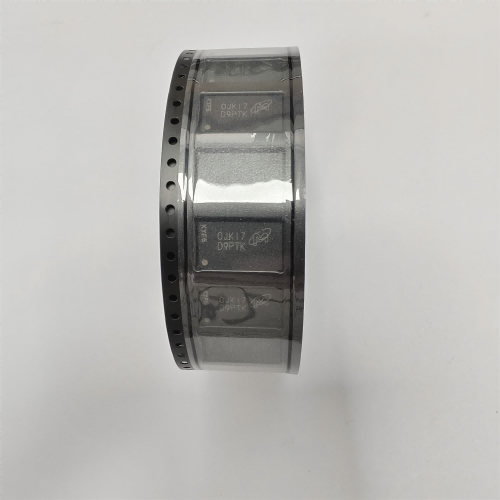
AD7888BRZ
Brand: Analog Devices
Analog Devices AD7888BRZ is a analog & mixed-signal component designed for Instrumentation and related applications. In stock at Superb Automation — request a quote for competitive pricing and fast delivery.
Product Specifications
AD7888BRZ
Analog Devices — Analog & Mixed-Signal ICs
Product Overview
The AD7888BRZ from Analog Devices is a high-performance analog / mixed-signal IC providing precision signal acquisition, conversion, and conditioning. Analog Devices (ADI) is a world leader in high-performance analog, mixed-signal, and DSP ICs for instrumentation, healthcare, automotive, and communications.
Superb Automation partners with leading brands including Qorvo, TI, ADI, XILINX, NVIDIA, Intel, ST, MACOM, Renesas, and Coilcraft to provide complete BOM and supply-chain solutions.
Key Features
- High-resolution data conversion with excellent SNR and THD
- Wide dynamic range and high linearity across operating conditions
- Integrated voltage reference with low temperature drift
- Flexible digital interface — SPI, I2C, or parallel options
- Industrial/automotive temperature range with guaranteed specs
- Low power consumption with power-down modes
Key Specifications
| Resolution | bits |
| Channels | — |
| Sample Rate | kSPS |
| Interface | — |
| Supply Voltage | V |
| Operating Temp | °C |
| Package | — |
| INL | LSB |
| SNR | dB |
| THD | dB |
Applications
Precision Instrumentation
Industrial Process Control
Medical Imaging & Diagnostics
Automotive Sensor Interfaces
Communications Infrastructure
Test & Measurement
Request Quote — In Stock, 100% New & Original, Full Warranty
AD7888BRZ: Eight 12 Bit Channels, 2 mW Typical, and a 500 ns Acquisition
The AD7888 is an eight channel, 12 bit converter with a 125 kSPS throughput rate, an on chip 2.5 V reference, a 500 ns track and hold acquisition and a typical power dissipation of 2 mW. It runs from 2.7 V to 5.25 V, goes to 3 uW in power-down, and fits in a 16-lead TSSOP that occupies the same board area as an 8-lead SOIC. The reference pin can be driven externally from 1.2 V up to the supply, so the input span can be set independently of the rail.
Eight channels in a 16-lead body
Eight single ended inputs in a 16-lead package is a pin count that leaves no room for a separate reference, supply, ground and interface pins, which is why the reference is internal and the interface is a four wire serial port. The part samples one channel at a time with a 500 ns acquisition window, so the source impedance has to be low enough to settle in that window: with a 2.5 pF sampling capacitor and 500 ns, a source resistance of 10 kohm gives a time constant of 25 ns and twenty time constants of settling, which is enough for 12 bits. A 100 kohm source does not settle in the window and the reading loses codes.
Power that follows the rate
The 2 mW typical figure is at a high throughput. The converter powers down automatically after each conversion when the auto shutdown mode is enabled, so at 1 kSPS the average power is dominated by the 3 uW standby and the short conversion burst. That is the same mechanism the AD7923 uses, reached from a different pin count: the part is only powered while it converts, so the supply current scales with the rate and not with the capability.
| Parameter | Value | What it decides |
|---|---|---|
| Resolution | 12 bit | 610 uV per code on a 2.5 V span |
| Channels | Eight single ended | Eight sensors on one part |
| Throughput | 125 kSPS | 8 us per conversion |
| Acquisition time | 500 ns | Source resistance below about 10 kohm |
| Input range | 0 V to the reference | Single ended, ground referenced |
| Internal reference | 2.5 V | No external reference for a 12 bit system |
| External reference | 1.2 V to the supply | Span set independently of the rail |
| Supply | 2.7 V to 5.25 V | Two cells or a 5 V rail |
| Power, typical | 2 mW | At a high rate with auto shutdown enabled |
| Power-down | 3 uW | Six hundred times lower than active |
| Input bandwidth | Full power to 2.5 MHz | Undersampling a modulated signal |
| Interface | SPI, QSPI, MICROWIRE, DSP | Four wires to any processor |
| Package | 16-lead TSSOP and SOIC | The same area as an 8-lead SOIC |
The reference pin as an input
Because the reference pin can be overdriven from 1.2 V to the supply, the same part serves a 1.25 V ratiometric bridge and a 2.5 V absolute measurement. In the ratiometric case the bridge excitation and the reference are the same node, so the drift of the excitation cancels in the conversion and the reading depends only on the bridge ratio. That is the cheapest way to get a stable reading from an unstable supply, and it depends on the reference being able to follow the excitation down to 1.2 V.
Channel scanning without a sequencer
The channel is selected by the address bits in the control word, so each conversion is preceded by a write. That costs one word per channel on the serial port but gives complete freedom in the scan order, and at 125 kSPS the port has room for it. A system that scans eight channels at 10 kSPS each spends 80 kSPS of port time, and the remaining 45 kSPS is the margin against a slower processor.
Buying a multichannel converter for a compact board
The comparison across candidates is channel count against package, acquisition time against source impedance, and power against the actual scan rate. The order code fixes the package. Availability is tracked through ADC DAC cross reference, and the wider question of consolidating a mixed analog bill of materials is set out in BOM consolidation. Where a short part forces a change, the checks are in how to verify a drop in replacement.