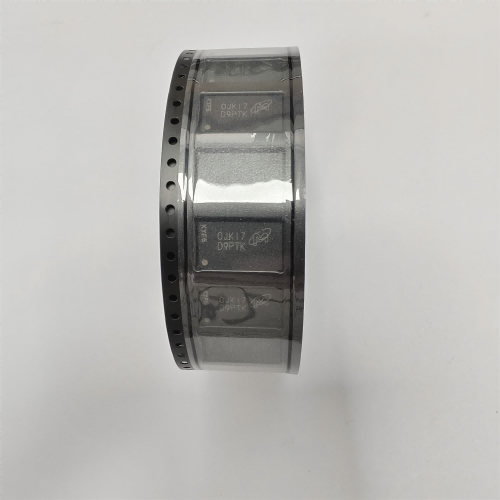
AD780BRZ
Brand: Analog Devices
Analog Devices AD780BRZ is a analog & mixed-signal component designed for Instrumentation and related applications. In stock at Superb Automation — request a quote for competitive pricing and fast delivery.
Product Specifications
AD780BRZ
Analog Devices — Analog & Mixed-Signal ICs
Product Overview
The AD780BRZ from Analog Devices is a high-performance analog / mixed-signal IC providing precision signal acquisition, conversion, and conditioning. Analog Devices (ADI) is a world leader in high-performance analog, mixed-signal, and DSP ICs for instrumentation, healthcare, automotive, and communications.
Superb Automation partners with leading brands including Qorvo, TI, ADI, XILINX, NVIDIA, Intel, ST, MACOM, Renesas, and Coilcraft to provide complete BOM and supply-chain solutions.
Key Features
- High-resolution data conversion with excellent SNR and THD
- Wide dynamic range and high linearity across operating conditions
- Integrated voltage reference with low temperature drift
- Flexible digital interface — SPI, I2C, or parallel options
- Industrial/automotive temperature range with guaranteed specs
- Low power consumption with power-down modes
Key Specifications
| Resolution | bits |
| Channels | — |
| Sample Rate | kSPS |
| Interface | — |
| Supply Voltage | V |
| Operating Temp | °C |
| Package | — |
| INL | LSB |
| SNR | dB |
| THD | dB |
Applications
Precision Instrumentation
Industrial Process Control
Medical Imaging & Diagnostics
Automotive Sensor Interfaces
Communications Infrastructure
Test & Measurement
Request Quote — In Stock, 100% New & Original, Full Warranty
AD780BRZ: 2.5 V or 3.0 V From a 4 V Input, With 100 nV of Noise
The AD780BRZ is a band gap voltage reference that produces either 2.5 V or 3.0 V from any input between 4.0 V and 36 V, selected by a pin, with 100 nV per root hertz of output noise and a maximum quiescent current of 1 mA. The B grade holds the 3.0 V output between 2.999 V and 3.001 V, so the initial error is 1 mV, and the low headroom circuit is what allows a 3.0 V output from a 5 V rail with 5 percent tolerance, which is the case that most 3 V references fail. It sources or sinks up to 10 mA, works in series or shunt mode, and brings out a temperature output pin that reports the die temperature while the reference is running.
Published values
| Parameter | Value |
|---|---|
| Output | 2.5 V or 3.0 V, pin programmable |
| Initial error, B grade at 3.0 V | 2.999 V to 3.001 V |
| Input range | 4.0 V to 36 V |
| Output noise | 100 nV per root hertz |
| Quiescent current | 1 mA maximum |
| Output current | Sources or sinks up to 10 mA |
| Operating modes | Series or shunt |
| Extra pin | Temperature output, works as a transducer while the reference runs |
| Trim | Optional fine trim connection |
| Bodies | Surface mount, R suffix, and DIP forms |
Three volts from a five volt rail with 5 percent tolerance
A 5 V rail at minus 5 percent is 4.75 V, and a reference that needs 300 mV of headroom fits with 450 mV to spare. That arithmetic is why the part exists: a 3.0 V reference supplied from a 5 V logic rail is the common case in mixed signal boards, and most references with sufficient accuracy need more headroom than the rail guarantees. The same property lets the reference run from a 4.5 V rail in a battery instrument where the rail sags as the cell discharges, without the output moving.
Noise, decoupling and the trim pin
At 100 nV per root hertz the reference is quieter than most converters behind it, so the noise budget is usually set by the amplifier rather than by the reference. The noise reduction pin and the recommended decoupling are in the data sheet, and the value of the capacitor matters because the reference has to stay stable while driving it. The fine trim connection is optional and exists to remove board level error; a production line that calibrates the converter in firmware can leave it open, which removes a potentiometer and its drift.
The temperature output pin, and what it is good for
Because the reference already has a stable output, the die temperature can be read from a separate pin without disturbing the reference. That is useful in a sealed instrument where the board temperature is the only available proxy for the environment, and it costs nothing in parts. It is not a calibrated sensor, so it belongs in a compensation table rather than in a specification, which is exactly how the data sheet describes it.
Grade and stock
The A, B and C grades differ in initial error and in drift, and the B grade in the surface mount body is the common industrial order code. Where the B grade is unavailable, moving to the A grade costs initial error that a calibration can absorb, while moving to a different family changes the headroom requirement and therefore the rail. The amplifier cross reference lists the reference families we supply, the ADI second source page covers grade equivalence, and the lead time page shows what is on the shelf.