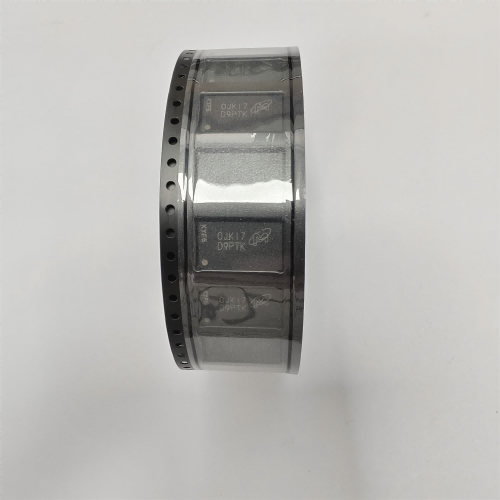
AD707AZ
Brand: Analog Devices
Analog Devices AD707AZ is a analog & mixed-signal component designed for Instrumentation and related applications. In stock at Superb Automation — request a quote for competitive pricing and fast delivery.
Product Specifications
AD707AZ
Analog Devices — Analog & Mixed-Signal ICs
Product Overview
The AD707AZ from Analog Devices is a high-performance analog / mixed-signal IC providing precision signal acquisition, conversion, and conditioning. Analog Devices (ADI) is a world leader in high-performance analog, mixed-signal, and DSP ICs for instrumentation, healthcare, automotive, and communications.
Superb Automation partners with leading brands including Qorvo, TI, ADI, XILINX, NVIDIA, Intel, ST, MACOM, Renesas, and Coilcraft to provide complete BOM and supply-chain solutions.
Key Features
- High-resolution data conversion with excellent SNR and THD
- Wide dynamic range and high linearity across operating conditions
- Integrated voltage reference with low temperature drift
- Flexible digital interface — SPI, I2C, or parallel options
- Industrial/automotive temperature range with guaranteed specs
- Low power consumption with power-down modes
Key Specifications
| Resolution | bits |
| Channels | — |
| Sample Rate | kSPS |
| Interface | — |
| Supply Voltage | V |
| Operating Temp | °C |
| Package | — |
| INL | LSB |
| SNR | dB |
| THD | dB |
Applications
Precision Instrumentation
Industrial Process Control
Medical Imaging & Diagnostics
Automotive Sensor Interfaces
Communications Infrastructure
Test & Measurement
Request Quote — In Stock, 100% New & Original, Full Warranty
AD707A: 15 Microvolts of Offset With a Tenth of a Microvolt of Drift
The AD707A is the industrial grade of the AD707, a bipolar operational amplifier whose offset voltage is 15 microvolts maximum and whose offset voltage drift is 0.1 microvolts per degree C maximum. On a bipolar input stage those two numbers together are unusual: most precision bipolar parts trade the low offset at 25 C for a drift in the microvolt per degree region, and the AD707 holds both. Input bias current is 1 nA maximum, open loop gain is 8 V per microvolt minimum while driving a 1 k load over the full plus or minus 10 V output range, common mode rejection is 130 dB minimum and power supply rejection 120 dB minimum. Low frequency noise is 350 nV peak to peak from 0.1 Hz to 10 Hz.
What 0.1 microvolts per degree buys
A transducer bridge with 2 mV per volt of sensitivity on a 10 V excitation gives 20 mV full scale. Amplified by 100 to reach a 2 V span, an offset drift of 1 microvolt per degree at the amplifier input becomes 100 microvolts per degree at the output, which on a 2 V span is 0.005 percent per degree and 0.25 percent over a 50 degree room excursion. At the AD707 drift the same chain moves 25 times less, and the calibration done at 25 C stays valid without a temperature sensor and a correction table. That is the real argument for the part: it removes a calibration step from the production line, not just a few microvolts from the error budget.
Values at a glance
| Parameter | Value | Note |
|---|---|---|
| Offset voltage | 15 microvolts maximum | Best available in a bipolar amplifier when introduced |
| Offset drift | 0.1 microvolts per degree C maximum | Top grade, first bipolar part at this drift |
| Input bias current | 1 nA maximum | Offset current drift 25 pA per degree C maximum |
| Open loop gain | 8 V per microvolt minimum | Full plus or minus 10 V swing into 1 k |
| Common mode rejection | 130 dB minimum | 140 dB typical |
| Power supply rejection | 120 dB minimum | Better than most instrumentation amplifiers |
| Noise | 350 nV peak to peak | 0.1 Hz to 10 Hz |
| Slew rate, bandwidth | 0.3 V per microsecond, 0.9 MHz | Unity gain stable |
| Packages | 8-lead plastic DIP, SOIC, cerdip, TO-99 | Dual version is the AD708 |
Chopper performance without the chopper
The usual route to sub microvolt offset is a chopper or an auto-zero amplifier, and the price is charge injection at the input, a switching artefact in the noise floor and a settling tail after a step. The AD707 reaches the same offset class with a trimmed bipolar input and no switching at all, so the noise floor stays flat down to DC and there is no intermodulation between the chopping frequency and the signal. Where a board already carries a chopper amplifier because nothing else would meet the offset budget, the AD707 is the part to evaluate before adding the filter that the chopper needs. The limit of the approach is drift over a wide temperature range at the very bottom of the range, where the chopper still wins, and long term stability, which the datasheet treats separately from drift.
Pin compatibility and the substitute nobody notices
The AD707 is an improved pin for pin replacement for the LT1001, which is the single most useful sentence in the datasheet for anyone maintaining an older board. A socket built for the LT1001 takes the AD707 with no change, and the improvement shows up in offset drift and common mode rejection. The reverse substitution is where care is needed: an LT1001 dropped into a socket specified around the AD707 will run, will pass a functional test, and will fail a drift budget in the field. The dual version is the AD708, and the two halves of the AD708 do not carry identical offset specifications, so an instrumentation amplifier built from one AD708 has to be trimmed as a pair rather than per amplifier.
Procurement and second source
Plain AD707 parts turn up in mixed date codes, and the grade suffix matters more than the base number, since the A grade is the industrial temperature part and the commercial grades stop at 70 C. The amplifier cross reference lists the precision parts that share the pinout, the obsolete part cross reference hub covers what to do when a grade disappears, and the checks that catch a remarked part are in the incoming inspection plan. Remarking is the real risk here: the plastic body carries the grade in the marking only, and a J grade relabelled as an A grade cannot be told apart except by measuring drift over temperature.