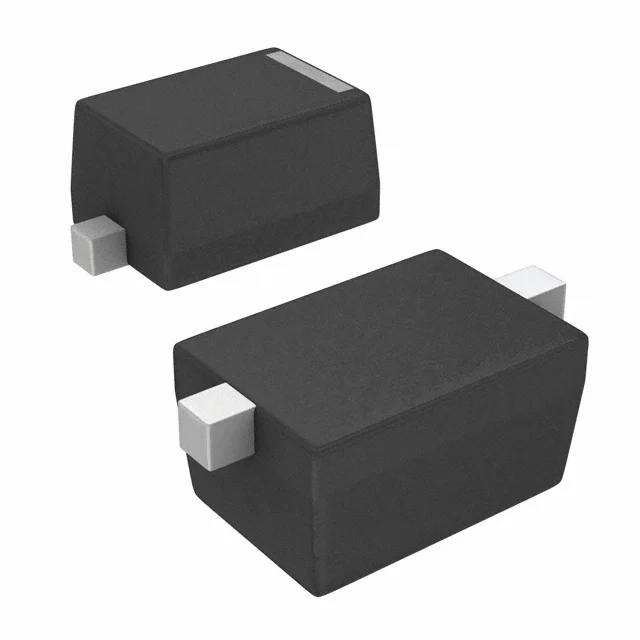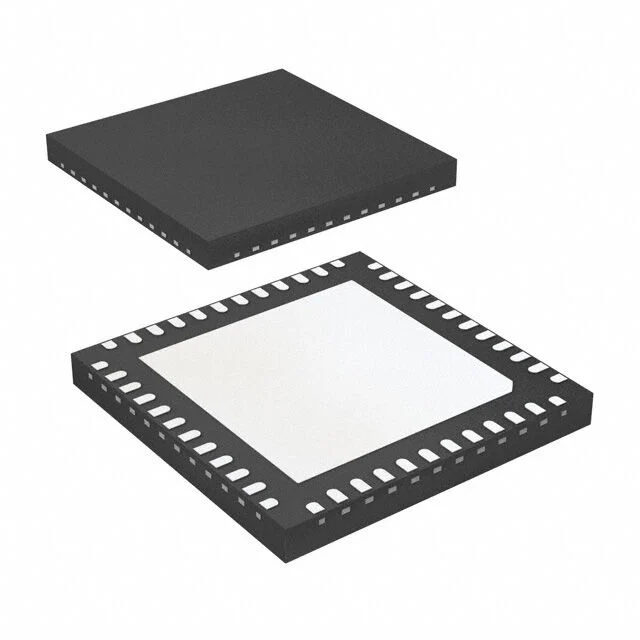

TPS923653DMTR
Brand: Texas Instruments
Texas Instruments TPS923653DMTR is a power management component designed for AI Servers & Low-Altitude Economy (Drone and UAV) and related applications. In stock at Superb Automation — request a quote for competitive pricing and fast delivery.
Product Specifications
TPS923653DMTR
Texas Instruments — Power Management & Signal Chain
Product Overview
The TPS923653DMTR from Texas Instruments is a power management / signal chain IC delivering high efficiency, precision regulation, and robust protection. Texas Instruments (TI) is a global leader in analog ICs, power management solutions, and embedded processors.
Superb Automation partners with leading brands including Qorvo, TI, ADI, XILINX, NVIDIA, Intel, ST, MACOM, Renesas, and Coilcraft to provide complete BOM and supply-chain solutions.
Key Features
- High-efficiency power conversion with low quiescent current
- Wide input voltage range with precision output regulation
- Integrated over-current, over-temperature, and short-circuit protection
- Small footprint packaging for space-constrained designs
- AEC-Q100 qualified options available for automotive applications
- Flexible sequencing and soft-start control
Key Specifications
| Input Voltage | V |
| Output Voltage | V |
| Output Current | A |
| Switching Frequency | kHz |
| Efficiency | % |
| Quiescent Current | µA |
| Topology | — |
| Package | — |
| Operating Temp | °C |
| Protection | — |
Applications
Industrial Automation
Automotive Electronics
Telecom Infrastructure
Server & Data Center Power
Medical Devices
Consumer Electronics
Request Quote — In Stock, 100% New & Original, Full Warranty
TPS923653DMTR: the spread spectrum member of the 65 V boost family
The TPS923653DMTR carries the same silicon as the 652 in the same 14 pin VSON DMT body, and the only difference that shows on a bench is the switching frequency behaviour. The 653 adds spread spectrum modulation, so the oscillator moves around the resistor set point instead of sitting on it. On a radiated emission scan the peak that was a single narrow line becomes a wider, lower hump of roughly the same total energy, which is often enough to clear a limit that the fixed frequency version misses by a few dB. The cost is a small low frequency component in the light output, and that is the trade a lighting integrator has to make with the camera or the film crew in mind.
Everything else is shared with the family: 4.5 V to 65 V in, a 150 milliohm low side switch, a 3 A cycle by cycle limit for the 2 A class, 100 kHz to 2.2 MHz, and the four dimming modes. The order code ends in DMTR because the body is the DMT package; the same die in the 12 pin WSON is TPS923653DRRR, and the marking on the top is T3653 against T23653 for the smaller body.
Key electrical data on the page
| Input range | 4.5 V to 65 V, UVLO rising 3.0 V to 3.4 V, falling 2.8 V to 3.2 V, 0.2 V hysteresis |
| Output current | 2 A class, switch limit 2.6 A to 3.6 A, the 4 A members at 5.8 A to 7.6 A |
| Switch | 150 milliohm low side NMOS, minimum on and off time 100 ns each |
| Switching | 100 kHz to 2.2 MHz with spread spectrum active, 4.6 mA at 400 kHz and 10 mA at 2.2 MHz |
| Current sense | 200 mV at full scale, 12.5 percent at 12.5 percent duty, 1.17 percent at the floor |
| Dimming | 256 to 1 analog, 150 ns PWM pulse, 2000 to 1 hybrid at 20 kHz, 1,000,000 to 1 at 120 Hz |
| Internal rail | 5.15 V LDO at 38 mA to 56 mA limit, enough for the gate and one small load |
Package, marking and reel data
| Body | VSON DMT, 14 pins, 4.5 mm by 3.0 mm, exposed pad under the switch |
| Reel | 3000 pieces on a 330 mm reel, 12.4 mm carrier, 8 mm pitch, quadrant Q1 |
| A0 3.30 mm, B0 4.80 mm, K0 1.20 mm, carrier width 12.0 mm | |
| Finish and moisture | nickel palladium gold, level 1 at 260 C, unlimited floor life |
| Marking and grade | T3653 on the top, rated -40 C to 125 C junction |
What a spreading oscillator does to a lighting fixture
The modulation is a triangle on the oscillator, a few percent wide, at a rate far below the switching frequency. The visible effect is a tiny amplitude modulation of the LED current at the triangle rate, and in a fixture that is photographed at a short shutter that shows up as faint banding. In a street light, a high bay or a parking structure there is no camera and the trade is free. That is why the 653 exists next to the 652 rather than replacing it, and why a purchase order should carry the exact digit: a substitution in either direction needs an emission retest and, for the camera case, a flicker measurement.
The foldback resistor and the thermal behaviour are unchanged across the family. Foldback starts reducing the current when the junction reaches 130 C with a 20 k resistor at the RTEMP pin, and the hard shutdown sits at 165 C with 15 C of hysteresis. In a sealed fixture the foldback curve is what keeps the light on at reduced output through a hot afternoon instead of dropping the whole luminaire, which matters on a product that carries a five year warranty rather than a one year one.
Buyer questions on the TPS923653DMTR
Is the 653 pin compatible with the 652? Yes, same body, same pin out, same external components. The difference is inside the oscillator, so the substitution question is about emission and flicker, not about the board.
Can spread spectrum be turned off on this part? No. The DM pin sets the modulation; on the 653 the feature is part of the silicon. A build that needs a fixed frequency has to order the 652.
Does the order code differ between the two bodies? Yes. DMTR is the 14 pin VSON at 3000 per reel and DRRR is the 12 pin WSON at 3000 per reel. The marking differs too, T3653 against T23653, which is how a receiving inspection tells them apart without a datasheet.
Buying this part through a component supplier
Two order codes that differ by one digit and share a datasheet are exactly where a mixed reel reaches a production line, so we keep the 652 and 653 in separate bags with the marking recorded on the label and documented through date code management. When one of the pair is missing from the channel, how to verify a drop in replacement lists the measurements that decide whether the swap is safe, and the power management cross reference shows the other 65 V drivers we can compare the line against.