


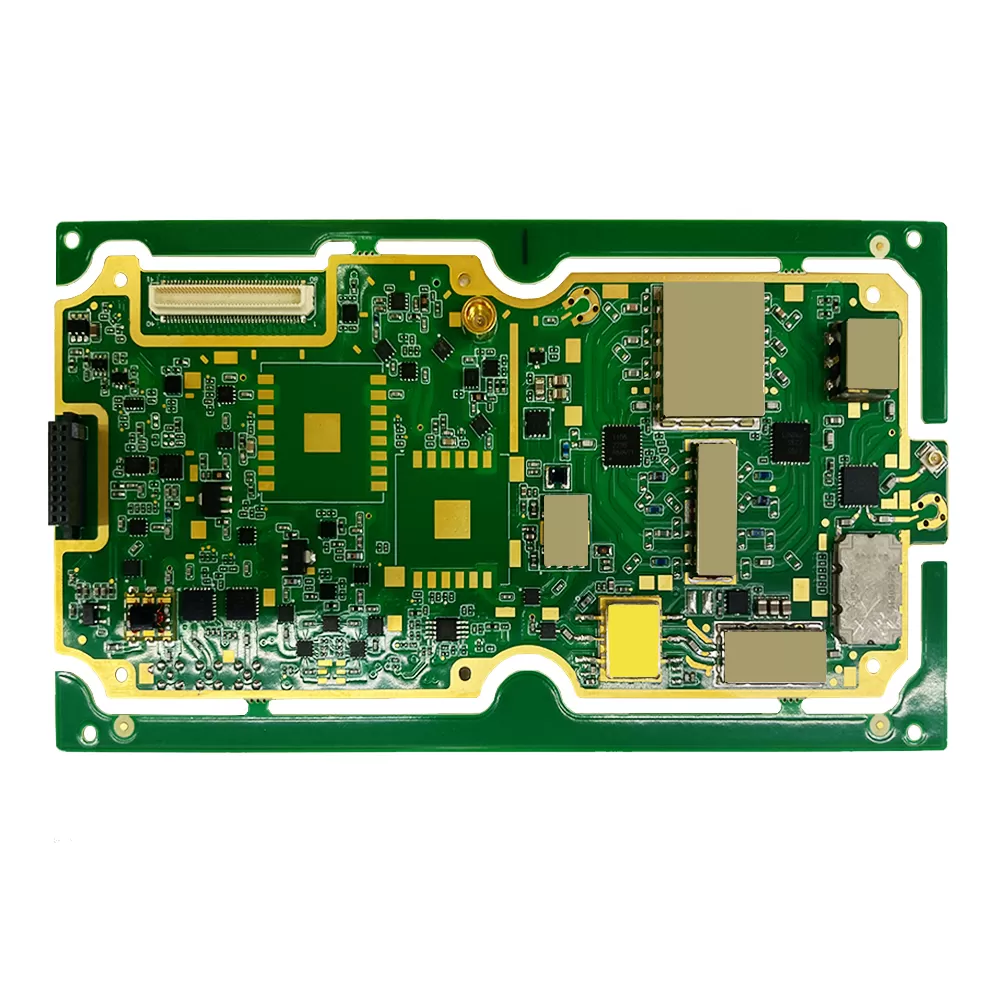

TPS79801QDGNRQ1
Brand: Texas Instruments
Texas Instruments TPS79801QDGNRQ1 is a power management component designed for AI Servers & Low-Altitude Economy (Drone and UAV) and related applications. In stock at Superb Automation — request a quote for competitive pricing and fast delivery.
Product Specifications
TPS79801QDGNRQ1
Texas Instruments — Power Management & Signal Chain
Product Overview
The TPS79801QDGNRQ1 from Texas Instruments is a power management / signal chain IC delivering high efficiency, precision regulation, and robust protection. Texas Instruments (TI) is a global leader in analog ICs, power management solutions, and embedded processors.
Superb Automation partners with leading brands including Qorvo, TI, ADI, XILINX, NVIDIA, Intel, ST, MACOM, Renesas, and Coilcraft to provide complete BOM and supply-chain solutions.
Key Features
- High-efficiency power conversion with low quiescent current
- Wide input voltage range with precision output regulation
- Integrated over-current, over-temperature, and short-circuit protection
- Small footprint packaging for space-constrained designs
- AEC-Q100 qualified options available for automotive applications
- Flexible sequencing and soft-start control
Key Specifications
| Input Voltage | V |
| Output Voltage | V |
| Output Current | A |
| Switching Frequency | kHz |
| Efficiency | % |
| Quiescent Current | µA |
| Topology | — |
| Package | — |
| Operating Temp | °C |
| Protection | — |
Applications
Industrial Automation
Automotive Electronics
Telecom Infrastructure
Server & Data Center Power
Medical Devices
Consumer Electronics
Request Quote — In Stock, 100% New & Original, Full Warranty
TPS79801QDGNRQ1: 50 mA, 3 V to 50 V automotive LDO, 40 microamp quiescent, adjustable, HVSSOP-8
TPS79801QDGNRQ1 is a high voltage micropower linear regulator that takes 3 V to 50 V in, delivers 50 mA and draws 40 microamp, with an adjustable output from 1.275 V to 28 V and reverse battery protection built in in a HVSSOP-8 body of 8 pins. Dropout is 300 mV typical at 50 mA, which is what makes the part usable from a 5 V rail with a small margin. Quiescent current is 40 microamp in regulation and 1 microamp in shutdown, and the output is stable with a 1 microfarad ceramic capacitor, which is a smaller output capacitor than older regulators of this class needed. The eight pin body has an exposed pad for the thermal path.
Order code and package
| TPS79801QDGNRQ1 | Active, HVSSOP (DGN) body, 8 pins, 2500 pieces on a 330 mm reel, marking PMRQ |
| TPS79801QDGNRQ1.A | Active, same body and same 2500 piece reel, material row at MSL Level-2-260C-1YEAR |
| TPS79850 | the fixed 5 V member of the same family, same body and same current |
| Temperature range | minus 40 to 125 degrees ambient, grade 1 for automotive use |
| Qualification | AEC-Q100 grade 1 |
Electrical parameters that decide the application
| Input voltage | 3 V to 50 V |
| Output voltage | 1.275 V to 28 V adjustable on this string, 5 V fixed on the 79850 |
| Output current | 50 mA maximum |
| Quiescent current | 40 microamp typical in regulation, 1 microamp in shutdown |
| Dropout | 300 mV typical at 50 mA |
| Output capacitor | stable with 1 microfarad, ceramic, tantalum or aluminium |
| Protection | reverse battery protection, reverse output current protection, current limit and thermal limiting |
| Input diodes | none required, which is unusual for a regulator that survives a reversed battery |
Family variants and how they differ
| TPS79801 | adjustable output from 1.275 V, the string on this page |
| TPS79850 | fixed 5 V output, same die and same body |
| Reverse protection | both the input and the output are protected against reverse current without external diodes |
| Stability | 1 microfarad is the minimum, and a ceramic part is acceptable with no ESR requirement |
| Body | eight pin HVSSOP with an exposed pad, which is the thermal path at 50 mA and 50 V |
Points to check before this part goes on a BOM
Fifty volts input with 40 microamp of quiescent current is the reason this part exists. A 48 V telecom rail, a 24 V industrial bus with surges or a 12 V automotive rail with load dump all need a regulator that survives the voltage, and a housekeeping supply on such a product cannot afford a milliamp of quiescent current. Most regulators solve one of those two problems and this one solves both.
Reverse battery protection without input diodes is a real system saving. A reversed battery normally puts the body diode of the regulator in forward conduction and destroys the part or the rail. Adding a series diode costs a voltage drop and a component; adding a MOSFET costs more. This part handles the condition internally, which removes a component from the bill of materials and a failure mode from the field.
Three hundred millivolts of dropout at 50 mA is good and still not zero. The adjustable output version has a minimum output of 1.275 V, so a 1.8 V rail from a 2.0 V input is not possible at full current. A 5 V rail from a 5.5 V input has 200 mV of margin and is in dropout at 50 mA. A rail that has to hold its value near the input needs a switching regulator, not this part.
Forty microamp is measured in regulation, and the shutdown current is 1 microamp. A housekeeping rail that is always on pays the 40 microamp continuously, which is about 0.5 milliwatt on a 12 V rail. That is small enough to leave on for years on a battery and large enough that a part drawing 500 microamp would halve the shelf life of a product.
The 1 microfarad stability requirement is a modern number. Older regulators of this class needed 10 to 100 microfarad of tantalum to stay stable, which cost board area and a component with a limited life. A 1 microfarad ceramic with no ESR requirement works here, and that is what allows the part to fit in a sensor housing.
At 50 V in and 5 V out, every milliamp dissipates 45 milliwatts. At the full 50 mA that is 2.25 W, far beyond what an eight pin HVSSOP can carry without a serious copper area. The part is rated for the voltage and for the current, not for both at once. In practice a 50 V input uses this regulator for a load in the low milliamps, and a larger load needs a switching stage in front.
The exposed pad is the only thermal path in this body. An HVSSOP with a PowerPAD conducts heat through the pad and the vias under it. A board that solders the pad to a small island and relies on the leads gets a junction rise that reaches the thermal limit at a load the part is rated for, and the symptom is a regulator that shuts down and recovers as it cools.
Reverse output current protection matters when the output is held up. A rail that stays charged after the input collapses would normally pull current backwards through the pass element. This part blocks it, which protects both the regulator and the input rail. A board that has a battery and an adapter on the same node depends on that behaviour.
Packing is 2500 pieces on a 330 mm reel and the moisture level is 2. Level 2 means a floor life of a year in a controlled environment after the bag is opened, which is a shorter clock than the Level 1 parts on the same board. A production line that tracks floor life needs the level recorded at goods inwards, and a substitute part with a different level changes the process.
What to confirm before this part goes on a purchase order
State the input rail and its worst case transient, together with the load current. The voltage rating and the current rating are separate and the thermal limit binds long before both are reached together.
Say whether the output is fixed or adjustable. The 79850 gives 5 V with no divider and the 79801 needs two resistors and a 1.275 V reference to set the rail.
Where this order code fits
It takes a 24 V or 48 V industrial or automotive rail down to a 5 V housekeeping supply for a CAN transceiver, a sensor or a microcontroller, and survives a reversed battery. Teams comparing it with a neighbouring part start from our Power Management Cross Reference page, and teams replacing a part that has gone end of life start from the Obsolete Part Cross Reference Hub page.
Questions buyers ask
Can it survive a reversed battery connection? Yes, that is one of its stated features, and it does so without external input diodes. The reverse input condition is limited by the thermal capability of the part, so a long reversal at high current still heats it, but the junction survives where a conventional regulator would not.
What is the minimum output voltage? 1.275 V on the adjustable version, set by the internal reference. A rail below that needs a different part. The fixed member of the family provides 5 V with no divider at all.
Why is the quiescent current higher in dropout? Because the pass element is fully on and the regulation loop cannot control the output. The data sheet states that the quiescent current is well controlled in dropout, which means the part does not draw a large current when the input falls below the regulated value, and that behaviour is what allows a battery product to run until the cell is empty.
SUPERB holds and sources this line for production and repair demand, quoted against the exact ordering string with date codes, packing and country of origin stated on the offer. When a part is moving, the Pin to Pin Cross Reference page sets out the checks that keep a substitute from failing on the bench.

