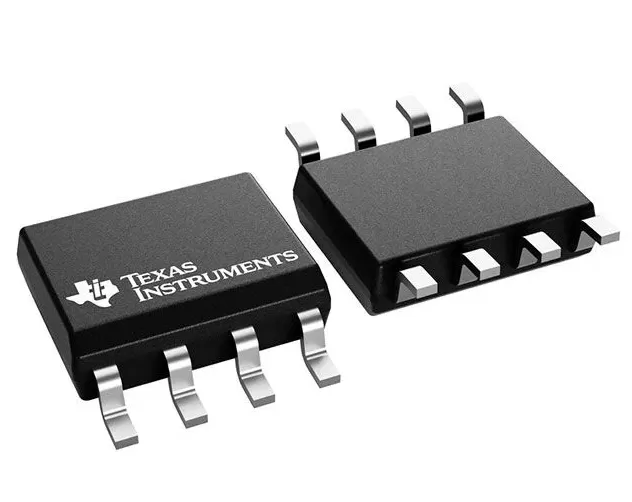

TPS709B50DBVR
Brand: Texas Instruments
Texas Instruments TPS709B50DBVR is a power management component designed for AI Servers & Low-Altitude Economy (Drone and UAV) and related applications. In stock at Superb Automation — request a quote for competitive pricing and fast delivery.
Product Specifications
TPS709B50DBVR
Texas Instruments — Power Management & Signal Chain
Product Overview
The TPS709B50DBVR from Texas Instruments is a power management / signal chain IC delivering high efficiency, precision regulation, and robust protection. Texas Instruments (TI) is a global leader in analog ICs, power management solutions, and embedded processors.
Superb Automation partners with leading brands including Qorvo, TI, ADI, XILINX, NVIDIA, Intel, ST, MACOM, Renesas, and Coilcraft to provide complete BOM and supply-chain solutions.
Key Features
- High-efficiency power conversion with low quiescent current
- Wide input voltage range with precision output regulation
- Integrated over-current, over-temperature, and short-circuit protection
- Small footprint packaging for space-constrained designs
- AEC-Q100 qualified options available for automotive applications
- Flexible sequencing and soft-start control
Key Specifications
| Input Voltage | V |
| Output Voltage | V |
| Output Current | A |
| Switching Frequency | kHz |
| Efficiency | % |
| Quiescent Current | µA |
| Topology | — |
| Package | — |
| Operating Temp | °C |
| Protection | — |
Applications
Industrial Automation
Automotive Electronics
Telecom Infrastructure
Server & Data Center Power
Medical Devices
Consumer Electronics
Request Quote — In Stock, 100% New & Original, Full Warranty
TPS709B50DBVR 5 V fixed regulator with the B revision die
The TPS709B50DBVR is the 5 V member of the TPS709 family on the B revision die, in the DBV five pin SOT-23. It holds 150 mA from an input between 2.7 V and 30 V, draws 1 microamp of quiescent current and 150 nA in shutdown, and is 2 percent accurate over temperature. The 5 V output makes it the rail that feeds a CAN transceiver, an RS-485 driver, a relay coil or an analogue section whose parts are all specified at 5 V, from an input that can be far higher.
The letter matters on a purchase order. The document prints a pin function table with three columns, TPS709, TPS709A and TPS709B, and the revision history records that the DBV package was added for the TPS709B. The electrical behaviour of the three revisions is close, but the pin functions are tabulated separately, and a board that was qualified on one revision should not silently receive another without a check of the pin function table and the marking on the reel.
The part carries reverse current protection, a current limit and thermal shutdown. Like the rest of the family it holds its ground current down when the input falls close to the output, which is what keeps a 5 V rail from becoming a heater at the end of a battery discharge.
Key parameters from the SBVS186H document
| Input range | 2.7 V to 30 V |
| Output | 5.0 V fixed on this order code |
| Output current | 150 mA rated, 200 mA peak |
| Quiescent current | 1 microamp typical |
| Shutdown current | 150 nA typical with the enable pin low |
| Dropout | Specified for outputs of 2.8 V and above, which includes this 5 V rail |
| Accuracy | 2 percent over temperature |
| Revisions | TPS709, TPS709A and TPS709B are tabulated separately in the pin function table |
| Package | DBV five pin SOT-23, 2.9 mm by 1.6 mm |
| Order code | TPS709B50DBVR, large reel, active in the vendor addendum |
What the B revision means for a buyer
A letter in the middle of a part number is easy to read past, and on this family it is the only thing that separates three rows of the same table. The revision history in the document records the addition of the DBV package for the TPS709B, which tells a buyer that the B die and the SOT-23 body is the newest combination of the three. Where a board was laid out against the TPS709A pin function table, the B part is not automatically a drop in replacement without that table being read again.
For an existing product the practical question is which revision the qualified build used. The marking on the body is the only field that identifies it after the reel has been opened, and the reel label is what identifies it before. A stock check that only reads the family name will mix the three revisions, and the mix surfaces as a parameter that drifts between build lots rather than as a hard failure.
Where this part fits
Industrial interfaces that need a 5 V rail from a 12 V or 24 V bus, CAN and RS-485 nodes, relay and opto driver rails, analogue front ends built around 5 V parts, and battery products whose 5 V section has to stay alive while the rest of the board sleeps. The 30 V input is what allows it to sit straight on a 24 V line without a pre regulator when the load is light. Our notes on picking between the fixed voltage rows of this family are under power management cross reference, and the marking and revision checks are in incoming inspection plan.
What to check before a purchase order
Check the revision on the qualified build before releasing the order. If the historical build used the plain TPS70950, the B revision has to be checked against the pin function table and against the board's thermal expectations, and the change should be recorded rather than absorbed. A revision swap that nobody writes down is the kind of change that makes a field return untraceable.
Check the dissipation at the operating input. On a 24 V bus with a 5 V output at 100 mA the part burns 1.9 W, which is far beyond a five pin SOT-23 without a large copper area. The 150 mA rating assumes a small input to output difference, and a high input rail at that current belongs on a switching converter with a linear regulator after it, not on a single pass device.
Check the enable pin. It is the only control on the part and it has to be driven to a defined level; on a board that leaves it floating the rail state is undefined at power up, which is easy to miss because the part will usually start anyway.
Questions that come up on this part
Is the B revision electrically different from the A? The three revisions are tabulated separately in the pin function table, and the safe reading is that the pin functions have to be compared rather than assumed identical.
Can this supply a 5 V CAN transceiver directly? Yes, at up to 150 mA, provided the transceiver's own quiescent and bus fault currents are inside that and the input is far enough above 5 V to keep the part out of dropout.