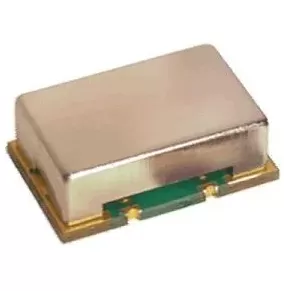
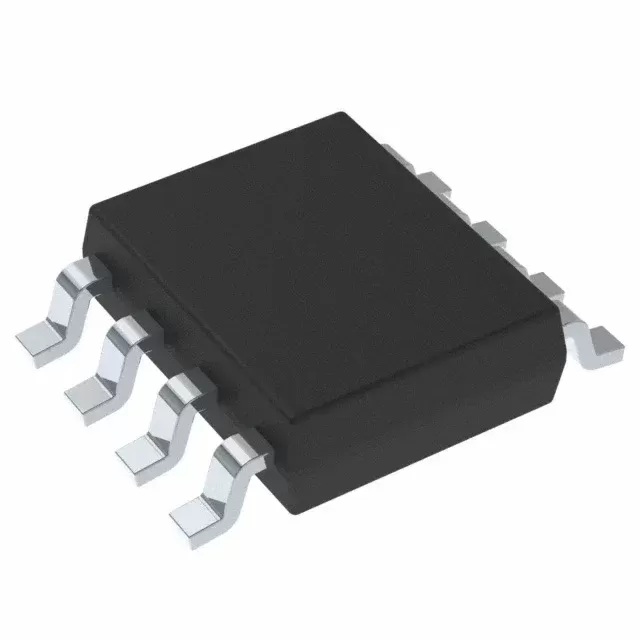
TPS563210ADDFR
Brand: Texas Instruments
Texas Instruments TPS563210ADDFR is a power management component designed for AI Servers & Low-Altitude Economy (Drone and UAV) and related applications. In stock at Superb Automation — request a quote for competitive pricing and fast delivery.
Product Specifications
TPS563210ADDFR
Texas Instruments — Power Management & Signal Chain
Product Overview
The TPS563210ADDFR from Texas Instruments is a power management / signal chain IC delivering high efficiency, precision regulation, and robust protection. Texas Instruments (TI) is a global leader in analog ICs, power management solutions, and embedded processors.
Superb Automation partners with leading brands including Qorvo, TI, ADI, XILINX, NVIDIA, Intel, ST, MACOM, Renesas, and Coilcraft to provide complete BOM and supply-chain solutions.
Key Features
- High-efficiency power conversion with low quiescent current
- Wide input voltage range with precision output regulation
- Integrated over-current, over-temperature, and short-circuit protection
- Small footprint packaging for space-constrained designs
- AEC-Q100 qualified options available for automotive applications
- Flexible sequencing and soft-start control
Key Specifications
| Input Voltage | V |
| Output Voltage | V |
| Output Current | A |
| Switching Frequency | kHz |
| Efficiency | % |
| Quiescent Current | µA |
| Topology | — |
| Package | — |
| Operating Temp | °C |
| Protection | — |
Applications
Industrial Automation
Automotive Electronics
Telecom Infrastructure
Server & Data Center Power
Medical Devices
Consumer Electronics
Request Quote — In Stock, 100% New & Original, Full Warranty
TPS563210ADDFR 3 A buck with Advanced Eco-mode and 1 per cent feedback
The TPS563210ADDFR is the 3 A member of the TPS562210A and TPS563210A pair: 4.5 V to 17 V input, 0.76 V to 7 V output, 68 milliohm high side and 39 milliohm low side FETs, a fixed 650 kHz switching frequency and D-CAP2 control that needs no external compensation. It sits in an 8 pin SOT-23 measuring 1.6 mm by 2.9 mm, and it is specified from 40 to 85 degrees ambient.
Two features separate it from the 3 A parts in the smaller 6 pin bodies. The first is the reference: 1 per cent feedback accuracy at 25 degrees rather than 2 per cent, which matters when the rail feeds a load with a narrow window. The second is the pin set: soft start is adjustable through a capacitor, and there is an open drain power good output, which the 6 pin bodies do not have room for.
Light load behaviour is Advanced Eco mode, a pulse skipping scheme. That is the opposite choice from the TPS563219A in the same body, which stays in continuous conduction at all loads. The two parts share a footprint and a pinout, and the decision between them is a decision about light load ripple against standby efficiency.
Key parameters from the SLVSDP9 document
| Input range | 4.5 V to 17 V |
| Output current | 3 A on this order code, with the 2 A member of the pair carrying 133 and 80 milliohm FETs |
| Power FETs | 68 milliohm high side and 39 milliohm low side |
| Output voltage | 0.76 V to 7 V |
| Switching frequency | 650 kHz fixed |
| Reference accuracy | 1 per cent feedback voltage accuracy at 25 degrees |
| Soft start | Adjustable with an external capacitor, with an open drain power good output |
| Package | 8 pin SOT-23, 1.6 mm by 2.9 mm, DDF body, ambient range 40 to 85 degrees |
The 85 degree ambient limit and what it means
This part is specified to 85 degrees ambient rather than 125 degrees junction like the 6 pin bodies. In a sealed enclosure the ambient inside the box is what counts, and a box that sits at 70 degrees internal leaves only 15 degrees of margin before the specification ends. A board that needs margin above that should look at a part with a wider ambient rating, not at a bigger heatsink, because the limit is on the air around the part rather than on the pad temperature.
At 3 A with 39 milliohm on the low side, the conduction loss is about 0.35 W at full load. The 8 pin body has a slightly larger pad than the 6 pin one, so it holds that a little better, but the ambient limit arrives first in most products.
Power good and adjustable soft start in a small body
PGOOD is an open drain output that goes low during the ramp and on a fault, which is what a sequencer or a supervisor needs to know when to enable the next rail. Adjustable soft start lets the ramp be slowed for a large output bank, which keeps the inrush current below the upstream supply's limit. Neither feature exists on the 6 pin parts, and both are the reason an engineer picks the 8 pin body despite the extra millimetre of board.
The part starts into a prebiased output, keeps the low side off until the internal ramp passes the sensed voltage, and protects with cycle by cycle overcurrent, hiccup on sustained undervoltage, and non latching overvoltage, UVLO and thermal shutdown. Nothing latches, so a board recovers on its own.
Where this part fits
Set top boxes, routers, industrial controllers, point of load rails behind a 12 V bus, and any 3 A rail that needs a power good signal. Our desk keeps the family comparison and the sibling notes, see power management cross reference and pin to pin cross reference.
What to check before a purchase order
The DDF suffix is the 8 pin 1.6 by 2.9 mm SOT-23 and it is shared with the continuous conduction sibling, so the order code is the only difference a reel label shows. The A in the order code is part of the string and separates this device from earlier revisions that carry different reference accuracy. Confirm the ambient at the part in the enclosure, not at the box exterior, before quoting 3 A.
See incoming inspection plan for how we check the marking on an 8 pin body, and one stop BOM sourcing for the rail group.
Questions that come up on this part
Is the 2 A version of the pair a drop in, is a common question. It is, on the same pads and the same pinout, and the current rating is the only difference in the power path. The second question is whether the ambient limit can be extended by adding copper. Copper lowers the junction temperature but does not extend the ambient specification, so the answer is no.