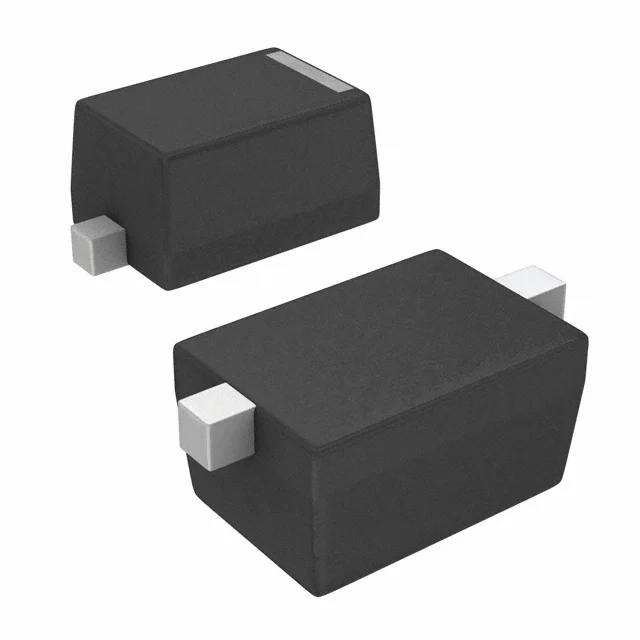
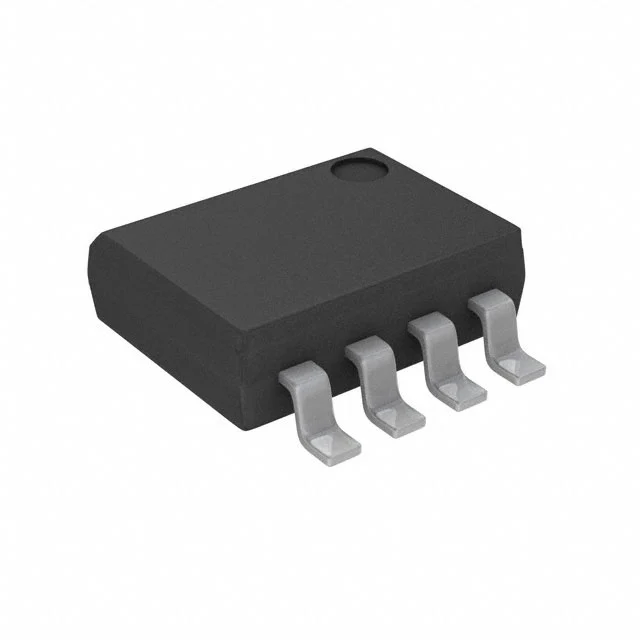
TMP431DDGKT
Brand: Texas Instruments
Texas Instruments TMP431DDGKT is a power management component designed for AI Servers & Low-Altitude Economy (Drone and UAV) and related applications. In stock at Superb Automation — request a quote for competitive pricing and fast delivery.
Product Specifications
TMP431DDGKT
Texas Instruments — Power Management & Signal Chain
Product Overview
The TMP431DDGKT from Texas Instruments is a power management / signal chain IC delivering high efficiency, precision regulation, and robust protection. Texas Instruments (TI) is a global leader in analog ICs, power management solutions, and embedded processors.
Superb Automation partners with leading brands including Qorvo, TI, ADI, XILINX, NVIDIA, Intel, ST, MACOM, Renesas, and Coilcraft to provide complete BOM and supply-chain solutions.
Key Features
- High-efficiency power conversion with low quiescent current
- Wide input voltage range with precision output regulation
- Integrated over-current, over-temperature, and short-circuit protection
- Small footprint packaging for space-constrained designs
- AEC-Q100 qualified options available for automotive applications
- Flexible sequencing and soft-start control
Key Specifications
| Input Voltage | V |
| Output Voltage | V |
| Output Current | A |
| Switching Frequency | kHz |
| Efficiency | % |
| Quiescent Current | µA |
| Topology | — |
| Package | — |
| Operating Temp | °C |
| Protection | — |
Applications
Industrial Automation
Automotive Electronics
Telecom Infrastructure
Server & Data Center Power
Medical Devices
Consumer Electronics
Request Quote — In Stock, 100% New & Original, Full Warranty
TMP431DDGKT: the small reel tail of the same sensor
TMP431DDGKT is the same silicon as the previous page in the same 8-pin VSSOP body, ordered as a small reel rather than a 2500 piece large reel. The T suffix in this family is the carrier marker, not a grade marker and not a body marker, and that is the single most useful fact about the string: an engineer who needs fifty pieces for a pilot build orders this one, and an engineer who needs five thousand orders the R version.
The distinction matters more than it sounds. A small reel is cut from the same production lot but it is packed with a different quantity, and on some bodies the tape width and the pocket pitch differ as well. A pick and place machine that has been taught the large reel may need its feeder and its component library checked before it runs a small reel, and a customer who switches carriers without telling the line often finds out at the first placement.
The electrical values are identical to the large reel version: one local channel, one remote diode channel, automatic beta compensation from 0.1 to 27, 12-bit resolution, 2.7 V to 5.5 V supply, and the ALERT and THERM2 outputs. What follows concentrates on the carrier, the addendum oddity that affects this order code, and the handling rules that apply to a partial reel.
The addendum row that does not match the suffix
The package option addendum in SBOS441I prints TMP431DDGKT as active and production, then lists the package as VSSOP with 10 pins in the DGS body. That row cannot be right for a string that ends in DGK with a T suffix: DGK is the 8-pin body used by every other TMP431 row, and the 10-pin DGS body belongs to the TMP432. The row also prints no package quantity and no carrier.
Our reading is that the row was generated with the wrong package reference and that the part is the 8-pin DGK in a small reel. We do not treat that as a reason to avoid the string, but we do treat it as a reason to confirm the carrier on the purchase order and to check the label against the body on receipt. A reel of the 10-pin part cannot be placed on an 8-pin land, so the error would be caught immediately on the line; the risk is a purchasing error upstream of the line, not a silent failure.
This is the sort of detail that a catalogue page hides and a datasheet footnote reveals. When a customer asks why we query a line that looks unambiguous, the answer is on this page: the vendor document itself prints two different packages for one order code.
| Channels | one local, one remote diode |
| Remote accuracy | 0.25 degrees typical, 1 degree maximum from 0 to 100 degrees |
| Local accuracy | 1.25 degrees typical, 2.5 degrees maximum |
| Resolution | 12 bits, 0.0625 degrees per count |
| Beta compensation | automatic, range 0.1 to 27 |
| Remote conversion | 126 milliseconds typical with beta and filter, 47 without the filter |
| Local conversion | 15 milliseconds typical |
| Supply range | 2.7 V to 5.5 V |
| Quiescent current | 35 microamps at the slowest rate, 0.7 mA at eight conversions per second |
| Package in the body column | VSSOP-8, DGK, 3.00 mm by 3.00 mm |
| Package in the addendum row | printed as VSSOP DGS with 10 pins, which is the TMP432 body |
| Carrier in the addendum row | not printed, small reel by suffix convention |
| Lead finish | NIPDAU |
| Moisture level | level 2 at 260 degrees, one year floor life |
| Marking | DSCI on the DGK body |
| Op temperature | minus 40 to plus 125 on the addendum row |
Small reel handling on a production line
A small reel is convenient for a pilot run and awkward for a line that is set up for large reels. Three checks avoid the usual problems. First, confirm the tape width: a 12 mm tape and an 8 mm tape need different feeders even when the pocket pitch matches. Second, confirm the leader and trailer length, because an auto loading feeder expects a minimum length of cover tape before the first pocket. Third, confirm the quantity on the label rather than the quantity on the purchase order, since a partial reel can be a distributor cut with a reprinted label.
Where the parts have been out of the bag for more than a year, the level 2 rating requires baking before reflow. A small reel bakes faster than a large one, so the cost is low, but the schedule impact is real if nobody notices until the morning of the build. We put the moisture indicator card number on the incoming record so the decision can be made from the paperwork.
For a customer who wants to qualify the part and then move to volume, the cleanest route is to qualify on the R version and use the T version only for engineering samples. That way the feeder, the tape and the component library are taught once, and the production order never carries a carrier change.
Why beta compensation still matters on a small quantity
A pilot build is often the first time a new processor and a new sensor meet, and that is exactly when a beta problem shows up. A sensor without compensation reads a substrate PNP several degrees high at 90 degrees and almost correctly at 25, so a bench test at room temperature passes and the thermal chamber test fails. The TMP431 has the correction built in, the register field that sets it is documented, and the result at the top of the range is inside the 1 degree specification once the field is set.
The configuration is two register writes: one to select the beta range and one to select the ideality factor. A pilot build that leaves both at their reset values will still read a discrete transistor correctly, because the reset value assumes a plain diode, and will read a fine geometry substrate PNP incorrectly. We flag that in the build file whenever the sensor is paired with a processor whose diode is not a discrete part.
The other pilot build trap is the filter. The recommended resistor and capacitor at the diode pair consume part of the 300 ohm cancellation budget when beta correction is on. A pilot board that fits a 1 k resistor because it was in the previous circuit will read several degrees high and the error will look like a sensor problem. The document's recommended values are in the application section, and they are not the same as the values used with the older parts.
The ALERT and THERM2 pins on a prototype
On a prototype the two open drain outputs are the fastest way to see whether the part is working. Configure ALERT with a limit slightly above room temperature and watch it assert when a finger is placed on the transistor; configure THERM2 higher and watch it stay released. That test exercises the measurement, the comparison and the output stage in one step, and it takes less time than reading registers through a debugger.
Both pins need a pull-up, and the pull-up value sets the current when the output is low. The output sinks 6 milliamps at 0.4 V, so a 1 k pull-up to 3.3 V draws 3.3 milliamps when asserted, which is inside the rating and wasteful in a battery product. A 10 k pull-up draws 330 microamps and is fast enough for a thermal alert that changes on a human timescale.
Where to use the small reel and where not to
The small reel belongs in engineering, in a pilot run, and in a service kit where a handful of parts has to travel with a tool. It does not belong in a production order of any size, because the per piece handling cost dominates and because the carrier may not suit the feeder that the line has set up.
For a customer who needs a mixed build, with a few boards of one variant and many of another, the practical answer is to hold the R version in stock and cut from it, rather than to buy two carriers. Our kitting service does exactly that: one reel, counted kits, and a record of how many pieces went to each build. The component traceability report then ties each kit to a date code.
For a customer who is qualifying this family for the first time, the pilot should include a thermal chamber run at the top of the range with the intended transistor, not a room temperature check. The whole point of the beta compensation is the behaviour at temperature, and a room temperature check cannot see it.
Three questions buyers ask about this string
Is the T suffix a different grade? No. It is the carrier, and the electrical table is the same as the R version.
Why does the datasheet print a 10-pin package for this order code? Because the addendum row carries a wrong package reference, which we flag on every quotation for this string. The body is the 8-pin VSSOP used by the rest of the TMP431 family.
Can a small reel be split further? Yes, by a distributor or by us, but the traceability record then starts at the split rather than at the vendor lot. For a regulated build that distinction needs to be written down, and the date code management page describes how we record it.