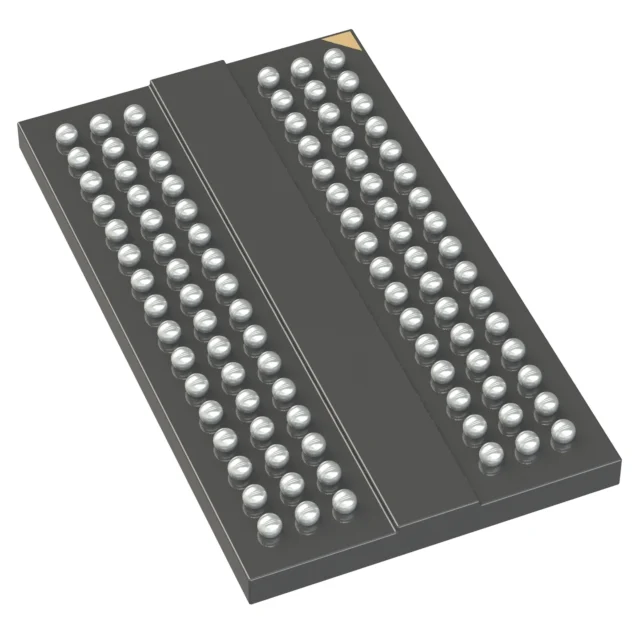
SN65C23243DLR
Brand: Texas Instruments
Texas Instruments SN65C23243DLR is a power management component designed for AI Servers & Low-Altitude Economy (Drone and UAV) and related applications. In stock at Superb Automation — request a quote for competitive pricing and fast delivery.
Product Specifications
SN65C23243DLR
Texas Instruments — Power Management & Signal Chain
Product Overview
The SN65C23243DLR from Texas Instruments is a power management / signal chain IC delivering high efficiency, precision regulation, and robust protection. Texas Instruments (TI) is a global leader in analog ICs, power management solutions, and embedded processors.
Superb Automation partners with leading brands including Qorvo, TI, ADI, XILINX, NVIDIA, Intel, ST, MACOM, Renesas, and Coilcraft to provide complete BOM and supply-chain solutions.
Key Features
- High-efficiency power conversion with low quiescent current
- Wide input voltage range with precision output regulation
- Integrated over-current, over-temperature, and short-circuit protection
- Small footprint packaging for space-constrained designs
- AEC-Q100 qualified options available for automotive applications
- Flexible sequencing and soft-start control
Key Specifications
| Input Voltage | V |
| Output Voltage | V |
| Output Current | A |
| Switching Frequency | kHz |
| Efficiency | % |
| Quiescent Current | µA |
| Topology | — |
| Package | — |
| Operating Temp | °C |
| Protection | — |
Applications
Industrial Automation
Automotive Electronics
Telecom Infrastructure
Server & Data Center Power
Medical Devices
Consumer Electronics
Request Quote — In Stock, 100% New & Original, Full Warranty
SN65C23243DLR: two full PC serial ports from one 3 V to 5.5 V rail
The SN65C23243DLR packs two complete RS-232 ports into one 48 pin SSOP body. Each port carries three line drivers and five line receivers, which is exactly the combination an IBM PC/AT style serial connector needs: nine pins per port, with the spare receivers kept for the modem status lines. A single charge pump and four small 0.22 uF capacitors generate the positive and negative rails, so the board needs no second supply and no transformer.
This is the part to pick when a control unit still has to talk to legacy serial equipment on two channels at once, for example a test rack that carries a service port and a modem port, or an industrial PC that keeps two DB9 connectors on the rear panel. The supply window runs from 3 V to 5.5 V, the inputs accept 5 V logic while the part runs on 3.3 V, and the serial port pins survive 15 kV human body discharge, which is the event a cable plugged in by hand produces.
Key data for the SN65C23243DLR
| Ports | Two independent ports, three drivers and five receivers each, 48 pins in total |
| Supply | 3 V to 5.5 V single rail, charge pump with four 0.22 uF capacitors at 3.3 V and 0.33 uF at 5 V |
| Speed | 250 kbit/s maximum data rate, driver slew rate 6 to 30 V per microsecond at 3.3 V, pulse skew 100 ns maximum |
| Current | 0.6 mA typical and 2 mA maximum with auto powerdown disabled, 1 uA typical and 20 uA maximum when powered off |
| Protection | 15 kV HBM on every serial port pin including ground, short circuit output current 35 to 60 mA |
| Logic | 2.4 V high and 0.8 V low thresholds on the SN65 member, 5 V tolerant inputs at a 3.3 V supply |
Body, marking and reel data
| Body | DL, SSOP 48, the wide 300 mil body that keeps the two port groups apart |
| Reel | 1000 pieces on a large reel for the plain SN65C23243DLR row, 2000 pieces for the .A row of the same string |
| Marking | 65C23243 on the plain row and 75C23243 on the .A row, so the two rows are told apart by the printed code |
| Handling | Moisture level 1, 260 C peak, unlimited floor life, so no bake is needed before reflow |
| Temperature | 0 C to 70 C operating free air range, which is a commercial grade part rather than an industrial one |
Where the dual port part earns its place
A single port transceiver is cheaper until the board needs two connectors. At that point the choices are two packages, two charge pump networks and twice the capacitor count, or one 48 pin body with one set of capacitors shared by both ports. The SN65C23243DLR removes eight capacitors and one package from the bill of materials, and it lets either port be powered down on its own through the FORCEOFF pins, so a unit that only uses the service port during commissioning can leave the second port off in the field.
The always active receiver on pin 42 is worth knowing about. ROUT2 stays alive when the port is forced off, which is how a host notices that a cable was plugged in while the port was idle. Boards that need that wake up behaviour should route that one receiver output to an interrupt pin rather than to a general purpose input that is scanned slowly.
Questions we get when this code is on a BOM
The first question is usually about the reel. The plain SN65C23243DLR row prints 1000 pieces on a large reel while the .A row of the same order string prints 2000, and the two rows also print different markings, 65C23243 against 75C23243. A line that counts on 2000 per reel from the plain code will be short by half on the first delivery, so the row has to be named on the purchase order and not inferred from the string.
The second question is about temperature. The part is rated 0 C to 70 C, and a cabinet that reaches 60 C inside still leaves margin, but an outdoor enclosure does not. For those builds the 3.3 V RS-232 member listed below is the industrial alternative, and we say so before a customer commits a board to a commercial grade part.
How SUPERB supports this line item
We hold and source the SN65C23243DLR as a catalogued line, with the reel size and marking checked against the vendor addendum before an offer goes out. When a build needs a second source, our pin to pin cross reference page lists the checks we run on body, pinout and charge pump capacitor count before we propose anything.
For projects where the connector count is still moving, the one stop BOM sourcing route lets a customer send the whole serial section, connectors included, and receive one offer with date codes and reel quantities stated per line.