



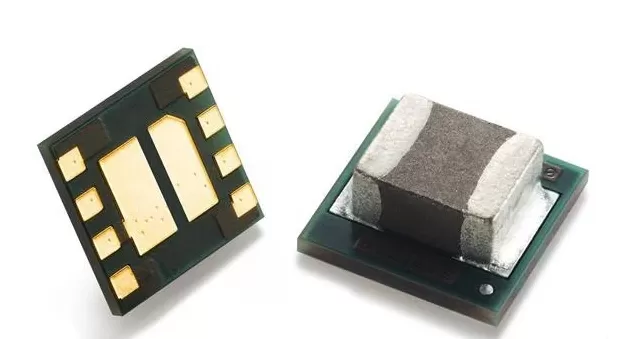
TPS82130SILR
The TPS82130SILR is a 3A step-down DC-DC converter MicroSiP module from Texas Instruments that integrates the buck converter IC, power inductor, and compensation network into a single 3.0mm x 2.8mm x 1.5mm package. With 3V to 17V input, 0.9V to 6V adjustable output, 2.5MHz fixed switching frequency, and ultra-low 1.7uA quiescent current, it delivers complete power solutions under 40mm^2 total PCB area. DCS-Control provides fast transient response with seamless PWM-to-PFM transition for high efficiency from full load to standby. Ideal for IoT sensors, wearables, industrial modules, and any space-constrained design where discrete buck converters consume too much board real estate.
Product Specifications
TPS82130SILR - TI MicroSiP Buck Module, 3A, 3V-17V Input, Integrated Inductor
Texas Instruments - 3A Continuous Output, 2.5MHz, DCS-Control, 1.7uA IQ, 8-uSiP 3x2.8x1.5mm
MFR Part #: TPS82130SILRSuperb SKU: SUP-TPS82130SILR
In Stock - Ready to Ship
The TPS82130SILR is a 3A step-down DC-DC converter MicroSiP module from Texas Instruments that integrates the buck converter IC, power inductor, and compensation network into a single 3.0mm x 2.8mm x 1.5mm package. With 3V to 17V input, 0.9V to 6V adjustable output, 2.5MHz fixed switching frequency, and ultra-low 1.7uA quiescent current, it delivers complete power solutions under 40mm^2 total PCB area. DCS-Control provides fast transient response with seamless PWM-to-PFM transition for high efficiency from full load to standby. Ideal for IoT sensors, wearables, industrial modules, and any space-constrained design where discrete buck converters consume too much board real estate.
Request QuoteContact Sales
Key Performance Highlights
Output Current
3 A Continuous
Input / Output
3-17V in, 0.9-6V out
Technology
MicroSiP Module
Quiescent Current
1.7 uA (typical)
Frequency
2.5 MHz Fixed
Package
8-uSiP (3 x 2.8 x 1.5 mm)
Technical Specifications
| Manufacturer | Texas Instruments |
| Part Number | TPS82130SILR |
| Device Type | Step-Down (Buck) DC-DC Converter Power Module |
| Technology | MicroSiP (Micro System-in-Package) |
| Input Voltage | 3 V to 17 V |
| Output Voltage | 0.9 V to 6 V (adjustable via resistor divider) |
| Output Current | 3 A continuous |
| Switching Frequency | 2.5 MHz (fixed) |
| Control Topology | DCS-Control (seamless PWM to Power Save Mode) |
| Quiescent Current (IQ) | 1.7 uA (typical) |
| Shutdown Current | < 0.1 uA (EN = low) |
| Efficiency | Up to 95% (12V to 3.3V, 1A typical) |
| Integrated Components | Buck IC + power inductor + compensation network |
| External Components | In/Out capacitors + feedback resistors + PG pull-up |
| Features | Power Good, Enable, output discharge, soft start, thermal shutdown, UVLO |
| Operating Temperature | -40C to +125C (junction) |
| Package | 8-uSiP (3.0 mm x 2.8 mm x 1.5 mm) |
| Mounting | Surface Mount (SMT) |
| RoHS | RoHS Compliant |
Product Details
MicroSiP Integrated Module Design
The TPS82130 uses MicroSiP (Micro System-in-Package) technology to integrate the bare DC-DC converter IC die and the power inductor into a single molded package. This eliminates the largest and most layout-sensitive discrete component — the inductor — reducing total solution size by 50% or more versus a discrete buck converter.
DCS-Control combines the fast transient response of hysteretic control with stable switching frequency. It seamlessly transitions into Power Save Mode at light load, maintaining high efficiency across the entire load range. The 1.7uA typical quiescent current enables months-to-years of battery operation in always-on IoT nodes.
Total BOM: Just 2 capacitors, 2 feedback resistors, and optional PG pull-up. No external inductor, Schottky diode, or compensation components. The 8-pin uSiP package (3.0x2.8x1.5mm) is approximately the size of a discrete inductor — but contains the entire power supply.
Key Applications
IoT Sensor Nodes - Battery-powered wireless sensors, environmental monitors
Wearable Devices - Smart watches, fitness trackers, medical patches
Industrial Modules - 4-20mA loop power, field transmitters, compact PLC I/O
FPGA / DSP Point-of-Load - Core/IO rail generation in space-constrained designs
Portable Medical - Glucose meters, pulse oximeters, portable diagnostics
Smart Metering - Gas/water/electricity meters with long battery life requirements
Embedded Camera Modules - Compact image sensor power rails
Integrated Module vs Discrete Buck Converter
| Feature | TPS82130SILR MicroSiP | Discrete Buck (TPS62130) |
|---|---|---|
| Total Solution Area | ~35 mm^2 | ~80 mm^2 |
| Component Count | 4-5 passives | 7-8 passives + inductor |
| Inductor Selection | Pre-integrated (no selection) | Must select & validate |
| Layout Complexity | Minimal (SW node internal) | Critical (SW node, inductor) |
| Efficiency | Up to 95% | Up to 95% |
| EMI | Lower (SW node internal) | Higher (external SW node) |
| Design Risk | Low (pre-validated) | Medium (designer validation) |
Why Source TPS82130SILR from Superb Automation?
Power Rail BOM Kitting - TPS82130 + input/output capacitors + feedback resistors + connectors - one PO
Compact PCB Design - Optimized for MicroSiP footprint, proper ground plane for thermal dissipation
Ultra-Low IQ Validation - We can verify 1.7uA standby current in production test for battery-critical designs
SMT Assembly - uSiP/module reflow with proper pad stencil design for reliable soldering
25 Years Trusted - Electronic components + PCBA partner since 2000
Genuine Parts - Direct from trusted TI channels, full lot traceability
Frequently Asked Questions
What is the TPS82130SILR used for?
The TPS82130SILR is a 3A buck converter MicroSiP module providing 0.9-6V from 3-17V input. It powers space-constrained IoT devices, wearables, industrial sensors, FPGA/ASIC rails, and battery-powered equipment. The integrated inductor and 1.7uA IQ make it ideal where board space and standby power are critical.
What is MicroSiP technology?
MicroSiP (Micro System-in-Package) from TI integrates the bare power IC die and inductor into a single molded 8-pin package. The TPS82130 packs a complete buck converter in 3.0x2.8x1.5mm — about the size of a discrete inductor alone. No external inductor is needed, dramatically reducing BOM and PCB area.
What external components are required?
Minimal: 1x input capacitor (~22uF ceramic), 1x output capacitor (~22-47uF ceramic), 2x feedback resistors to set Vout, and optional pull-up resistor for Power Good indicator. That's it — no inductor, diode, or compensation network. Total BOM: 4-5 passive components for a complete 3A power supply.
How is output voltage set?
Output voltage is adjustable from 0.9V to 6V via two external resistors (R1, R2) forming a voltage divider from VOUT to the FB pin. Formula: VOUT = 0.9V x (1 + R1/R2). TI provides recommended resistor values for common output voltages in the datasheet. Internal compensation is fixed — no external compensation selection needed.
How does DCS-Control work?
DCS-Control combines the fast transient response of hysteretic control with stable 2.5MHz switching frequency. At heavy load it operates in PWM mode. At light load it seamlessly enters Power Save Mode (PFM) without output voltage deviation. The 1.7uA quiescent current in PFM mode enables months of battery life in always-on IoT applications.