


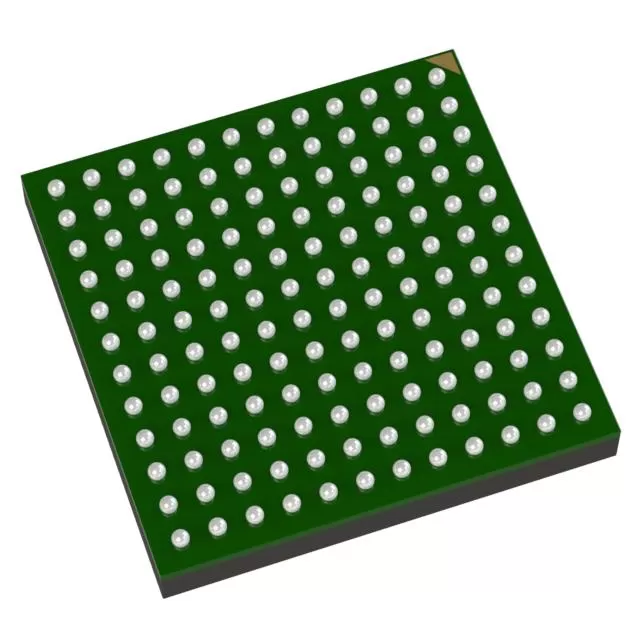

ADSP-21375KSWZ-2B
Brand: Analog Devices
Analog Devices ADSP-21375KSWZ-2B is a analog & mixed-signal component designed for Instrumentation and related applications. In stock at Superb Automation — request a quote for competitive pricing and fast delivery.
Product Specifications
ADSP-21375KSWZ-2B
Analog Devices — Analog & Mixed-Signal ICs
Product Overview
The ADSP-21375KSWZ-2B from Analog Devices is a high-performance analog / mixed-signal IC providing precision signal acquisition, conversion, and conditioning. Analog Devices (ADI) is a world leader in high-performance analog, mixed-signal, and DSP ICs for instrumentation, healthcare, automotive, and communications.
Superb Automation partners with leading brands including Qorvo, TI, ADI, XILINX, NVIDIA, Intel, ST, MACOM, Renesas, and Coilcraft to provide complete BOM and supply-chain solutions.
Key Features
- High-resolution data conversion with excellent SNR and THD
- Wide dynamic range and high linearity across operating conditions
- Integrated voltage reference with low temperature drift
- Flexible digital interface — SPI, I2C, or parallel options
- Industrial/automotive temperature range with guaranteed specs
- Low power consumption with power-down modes
Key Specifications
| Resolution | bits |
| Channels | — |
| Sample Rate | kSPS |
| Interface | — |
| Supply Voltage | V |
| Operating Temp | °C |
| Package | — |
| INL | LSB |
| SNR | dB |
| THD | dB |
Applications
Precision Instrumentation
Industrial Process Control
Medical Imaging & Diagnostics
Automotive Sensor Interfaces
Communications Infrastructure
Test & Measurement
Request Quote — In Stock, 100% New & Original, Full Warranty
ADSP-21375KSWZ-2B: 266 MHz SHARC with 0.5 Mbit of SRAM
The ADSP-21375KSWZ-2B is a 32-bit and 40-bit floating point SHARC processor with a single instruction multiple data core, 0.5 Mbit of on-chip SRAM, 2 Mbit of mask programmable ROM and 16 PWM outputs, in the 208-lead LQFP_EP package. It is bought for audio and industrial signal chains that were written for the SHARC instruction set and need the same code to run on a replacement board. The K letter and the 2B suffix decide the temperature range and the instruction rate, and both are printed in the ordering guide rather than on the front page.
Published values
| Parameter | Value |
|---|---|
| Core | 32-bit and 40-bit floating point, SIMD architecture |
| Instruction rate, this code | 266 MHz, a 3.76 ns cycle |
| On-chip SRAM | 0.5 Mbit, which is 64 KB |
| On-chip ROM | 2 Mbit mask programmable, which is 256 KB |
| Package | 208-lead LQFP_EP, option SW-208-1 |
| Temperature range | 0 C to +70 C, K grade |
| PWM outputs | 16, arranged as four groups of four |
| Memory protection | JTAG access to memory gated by a 64-bit key |
| Supply and I/O | Core and I/O rails per the data sheet power table, 3.3 V class peripherals |
| Code compatibility | Source compatible with the rest of the SHARC family |
The K grade is a commercial temperature part
The ordering guide lists the K code at 0 C to +70 C and the B code at -40 C to +85 C, with the same 266 MHz rate and the same memory sizes. Two order codes that differ by one letter therefore differ by 125 degrees of rated window, and a board specified for an industrial ambient cannot use this code however good the bench result looks.
The automotive table goes further and lists W parts at -40 to +85 C and -40 to +105 C. Those are separate models with their own suffixes, so the temperature question is answered from the ordering guide, never from the family summary.
Mask ROM is a volume decision, not a free 256 KB
The 2 Mbit of ROM is programmed at mask, so the image is fixed once wafers are built. That is fine for a product whose firmware is frozen and expensive for a product that still ships updates, which is why so many boards in this family boot from external memory and treat the on-chip ROM as a fallback.
SRAM is the working space: 64 KB here against 128 KB on the ADSP-21371. The difference is the first thing to check when a project moves from a 21371 board to this part, because audio delay lines and filter states are what fill it.
Reading the family summary correctly
The summary page names the S/PDIF receiver and transmitter and the eight dual data line serial ports under the ADSP-21371. Those blocks are described for that model by name, so a 21375 socket has to be confirmed against its own peripheral list rather than against the first page of a document that covers both parts.
At 266 MHz the cycle is 3.76 ns, which is the number a filter budget is written in. A 48 kHz frame is 20.8 us, or about 5530 cycles, so the headroom is decided by how much of the chain runs in SIMD mode rather than by the clock alone.
Where these boards come from
Most demand is replacement: a mixing console, a sonar front end or a test instrument whose original processor line has been trimmed. The parts are sourced against the exact suffix, because K and B grade boards are not interchangeable at temperature and the ROM image differs between projects.
Two pages worth reading before a purchase order goes out are the ADI second source page and the obsolete part cross reference hub; the first lists what else fits the socket, the second is the test sequence for a drop in, and how to verify a drop in replacement covers the case where the shortage is already on the line.
Two questions buyers ask
Is the 2B suffix a 200 MHz part? No. The ordering guide lists 266 MHz for the -2B code. The 200 MHz rate appears in the automotive products table, which is a different set of models.
Can a K grade board be built with a B grade part? The B grade is wider at -40 to +85 C, so it covers the K window, but it is a separate order code with its own price and lead time. We confirm the grade on the purchase order rather than assume the wider part will be substituted silently.