


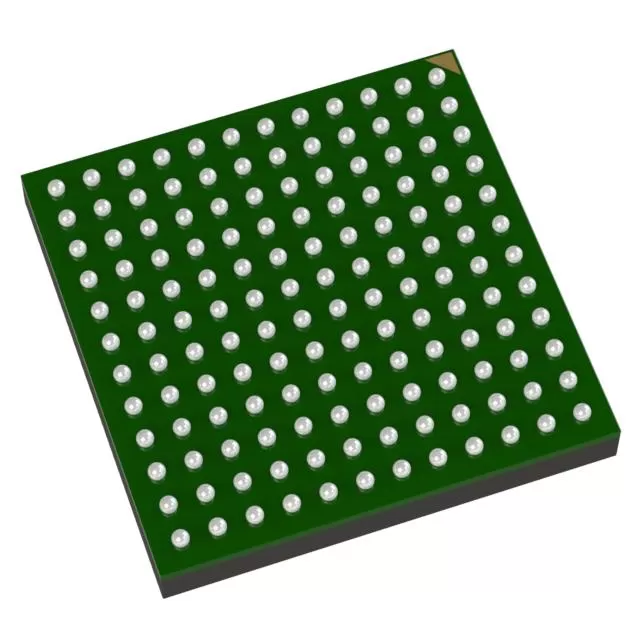

ADA4891-2ARMZ
Brand: Analog Devices
Analog Devices ADA4891-2ARMZ is a analog & mixed-signal component designed for Instrumentation and related applications. In stock at Superb Automation — request a quote for competitive pricing and fast delivery.
Product Specifications
ADA4891-2ARMZ
Analog Devices — Analog & Mixed-Signal ICs
Product Overview
The ADA4891-2ARMZ from Analog Devices is a high-performance analog / mixed-signal IC providing precision signal acquisition, conversion, and conditioning. Analog Devices (ADI) is a world leader in high-performance analog, mixed-signal, and DSP ICs for instrumentation, healthcare, automotive, and communications.
Superb Automation partners with leading brands including Qorvo, TI, ADI, XILINX, NVIDIA, Intel, ST, MACOM, Renesas, and Coilcraft to provide complete BOM and supply-chain solutions.
Key Features
- High-resolution data conversion with excellent SNR and THD
- Wide dynamic range and high linearity across operating conditions
- Integrated voltage reference with low temperature drift
- Flexible digital interface — SPI, I2C, or parallel options
- Industrial/automotive temperature range with guaranteed specs
- Low power consumption with power-down modes
Key Specifications
| Resolution | bits |
| Channels | — |
| Sample Rate | kSPS |
| Interface | — |
| Supply Voltage | V |
| Operating Temp | °C |
| Package | — |
| INL | LSB |
| SNR | dB |
| THD | dB |
Applications
Precision Instrumentation
Industrial Process Control
Medical Imaging & Diagnostics
Automotive Sensor Interfaces
Communications Infrastructure
Test & Measurement
Request Quote — In Stock, 100% New & Original, Full Warranty
ADA4891-2ARMZ: two 220 MHz CMOS amplifiers with a 125 mA output
The ADA4891-2ARMZ is a dual CMOS rail to rail amplifier with a 220 MHz minus 3 dB bandwidth at unity gain, 170 V per microsecond of slew rate and 28 ns settling to 0.1 percent, on 4.4 mA per amplifier. Its output swings to within 50 mV of either rail and delivers 125 mA of linear current, which is unusual at this price and current. Video parameters are 0.1 dB flatness to 25 MHz, 0.05 percent differential gain and 0.25 degrees of differential phase.
Published values
| Parameter | Value |
|---|---|
| Channels | 2 |
| Bandwidth | 220 MHz at unity gain |
| Slew rate | 170 V per microsecond, a 2 V step in 11.8 ns at the slew limit |
| Settling | 28 ns to 0.1 percent |
| Output current | 125 mA linear at minus 40 dBc |
| Output swing | within 50 mV of either rail |
| Video flatness | 0.1 dB to 25 MHz |
| Differential gain and phase | 0.05 percent, 0.25 degrees |
| Distortion | 79 dBc spurious free dynamic range at 1 MHz |
| Supply current | 4.4 mA per amplifier, 44 mW for the pair at 5 V |
| Supply | 2.7 V to 5.5 V |
| Qualification | automotive |
| Package | 8-lead MSOP, also 8-lead SOIC |
A line driver that does not need a buffer stage
A hundred and twenty five milliamps of linear output current at 5 V is enough to drive a coaxial cable or a 50 ohm load directly, which removes a discrete buffer from the BOM. On a video output that is the difference between one part and three, and on a board where the connector is close to the amplifier it also removes the stability problems that a buffer brings.
The 50 mV of headroom from each rail means a rail to rail signal is available, and the 0.05 percent differential gain keeps the colour subcarrier stable across the picture. On a 3 V supply the same output current is not available, so a customer moving from 5 V to 3 V must re check the load and the distortion at the current the load draws.
Where 220 MHz is real and where it is not
The bandwidth is quoted at unity gain. At a gain of 2 it halves and at a gain of 10 it is around 22 MHz, which is still enough for video but not for an IF stage. Customers frequently compare this number against a current feedback amplifier's headline bandwidth and conclude the parts are equivalent; they are not, and the gain at which each was measured decides which one is suitable.
The 28 ns settling time at 0.1 percent suits a multiplexed ADC front end, and the output current lets the amplifier drive the sampling capacitor through a resistor without an intermediate buffer. What it does not do is drive a large capacitive load directly: 125 mA into a 1 nF load is a very fast edge and a very likely oscillation, so a series resistor at the output is part of the application and not an optional component.
CMOS input and the leakage that comes with it
A CMOS input has very low bias current and a comparatively high input capacitance, and at 220 MHz that capacitance is part of the feedback loop. In a transimpedance stage the input capacitance adds a pole, and the value that matters is the total of the amplifier, the source and the board. A part with lower capacitance is the right choice for a wideband photodiode stage, even at a higher price.
The automotive qualification and the 8-lead MSOP package make this a common choice in camera and sensor modules where space and temperature both matter. The MSOP and the SOIC are the same die in different packages, and the order code decides which ships, which is the kind of detail that stops a line when only one of the two is on the approved vendor list.
When an order code in this family cannot be found, how to verify a drop in replacement lists what else does the same job, the pin to pin cross reference covers what to check before a part is dropped into an existing board, and BOM shortage recovery is the route we take on a live shortage.
Two questions buyers ask
Can it drive a 75 ohm video cable on a 3.3 V supply? It can drive the cable, with less headroom and less output current than at 5 V. The distortion and the swing at 3.3 V should be checked against the standard the customer is shipping to.
Is the ARMZ package the same part as the ARZ? It is the same amplifier in an 8-lead MSOP instead of an 8-lead SOIC. The electrical specification is the same and the footprint is not.