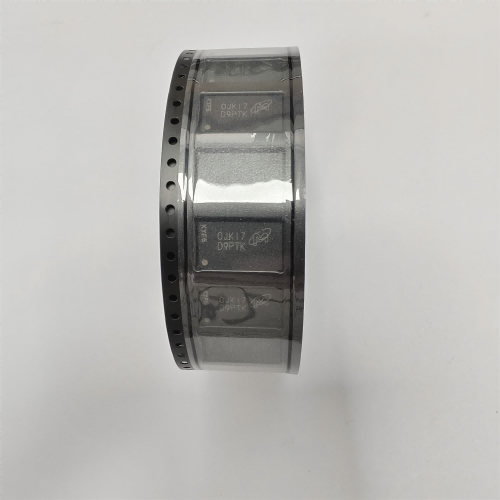
AD8032ARZ-REEL7
Brand: Analog Devices
Analog Devices AD8032ARZ-REEL7 is a analog & mixed-signal component designed for Precision Instrumentation and related applications. In stock at Superb Automation — request a quote for competitive pricing and fast delivery.
Product Specifications
AD8032ARZ-REEL7
Analog Devices — Analog & Mixed-Signal ICs
Product Overview
The AD8032ARZ-REEL7 from Analog Devices is a high-performance analog / mixed-signal IC providing precision signal acquisition, conversion, and conditioning. Analog Devices (ADI) is a world leader in high-performance analog, mixed-signal, and DSP ICs for instrumentation, healthcare, automotive, and communications.
Superb Automation partners with leading brands including Qorvo, TI, ADI, XILINX, NVIDIA, Intel, ST, MACOM, Renesas, and Coilcraft to provide complete BOM and supply-chain solutions.
Key Features
- High-resolution data conversion with excellent SNR and THD
- Wide dynamic range and high linearity across operating conditions
- Integrated voltage reference with low temperature drift
- Flexible digital interface — SPI, I2C, or parallel options
- Industrial/automotive temperature range with guaranteed specs
- Low power consumption with power-down modes
Key Specifications
| Resolution | bits |
| Channels | — |
| Sample Rate | kSPS |
| Interface | — |
| Supply Voltage | V |
| Operating Temp | °C |
| Package | — |
| INL | LSB |
| SNR | dB |
| THD | dB |
Applications
Precision Instrumentation
Industrial Process Control
Medical Imaging & Diagnostics
Automotive Sensor Interfaces
Communications Infrastructure
Test & Measurement
AD8032ARZ-REEL7: 80 MHz for 4 Milliwatts and the Rail That Makes It Possible
The AD8032ARZ-REEL7 is a dual voltage feedback amplifier with 80 MHz of small signal bandwidth, a 30 V per microsecond slew rate and 125 ns settling to 0.1 percent, running on 800 uA per amplifier from a single 2.7 V rail. Its input common mode range extends 200 mV beyond both rails and its output swings to within 20 mV of either rail, so a single 3 V supply can carry a signal that fills the converter input range.
Supply current against settling time
At 5 V the part dissipates 4 mW per amplifier. The figure that matters for a multiplexed data acquisition front end is the 125 ns settling to 0.1 percent, because that is what allows a channel to be acquired in a fraction of a microsecond after the multiplexer moves. A 4 mW amplifier that settles in 125 ns replaces a 40 mW amplifier that settles in 40 ns in any system whose converter takes more than 1 us per conversion. This is the arithmetic that decides most battery powered instrument front ends.
What the published figures convert to
| Parameter | Published figure | What it means on a board |
|---|---|---|
| Small signal bandwidth | 80 MHz at a gain of 1 | 8 MHz at a gain of 10, which still covers a 1 MSPS converter input |
| Slew rate | 30 V per microsecond | At 2 V peak to peak the full power bandwidth is 4.8 MHz, not 80 MHz |
| Settling time | 125 ns to 0.1 percent | Enough for a 1 MSPS multiplexed path with a 1 us conversion window |
| Supply current | 800 uA per amplifier | 4 mW per amplifier at 5 V, so a four channel path costs 16 mW |
| Bandwidth per milliamp | 100 MHz per mA | The comparison figure when a lower power part is proposed |
| Output swing | Within 20 mV of either rail | A 3 V rail gives about 2.96 V of usable output range |
| Input common mode | 200 mV beyond either rail | Signals that sit at the rail are inside the window, not outside |
| Output current | 15 mA | 1.5 V into a 100 ohm load, enough for a cable or a transformer primary |
| Distortion | Minus 62 dB at 1 MHz, minus 86 dB at 100 kHz | Suited to 12 bit and 14 bit paths, not to 18 bit audio |
| Supply range | 2.7 V to 12 V single, up to plus and minus 6 V | One part covers a 3 V battery rail and a plus and minus 5 V analog rail |
| Offset voltage | 1.5 mV maximum in the high grade | 0.05 percent of a 3 V full scale, which is inside a 12 bit budget |
| Phase reversal | None with the input 0.5 V beyond the supplies | A fault or a hot plug event does not invert the output |
Checks before accepting a cross reference
- Compare the settling time to 0.1 percent, not the bandwidth. A faster amplifier that rings for 300 ns is slower in a multiplexed system.
- Check the output swing at the real load current. A rail to rail part that sources 15 mA at 20 mV from the rail may only reach 200 mV from it at 5 mA in the other direction.
- Confirm the input common mode range includes the rail. Many low power parts are rail to rail output only.
- Ask for the capacitive load stability. A converter with a 100 pF sample capacitor benefits from the isolation resistor the datasheet already assumes.
- Verify the grade. The 1.5 mV offset option is a distinct order code from the standard grade.
Where this part is used
Single supply ADC buffers, portable medical instruments, active filters with a low power budget, photodiode preamplifiers where the bandwidth is modest and battery powered test equipment. The part also appears as a cable driver where the 15 mA output current is the reason it was selected.
Questions buyers ask
Does it work on 3 V? Yes, it is fully specified at 2.7 V, 5 V and plus and minus 5 V, and the 80 MHz figure holds at 5 V.
Can it drive a 16 bit converter? The distortion and offset suit 12 bit and 14 bit converters. For 16 bit and above the converter's own settling requirement usually points to a higher current amplifier.
What is the difference from the single? The single AD8031 is the same amplifier in a single package, so a four channel path can be built from two duals or four singles with the same behaviour.
Sourcing notes and next step
The dual sits in the amplifier group on the analog and mixed signal index, and the settling and distortion comparisons against alternative parts are in the amplifier cross reference. Front ends that feed a converter are described in the ADC and DAC cross reference. Send the supply rail, the signal amplitude, the load and the converter sample rate and we will confirm the grade and the reel.
Request Quote — In Stock, 100% New & Original, Full Warranty