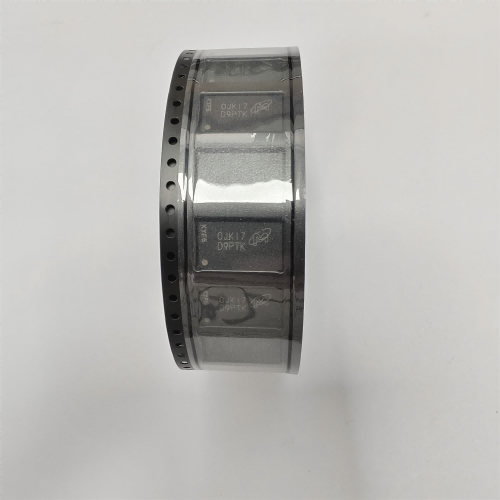
AD7760BSVZ
Brand: Analog Devices
Analog Devices AD7760BSVZ is a analog & mixed-signal component designed for Precision Instrumentation and related applications. In stock at Superb Automation — request a quote for competitive pricing and fast delivery.
Product Specifications
AD7760BSVZ
Analog Devices — Analog & Mixed-Signal ICs
Product Overview
The AD7760BSVZ from Analog Devices is a high-performance analog / mixed-signal IC providing precision signal acquisition, conversion, and conditioning. Analog Devices (ADI) is a world leader in high-performance analog, mixed-signal, and DSP ICs for instrumentation, healthcare, automotive, and communications.
Superb Automation partners with leading brands including Qorvo, TI, ADI, XILINX, NVIDIA, Intel, ST, MACOM, Renesas, and Coilcraft to provide complete BOM and supply-chain solutions.
Key Features
- High-resolution data conversion with excellent SNR and THD
- Wide dynamic range and high linearity across operating conditions
- Integrated voltage reference with low temperature drift
- Flexible digital interface — SPI, I2C, or parallel options
- Industrial/automotive temperature range with guaranteed specs
- Low power consumption with power-down modes
Key Specifications
| Resolution | bits |
| Channels | — |
| Sample Rate | kSPS |
| Interface | — |
| Supply Voltage | V |
| Operating Temp | °C |
| Package | — |
| INL | LSB |
| SNR | dB |
| THD | dB |
Applications
Precision Instrumentation
Industrial Process Control
Medical Imaging & Diagnostics
Automotive Sensor Interfaces
Communications Infrastructure
Test & Measurement
AD7760BSVZ: 2.5 MSPS 24 Bit Sigma-Delta With a Buffer Inside
The AD7760BSVZ is a 24 bit sigma-delta converter that delivers fully filtered output words at up to 2.5 MSPS, with a differential amplifier on the die to buffer the modulator input. It sits between precision converters that are too slow and pipeline converters that are not accurate enough, which is where vibration analysis, power quality measurement and medical imaging front ends live.
What the part is
A sigma-delta modulator with a programmable oversampling ratio from 8 to 256, followed by a finite impulse response filter whose coefficients are either the default set or user supplied. Dynamic range is 120 dB at a 78 kHz output word rate and 100 dB at 2.5 MHz, with signal to noise ratio of 112 dB and 100 dB at the same two rates. The on-chip differential amplifier means the input does not need an external buffer, and a modulator output mode gives access to the raw bitstream when the filter belongs in an FPGA. An overrange alert bit and digital offset and gain correction registers are included.
Key parameters
| Parameter | Value |
|---|---|
| Resolution | 24 bit |
| Maximum output word rate | 2.5 MSPS, fully filtered |
| Dynamic range | 120 dB at 78 kHz, 100 dB at 2.5 MHz |
| Signal to noise ratio | 112 dB at 78 kHz, 100 dB at 2.5 MHz |
| Oversampling ratio | 8 to 256, programmable |
| Input | fully differential modulator input with on-chip buffer |
| Digital filter | low pass FIR, default or user coefficients |
| Extra modes | modulator output, overrange bit, offset and gain registers |
| Evaluation board | EVAL-AD7760 |
What the numbers mean on a board
100 dB of signal to noise ratio at 2.5 MSPS is 16.3 effective bits, and 112 dB at 78 kHz is 18.3, so the 24 bit word carries between sixteen and eighteen real bits depending on the rate chosen. Choosing 2.5 MSPS with an oversampling ratio of 8 runs the modulator at 20 MHz, which is the clock that has to be clean and the figure that decides the board stack and decoupling. Because the filter coefficients can be loaded, a channel can be tuned for a specific vibration band instead of taking the default response, and that is often the reason this part is chosen over a general purpose converter. The overrange bit is worth connecting: at high rates the input can clip before the output word saturates.
Where it is used
- Vibration and structural monitoring
- Power quality and grid measurement
- Medical imaging and ultrasound front ends
- High dynamic range instrumentation and sonar
Wideband precision acquisition, in practice
The differential input buffer on the die removes one amplifier from the board, but it does not remove the need for a quiet input network: at 2.5 MSPS the modulator runs at 20 MHz with an oversampling ratio of 8, and any noise that reaches the modulator inside that band is folded into the result. The second point is the digital filter. Loading custom coefficients turns the converter into a channel tuned to a band, which is powerful and also means the response is no longer the one in the default table, so the coefficients belong under version control with the rest of the firmware. The third is the interface rate: a 2.5 MSPS 24 bit stream is 60 Mbit per second, which is a real constraint on the controller and often the reason the modulator output mode is used instead.
Sourcing notes and next step
The BSVZ code is the 64-lead LQFP body, and the converter is normally bought with the evaluation board once during development, which shares the same order channel. Converter families for wideband precision acquisition are compared on the ADC and DAC cross reference page, and instrument grade front ends including medical imaging are on the medical device components page. The full catalogue is on the analog and mixed signal family page. Send the order code, the word rate you run and the annual quantity, and we confirm stock and date code.
Request Quote — In Stock, 100% New & Original, Full Warranty