
UCC20225QNPLRQ1
Brand: Texas Instruments
Texas Instruments UCC20225QNPLRQ1 is a power management component designed for AI Servers & Low-Altitude Economy (Drone and UAV) and related applications. In stock at Superb Automation — request a quote for competitive pricing and fast delivery.
Product Specifications
UCC20225QNPLRQ1
Texas Instruments — Power Management & Signal Chain
Product Overview
The UCC20225QNPLRQ1 from Texas Instruments is a power management / signal chain IC delivering high efficiency, precision regulation, and robust protection. Texas Instruments (TI) is a global leader in analog ICs, power management solutions, and embedded processors.
Superb Automation partners with leading brands including Qorvo, TI, ADI, XILINX, NVIDIA, Intel, ST, MACOM, Renesas, and Coilcraft to provide complete BOM and supply-chain solutions.
Key Features
- High-efficiency power conversion with low quiescent current
- Wide input voltage range with precision output regulation
- Integrated over-current, over-temperature, and short-circuit protection
- Small footprint packaging for space-constrained designs
- AEC-Q100 qualified options available for automotive applications
- Flexible sequencing and soft-start control
Key Specifications
| Input Voltage | V |
| Output Voltage | V |
| Output Current | A |
| Switching Frequency | kHz |
| Efficiency | % |
| Quiescent Current | µA |
| Topology | — |
| Package | — |
| Operating Temp | °C |
| Protection | — |
Applications
Industrial Automation
Automotive Electronics
Telecom Infrastructure
Server & Data Center Power
Medical Devices
Consumer Electronics
Request Quote — In Stock, 100% New & Original, Full Warranty
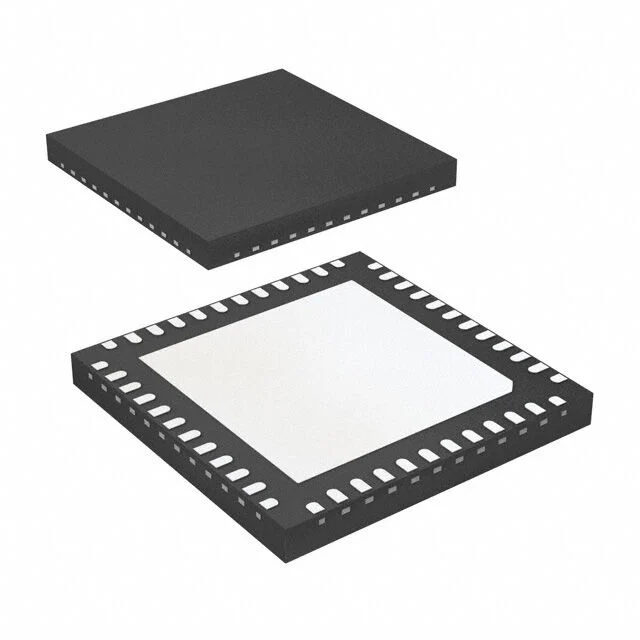
UCC20225QNPLRQ1: 4 A source and 6 A sink in a 5 mm by 5 mm LGA, with 19 ns of propagation delay
The UCC20225QNPLRQ1 is an automotive qualified isolated dual channel gate driver with a single PWM input. The input side is separated from the two output drivers by a 2.5 kVRMS isolation barrier rated for 100 volts per nanosecond of common mode transient immunity, and the two output channels are functionally isolated from each other for working voltages up to 700 VDC. It drives 4 A source and 6 A sink peak, switches up to 5 MHz, and quotes 19 ns typical propagation delay with 5 ns maximum delay matching and 6 ns maximum pulse width distortion.
Its place in the market is the 48 V automotive system. A 5 mm by 5 mm LGA-13 with 3535 VPK isolation per VDE V 0884-11 and 2500 VRMS per UL 1577 fits under a DC/DC brick or beside a 48 V to 12 V converter where a SOIC-16 wide body does not, and the single input with a resistor programmed dead time means one PWM line from the controller drives a half bridge. The input accepts 3 V to 18 V and the output side runs up to 25 V with 5 V and 8 V UVLO options, so the same code family covers a logic level MOSFET bridge and a 15 V IGBT bridge.
Key electrical data for the UCC20225QNPLRQ1
| Drive | 4 A peak source and 6 A peak sink, single PWM input, dual output |
| Timing | 19 ns typical propagation delay, 5 ns maximum delay matching, 6 ns maximum pulse width distortion |
| Isolation | 2.5 kVRMS barrier, 3535 VPK per VDE V 0884-11, 2500 VRMS for one minute per UL 1577, 700 VDC between outputs |
| Immunity | Common mode transient immunity above 100 V per nanosecond, rejects input transients shorter than 5 ns |
| Supplies | VCCI 3 V to 18 V, VDD up to 25 V, 5 V and 8 V UVLO options, all rails protected |
| Grade | AEC-Q100 grade 1, HBM classification H2, CDM classification C6, -40 C to 125 C |
Package, marking and reel data
| Body | NPL, 13 pin very thin LGA, 5.00 mm by 5.00 mm |
| Reel | 3000 pieces on a large reel for the A version, the plain row is published with plating marked Call TI |
| Plating | NIAU on the A row, no plating data on the plain row |
| Function | Programmable dead time by resistor on DT, DIS pin shuts both outputs, TTL and CMOS inputs |
The dead time resistor is the setting that matters
With a single input, the two outputs switch in opposition, and the dead time between them is set by a resistor from the DT pin to ground. Too short and the half bridge shoots through, too long and the body diode of the low side MOSFET conducts for longer than it should, which costs efficiency and heats the die. The vendor's table maps resistance to dead time, and the tolerance of that resistor plus the part spread is the window the bridge has to survive, so a 1 percent resistor is the right choice rather than a 5 percent one.
The other setting is the DIS pin: pulled high, both outputs go low within the propagation delay, which is the behaviour an overcurrent comparator wants when it needs to stop a bridge faster than the controller can react. Left grounded, the part runs normally. A 48 V to 12 V converter that has to survive a shorted output uses that pin as the second line of defence behind the current sense. Our how to verify a drop in replacement page covers what to check when a second source is proposed for this family.
Buyer questions on the UCC20225QNPLRQ1
Is the plain row the same silicon as the A row? The A row is the later revision and carries a published plating callout. The plain row appears in the addendum with plating and moisture data marked Call TI, so a lot that matters for reflow has to be qualified on the row that actually ships.
Can the two outputs drive independent half bridges? They are functionally isolated to 700 VDC between channels, so they can sit on two different phases of the same bridge, provided the working voltage between the two reference nodes stays inside that limit.
What does the DIS pin do to the output timing? It pulls both outputs low, and the delay from the DIS pin to the output is specified separately from the PWM path, so a fault response has to budget the DIS delay rather than the propagation delay.
Availability and cross reference
The A version ships 3000 pieces per reel with NIAU plating. Because the plain and A rows differ in the published plating and moisture data, we quote the exact row rather than the family name, and the packing list carries the row suffix. Automotive customers get the AEC-Q100 test report with the shipment, and our supplier quality audit page describes the record we keep for each lot.