


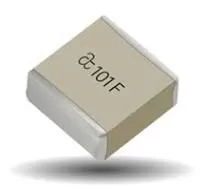

TPSM365R6FRDNR
Brand: Texas Instruments
Texas Instruments TPSM365R6FRDNR is a power management component designed for AI Servers & Low-Altitude Economy (Drone and UAV) and related applications. In stock at Superb Automation — request a quote for competitive pricing and fast delivery.
Product Specifications
TPSM365R6FRDNR
Texas Instruments — Power Management & Signal Chain
Product Overview
The TPSM365R6FRDNR from Texas Instruments is a power management / signal chain IC delivering high efficiency, precision regulation, and robust protection. Texas Instruments (TI) is a global leader in analog ICs, power management solutions, and embedded processors.
Superb Automation partners with leading brands including Qorvo, TI, ADI, XILINX, NVIDIA, Intel, ST, MACOM, Renesas, and Coilcraft to provide complete BOM and supply-chain solutions.
Key Features
- High-efficiency power conversion with low quiescent current
- Wide input voltage range with precision output regulation
- Integrated over-current, over-temperature, and short-circuit protection
- Small footprint packaging for space-constrained designs
- AEC-Q100 qualified options available for automotive applications
- Flexible sequencing and soft-start control
Key Specifications
| Input Voltage | V |
| Output Voltage | V |
| Output Current | A |
| Switching Frequency | kHz |
| Efficiency | % |
| Quiescent Current | µA |
| Topology | — |
| Package | — |
| Operating Temp | °C |
| Protection | — |
Applications
Industrial Automation
Automotive Electronics
Telecom Infrastructure
Server & Data Center Power
Medical Devices
Consumer Electronics
Request Quote — In Stock, 100% New & Original, Full Warranty
TPSM365R6FRDNR: a 65 V input module that holds one frequency under any load
The TPSM365R6FRDNR is a complete 600 mA step-down converter in an 11 pin QFN of 4.5 mm by 3.5 mm by 2 mm, with the switches, the inductor and the boot capacitor already inside. The F in the order code marks the version that runs in forced PWM only: the module keeps switching at the frequency set by the resistor on the RT pin, 200 kHz to 2.2 MHz, no matter how light the load is. That is the opposite of an efficiency choice and it is deliberate. A constant frequency keeps the output ripple a known shape, keeps the emission spectrum fixed and keeps the loop response identical from 1 mA to 600 mA, which is what an analog or RF rail needs when the load is a front end that must not see a mode change.
The input range is 3 V to 65 V, with 70 V transient capability, and the module is specified for CISPR11 class B radiated emission as a complete unit. Pseudo random spread spectrum moves the switching harmonics slightly, and the HotRod package puts the switch node on a small loop so the high di over dt area is short. The no-load current is 17 uA typical on the adjustable output version, because the feedback divider is external and draws current continuously, against 0.67 uA on the fixed 3.3 V and 5 V versions.
Key electrical data on the page
| Input range | 3 V to 65 V operating after start, rising threshold 3.4 V to 3.6 V, falling 2.45 V to 3.0 V |
| Output | 600 mA on the R6, 300 mA on the R3 die, adjustable 1 V to 13 V with an external divider |
| No-load current | 17 uA typical and 24 uA maximum on the adjustable version, 11 uA on the same die at 13.5 V in |
| Switching | 200 kHz to 2.2 MHz set by the RT resistor, 2.2 MHz with RT tied to ground |
| Soft start | 2.58 ms typical from the first switch pulse to 90 percent of the set point |
| Power good | open drain, upper threshold 107 percent, lower 94 percent, 25 us de-glitch on the falling edge |
| Thermal | junction to ambient 56.3 C per W, junction to board 17.3 C per W on a four layer test board |
Package, marking and reel data
| Body | QFN-FCMOD RDN, 11 pins, 4.5 mm by 3.5 mm by 2.0 mm overmoulded module |
| Reel | 3000 pieces on a 330 mm reel, 17.6 mm carrier, 8 mm pitch, quadrant Q1 |
| A0 3.80 mm, B0 4.80 mm, K0 2.30 mm, carrier width 12.0 mm | |
| Finish and moisture | tin, level 3 at 260 C, 168 hour floor life |
| Marking and grade | 365R6F on the top, rated -40 C to 125 C junction |
Where forced PWM is worth the standing current
Three loads in our customer base want this version. The first is a sensor front end on a 24 V industrial bus, where a PFM burst at light load puts a few millivolts of low frequency ripple straight onto the reference. The second is a radio module that is idle most of the time and must not produce a spur that moves with the duty cycle. The third is any rail whose load steps between 1 mA and the full 600 mA fast enough that a mode change would show up as a settling tail on a scope. In all three the extra standing current of tens of microamps is cheap against a filter that would otherwise be needed.
The 65 V ceiling makes the module usable directly on a 48 V rail, which removes a pre regulator from a telecom or a PoE board. The four external components are an input capacitor, an output capacitor, the feedback divider on the adjustable version and the RT resistor, and with the inductor already inside there is no magnetic part to qualify. The PGOOD output is a real comparator with 1.8 percent of hysteresis, not a flag tied to the enable, so it can hold a downstream converter off until the rail is genuinely in window.
Buyer questions on the TPSM365R6FRDNR
Can the RT pin be left open? No. The RT version needs a resistor from RT to ground, or the pin tied to ground for the 2.2 MHz setting. A floating pin leaves the oscillator undefined and the module may not start.
How is this different from the plain TPSM365R6RDNR? That one carries the MODE/SYNC pin instead of RT. It can run in PFM at light load, can be synchronised to an external clock, and holds about 0.7 uA of no-load current on the fixed versions. This one trades that for a single fixed frequency.
Is the module a drop in replacement for the TPSM33625? The pin out is compatible, which is why the family is often used as a second source on an existing board. The input range and the current rating have to be checked against the original part before the order code is swapped.
Buying this part through a component supplier
A module with an internal inductor is bought as a single line item but behaves like three parts on a BOM, and the substitution question is almost always about the frequency pin. We supply the F, V3 and plain versions as separate codes and record the marking on the reel label through date code management. When a build needs a module that is not in the channel, BOM shortage recovery looks for the same die in another body before a board change is considered, and the power management cross reference lists the 65 V modules we can compare by length and pin count.