TPS7A0331PDBVR
Brand: Texas Instruments
Texas Instruments TPS7A0331PDBVR is a power management component designed for AI Servers & Low-Altitude Economy (Drone and UAV) and related applications. In stock at Superb Automation — request a quote for competitive pricing and fast delivery.
Product Specifications
TPS7A0331PDBVR
Texas Instruments — Power Management & Signal Chain
Product Overview
The TPS7A0331PDBVR from Texas Instruments is a power management / signal chain IC delivering high efficiency, precision regulation, and robust protection. Texas Instruments (TI) is a global leader in analog ICs, power management solutions, and embedded processors.
Superb Automation partners with leading brands including Qorvo, TI, ADI, XILINX, NVIDIA, Intel, ST, MACOM, Renesas, and Coilcraft to provide complete BOM and supply-chain solutions.
Key Features
- High-efficiency power conversion with low quiescent current
- Wide input voltage range with precision output regulation
- Integrated over-current, over-temperature, and short-circuit protection
- Small footprint packaging for space-constrained designs
- AEC-Q100 qualified options available for automotive applications
- Flexible sequencing and soft-start control
Key Specifications
| Input Voltage | V |
| Output Voltage | V |
| Output Current | A |
| Switching Frequency | kHz |
| Efficiency | % |
| Quiescent Current | µA |
| Topology | — |
| Package | — |
| Operating Temp | °C |
| Protection | — |
Applications
Industrial Automation
Automotive Electronics
Telecom Infrastructure
Server & Data Center Power
Medical Devices
Consumer Electronics
Request Quote — In Stock, 100% New & Original, Full Warranty
TPS7A0331PDBVR: the 3.1 V trim in the five pin SOT-23
The TPS7A0331PDBVR is a 3.1 V fixed output of the TPS7A03 family in the five pin SOT-23 body coded DBV. The 3.1 V point is unusual, and it exists for a practical reason: a rail that has to stay above 3.0 V over temperature from a 3.3 V source, where a 3.3 V regulator would drop out as soon as the source sags. With 400 mV of maximum dropout in the 2.5 V to 3.3 V band, a 3.1 V output holds regulation from a 3.5 V input at the full 200 mA.
The electrical core is the same as the rest of the line: 200 mA, 200 nA of quiescent current, a 1.5 V to 6.0 V input window, 1 percent at 25 degrees and 1.5 percent over the full junction range. The DBV body is the one most assembly houses already have a footprint for, which makes it the practical choice for a first prototype that later moves to the 1 mm X2SON body.
Key electrical data for the 3.1 V point
| Input range | 1.5 V to 6.0 V, 3.5 V minimum for full regulation at 200 mA |
| Output current | 200 mA, current limit 240 mA to 750 mA, short circuit 65 mA |
| Quiescent current | 200 nA typical, 250 nA maximum at 25 C, 220 nA in dropout |
| Accuracy | plus or minus 1 percent at 25 C, plus or minus 1.5 percent over temperature |
| Dropout at 200 mA | 310 mV maximum in the 2.5 V to 3.3 V band, 360 mV over the full range |
| Load and line | 38 mV of load regulation from 1 mA to 200 mA, 5 mV of line regulation |
| Thermal shutdown | 170 C rising, 145 C reset, with the enable pin pulled down at 500 kOhm |
Package, marking and reel data
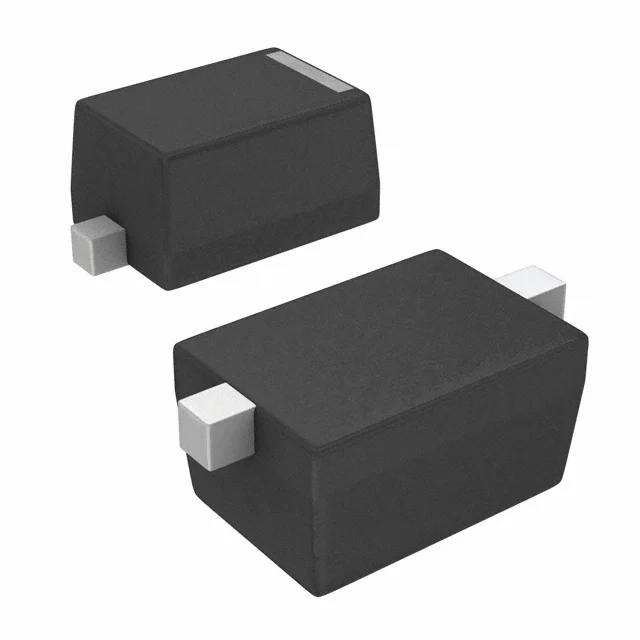
| Body | SOT-23 DBV, 5 pins, 2.9 mm by 2.8 mm |
| Reel | 3000 pieces, large tape and reel, 180 mm carrier, 8 mm tape |
| Finish | NIPDAU on the plain row, NIPDAU or SN on the same code in the addendum |
| Moisture | level 1, 260 C peak reflow, unlimited floor life |
| Marking | 21XF, which carries both the trim and the lot |
Where a 3.1 V rail belongs
A 3.1 V rail is typically the logic and sensor supply in a product that runs from three alkaline cells, a single cell lithium pack or a 3.3 V backplane with a long cable. The 3.1 V trim buys margin at the bottom of the source range and costs nothing at the top, since the regulator only dissipates the difference. In a fire detector or a heat detector, where the load is a few microamps for years and the alarm condition draws tens of milliamps, the 200 nA quiescent current keeps the standby drain below the self discharge of the cells.
The trade to watch is dissipation during the alarm burst. At 4.5 V in and 200 mA out the part drops 1.4 V and dissipates 280 mW, which a SOT-23 body passes only with a reasonable copper pad under it. The alternative is to hold the load below 100 mA, where the same body stays comfortable, and to size the SOT-23 copper from the thermal table rather than from habit.
Buyer questions on the 3.1 V code
Why choose 3.1 V instead of 3.3 V? Because a 3.3 V fixed output needs at least 3.7 V at the input to hold regulation at 200 mA, and a 3.1 V output needs 3.5 V. On a 3.3 V rail with cable drop the difference decides whether the rail regulates at all.
Is the SOT-23 footprint the same as the older 200 mA parts? The five pin DBV footprint is common across several families, but the pin functions have to be checked one by one. The enable pin and the output sense pin are the two that move between families.
What happens below the 1.5 V input floor? The part stops regulating and the body goes into an undervoltage state; the output follows the input through the pass element. There is no guaranteed behaviour below the floor, so the system has to define the sequence.
Sourcing the SOT-23 version
Because the SOT-23 body is easy to second source, most buyers end up comparing a list of 200 mA parts across vendors. The pin to pin cross reference page sets out which of those are true drop in replacements and which need a footprint change, and date code management covers the shelf life question once a reel sits in stores.
Regulation figures for this trim are the family figures: 38 mV of load regulation from 1 mA to 200 mA and 5 mV of line regulation across the input window, with a thermal shutdown at 170 degrees and a reset at 145 degrees. The enable thresholds are 1.1 V high and 0.3 V low, which allows a 1.8 V logic pin to drive the part directly, and the internal 500 kOhm pulldown keeps it off when the pin floats. In a detector the usual sequence is to hold the enable low until the battery voltage is above the 3.5 V floor, then release it, which the 1.1 V threshold makes straightforward from a comparator output.