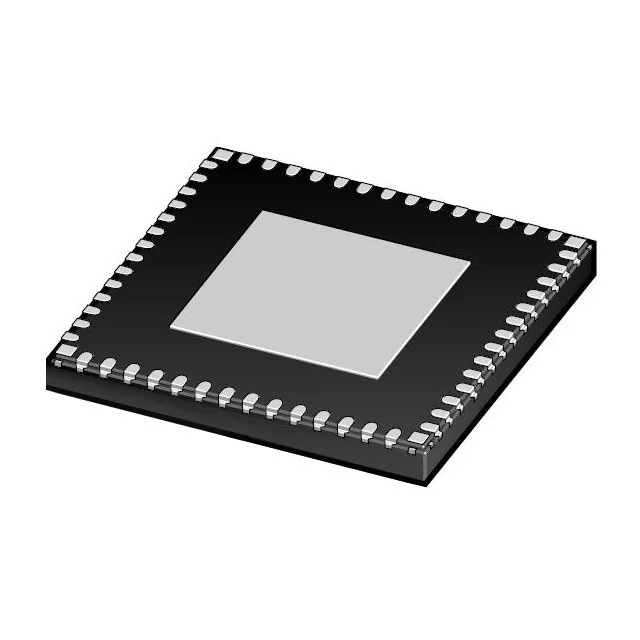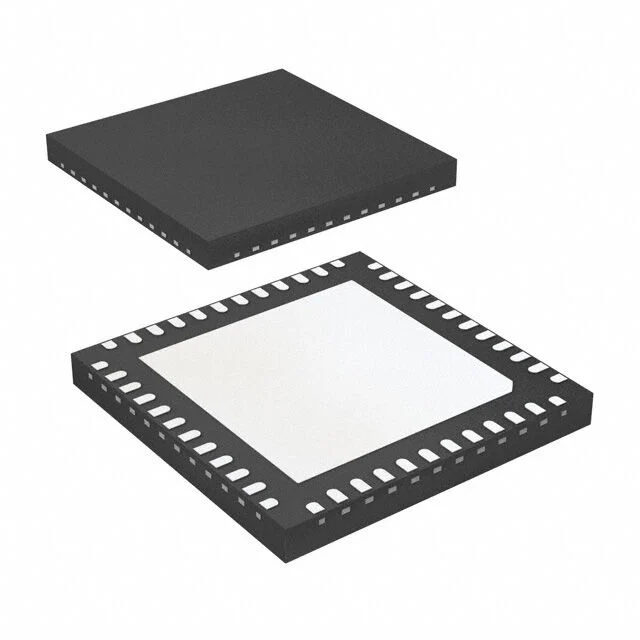

TPS74601PQWDRVRQ1
Brand: Texas Instruments
Texas Instruments TPS74601PQWDRVRQ1 is a power management component designed for AI Servers & Low-Altitude Economy (Drone and UAV) and related applications. In stock at Superb Automation — request a quote for competitive pricing and fast delivery.
Product Specifications
TPS74601PQWDRVRQ1
Texas Instruments — Power Management & Signal Chain
Product Overview
The TPS74601PQWDRVRQ1 from Texas Instruments is a power management / signal chain IC delivering high efficiency, precision regulation, and robust protection. Texas Instruments (TI) is a global leader in analog ICs, power management solutions, and embedded processors.
Superb Automation partners with leading brands including Qorvo, TI, ADI, XILINX, NVIDIA, Intel, ST, MACOM, Renesas, and Coilcraft to provide complete BOM and supply-chain solutions.
Key Features
- High-efficiency power conversion with low quiescent current
- Wide input voltage range with precision output regulation
- Integrated over-current, over-temperature, and short-circuit protection
- Small footprint packaging for space-constrained designs
- AEC-Q100 qualified options available for automotive applications
- Flexible sequencing and soft-start control
Key Specifications
| Input Voltage | V |
| Output Voltage | V |
| Output Current | A |
| Switching Frequency | kHz |
| Efficiency | % |
| Quiescent Current | µA |
| Topology | — |
| Package | — |
| Operating Temp | °C |
| Protection | — |
Applications
Industrial Automation
Automotive Electronics
Telecom Infrastructure
Server & Data Center Power
Medical Devices
Consumer Electronics
Request Quote — In Stock, 100% New & Original, Full Warranty
TPS74601PQWDRVRQ1: 1 A automotive LDO, 0.55 V to 5.5 V adjustable, power good, WSON-6
TPS74601PQWDRVRQ1 is a 1 A low dropout regulator in a 2 mm by 2 mm wettable flank body, with an adjustable output from 0.55 V to 5.5 V and an open drain power good signal in a WSON-6 body of 6 pins. Dropout is 225 mV maximum at 1 A with a 3.3 V output, accuracy is 0.7 per cent typical and 1 per cent maximum over temperature to 85 degrees, and the quiescent current is 25 microamp. The input range is 1.5 V to 6.0 V and the output is set by an external divider, so a core rail at 0.9 V and a 5 V rail use the same part. Soft start is internal with a monotonic rise and an active discharge pulls the output down when the part is disabled.
Order code and package
| TPS74601PQWDRVRQ1 | the automotive grade 1 A regulator in the WSON (DRV) body, 6 pins, wettable flanks; the current addendum prints TPS74601PBQWDRVRQ1 and TPS74601PCQWDRVRQ1 for this body with 3000 pieces on a large reel, and TPS74601PQWDRBRQ1 for the eight pin DRB body |
| Reel options | 3000 pieces on a large reel for the R ending, 250 on a small reel for the T ending |
| Voltage options | the P suffix marks the fixed and adjustable variants, and the family covers 0.55 V to 5.5 V |
| Temperature range | minus 40 to 150 degrees junction, grade 1 for automotive use |
| Qualification | AEC-Q100 grade 1 with wettable flanks for automated optical inspection |
Electrical parameters that decide the application
| Input voltage | 1.5 V to 6.0 V |
| Output voltage | 0.55 V to 5.5 V, set by an external divider |
| Output current | 1 A maximum |
| Dropout | 225 mV maximum at 1 A with a 3.3 V output |
| Accuracy | 0.7 per cent typical, 1 per cent maximum over temperature to 85 degrees |
| Quiescent current | 25 microamp typical |
| Power good delay | 165 microseconds rising on this family member, 5 ms on the B member |
| Soft start | internal with a monotonic rise, plus an active output discharge when disabled |
Family variants and how they differ
| TPS746 | the industrial member with the same function and the same bodies |
| TPS746B | the member with a 5 ms power good rising delay instead of 165 microseconds |
| Bodies | 2 mm by 2 mm six pin WSON with wettable flanks and 3 mm by 3 mm eight pin VSON, both with wettable flanks |
| Orderable strings | the addendum prints the B and C variants for the DRV body, so the exact suffix has to be confirmed against the approved list of the customer |
| Discharge | an internal active discharge pulls the output to zero when the enable is low |
Points to check before this part goes on a BOM
Wettable flanks are the reason this part exists in this body. A 2 mm by 2 mm leadless package with wettable flanks allows an automated optical inspection step to confirm the solder joint, which is what automotive lines need. Without them, the same footprint would require X-ray sampling and a different process control plan. That is a production argument rather than an electrical one, and it is the one to lead with on an automotive quote.
Two hundred and twenty five millivolts of dropout at 1 A is a real limit on a 3.3 V rail. It means the input has to stay above 3.525 V for full regulation, so a 5 V input has plenty of margin and a 3.3 V input has none at all. A rail that post regulates a 3.3 V supply down to 1.8 V is comfortable, and a rail that tries to hold 3.3 V from a 3.6 V battery is depending on the battery staying above 3.5 V.
The difference between the B and C variants is the power good timing. One releases power good 165 microseconds after the output is valid and the other waits 5 ms. A host that samples power good as an interrupt needs the short delay; a host that needs the output to be settled before it starts needs the long one. The two are the same regulator with different timing, and the string on the order decides the behaviour.
Active discharge is a small feature with a large system effect. When the enable is pulled low the output is discharged instead of floating, so a rail that powers a processor core collapses in a defined time. Without it the rail decays through the load, which can take long enough that the next power up starts from a partly charged output and the soft start ramp is not monotonic.
Twenty five microamp of quiescent current is a standby number in a module that is never fully off. An automotive body controller keeps a 3.3 V rail alive for a CAN transceiver and a sleeping microcontroller, and the regulator is on for weeks. At 25 microamp the regulator contributes 0.6 milliwatt on a 12 V battery, which is small next to the transceiver and large next to a regulator that draws a milliamp.
A 6 V maximum input excludes a 12 V rail without a pre regulator. The part is a post regulator, not a wide input device. In a 12 V automotive module the input comes from a buck converter or from a 5 V housekeeping rail, and the LDO cleans it. Quoting this part against a 12 V bus is a mistake that shows up as a part that dies on the first load dump test.
One per cent over temperature to 85 degrees is not the same as one per cent to 150 degrees. The accuracy statement is qualified at 85 degrees while the junction range goes to 150. A module that runs the regulator hot has to look at the drift curves rather than the headline, and the divider tolerance sits on top of whatever the reference does.
Six pins in a 2 mm body leave no room for a noise reduction capacitor. This is a general purpose regulator, not a low noise one. A rail feeding an ADC or a radio needs the low noise member of the family, which brings out a filter pin. Using this part in front of a converter and expecting a quiet supply is a common mismatch between the part and the load.
What to confirm before this part goes on a purchase order
Confirm the exact orderable suffix against the approved list of the customer. The addendum prints B and C variants for the six pin body and a different string for the eight pin body, and the power good timing differs between them.
Give the input rail and the output current. The dropout figure only holds at 1 A with a 3.3 V output, and a board that needs 1 A from a 3.4 V input has no margin.
Where this order code fits
It post regulates a 3.3 V or 5 V rail down to a core voltage in an automotive module, with a power good signal that tells the host the rail is up. Teams comparing it with a neighbouring part start from our Power Management Cross Reference page, and teams replacing a part that has gone end of life start from the Pin to Pin Cross Reference page.
Questions buyers ask
Is this part the same as the TPS746 industrial version? Electrically close and differently qualified. The automotive part is AEC-Q100 grade 1 with wettable flanks and a junction range to 150 degrees. The industrial part shares the function and the package outline, and the qualification documents are what differ.
What does the power good output report? That the output has reached its regulation window. It is open drain, so it needs a pull up to a rail that is alive before this regulator starts, and it goes low again if the output falls out of regulation or the part is disabled.
Can the output go below 0.55 V? No. The reference and the internal divider set 0.55 V as the floor, which is well below the core voltages used by modern processors. A rail that needs 0.5 V is outside this part and outside most linear regulators of this class.
SUPERB holds and sources this line for production and repair demand, quoted against the exact ordering string with date codes, packing and country of origin stated on the offer. When a part is moving, the How to Verify a Drop in Replacement page sets out the checks that keep a substitute from failing on the bench.