
TPS65987DDHRSHR
Brand: Texas Instruments
Texas Instruments TPS65987DDHRSHR is a power management component designed for AI Servers & Low-Altitude Economy (Drone and UAV) and related applications. In stock at Superb Automation — request a quote for competitive pricing and fast delivery.
Product Specifications
TPS65987DDHRSHR
Texas Instruments — Power Management & Signal Chain
Product Overview
The TPS65987DDHRSHR from Texas Instruments is a power management / signal chain IC delivering high efficiency, precision regulation, and robust protection. Texas Instruments (TI) is a global leader in analog ICs, power management solutions, and embedded processors.
Superb Automation partners with leading brands including Qorvo, TI, ADI, XILINX, NVIDIA, Intel, ST, MACOM, Renesas, and Coilcraft to provide complete BOM and supply-chain solutions.
Key Features
- High-efficiency power conversion with low quiescent current
- Wide input voltage range with precision output regulation
- Integrated over-current, over-temperature, and short-circuit protection
- Small footprint packaging for space-constrained designs
- AEC-Q100 qualified options available for automotive applications
- Flexible sequencing and soft-start control
Key Specifications
| Input Voltage | V |
| Output Voltage | V |
| Output Current | A |
| Switching Frequency | kHz |
| Efficiency | % |
| Quiescent Current | µA |
| Topology | — |
| Package | — |
| Operating Temp | °C |
| Protection | — |
Applications
Industrial Automation
Automotive Electronics
Telecom Infrastructure
Server & Data Center Power
Medical Devices
Consumer Electronics
Request Quote — In Stock, 100% New & Original, Full Warranty
TPS65987DDHRSHR USB Type-C and Power Delivery controller
The TPS65987DDHRSHR is a stand alone USB Type-C and USB Power Delivery controller for a single connector. It detects the cable, determines the plug orientation, negotiates over the configuration channel using the power delivery protocol, and then enables the appropriate power path and configures the alternate mode multiplexers. It is certified for PD3.0 with a certification identifier, and it can source or sink up to 20 V at 5 A through two internal high voltage power paths.
The part runs from a 3.3 V supply or directly from VBUS, which means a dock or a monitor can be built without a separate housekeeping rail. Configuration is held in the device and written with the vendor configuration tool over I2C, so the port behaviour, the power rules and the alternate mode settings are part of a configuration file rather than of host software.
Three I2C interfaces are provided, one of them configurable as a master, so the controller can also drive an external converter or a multiplexer on the same board. The device has a central thermal shutdown plus independent thermal sensors for each internal power path, and it supports wake on attach and wake on detach.
Key parameters from the SLVSES1D document
| Standards | USB Type-C and USB Power Delivery 3.0, certified, identifier printed in the document |
| Power range | Source and sink up to 20 V at 5 A |
| Power paths | Two internal high voltage paths, no external transistors for the port current |
| Alternate mode | DisplayPort supported, multiplexer control over GPIO or I2C |
| Supply | 3.3 V or VBUS, with an internal 3.3 V regulator for housekeeping |
| Interfaces | Three I2C ports, one configurable as master, plus GPIO control of external supplies |
| Configuration | Held in the device, written with the vendor configuration tool |
| Thermal | Central shutdown plus independent sensors for each internal power path |
| States | Active, idle and sleep, with wake on attach and detach |
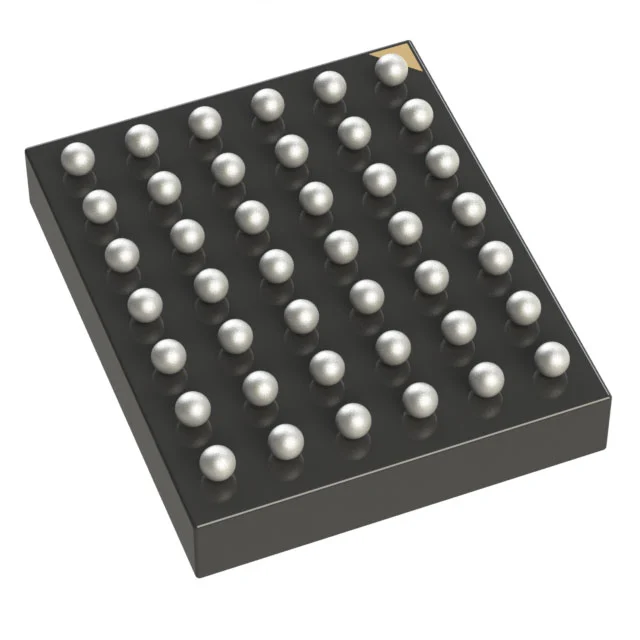
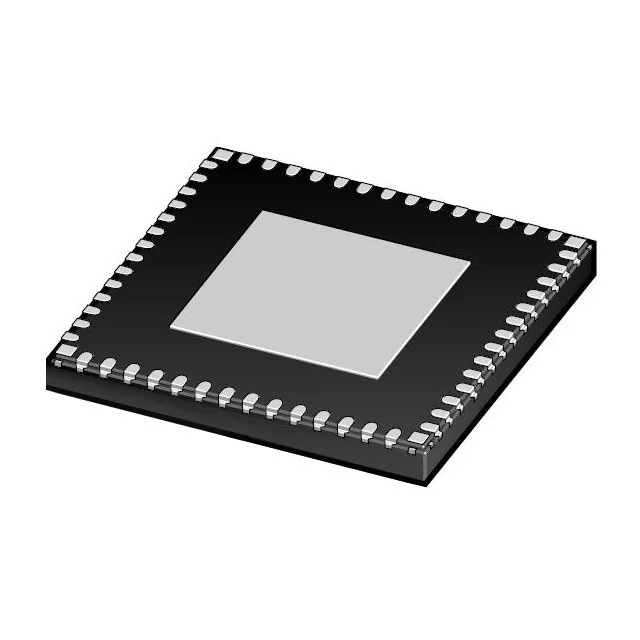
| Package | RSH 56 pin VQFN, 2500 pieces on a large reel, moisture level 3, status on the printed rows is not recommended for new builds |
Configuration is the product, not the silicon
Two boards with the same controller and different configuration files behave like two different parts. One might present itself as a 5 V 3 A source, the other as a 20 V 5 A sink, and nothing on the package tells them apart. That is why a port that works on a bench with one cable can fail with another: the negotiated contract and the cable capability are read from the configuration, and the configuration is a file that ships with the product.
For a purchasing desk the practical consequence is that the part number alone is not enough for a build. The configuration revision has to be recorded with the assembly, and a replacement lot has to be programmed to the same revision before it goes to the line.
Where this part fits
Docking stations, monitors with a Type-C input, single board computers, power banks, retail payment terminals and battery powered tools that charge over Type-C. Notes for this class sit under power management cross reference and obsolete part cross reference hub.
What to check before a purchase order
Check the status first. The printed rows for this body carry not recommended for new builds, which means a new product should plan a successor rather than a second source of this code, and an existing product needs a last time buy position.
Check the configuration revision and the thermal path together. Two internal power paths at 5 A in a 56 pin body need copper on both sides and a thermal path to the enclosure, and a port that works at 5 V 1.5 A can fold back at 20 V 3 A on a board that was never laid out for the loss. The incoming check is in incoming inspection plan.
Questions that come up on this part
Can it be used without a host processor? Yes, it is a stand alone controller and brings the port up from its own configuration.
Does it need external multiplexers for video? It needs them for DisplayPort alternate mode, and the part controls them over GPIO or I2C, so the multiplexer choice follows the connector wiring rather than the controller.
One more point about the power path. The two internal paths are rated for the port current, so the copper on the board has to carry that current from the connector to the part and from the part to the system rail, and the thermal sensors are inside the part rather than on the board. A board that puts the connector far from the controller will pass a 5 V test and fold back at 20 V, because the path resistance and the part temperature both rise with the current.
The configuration file also decides which power rules the port advertises, so a port that must not offer 20 V carries a file that says so rather than a hardware strap.