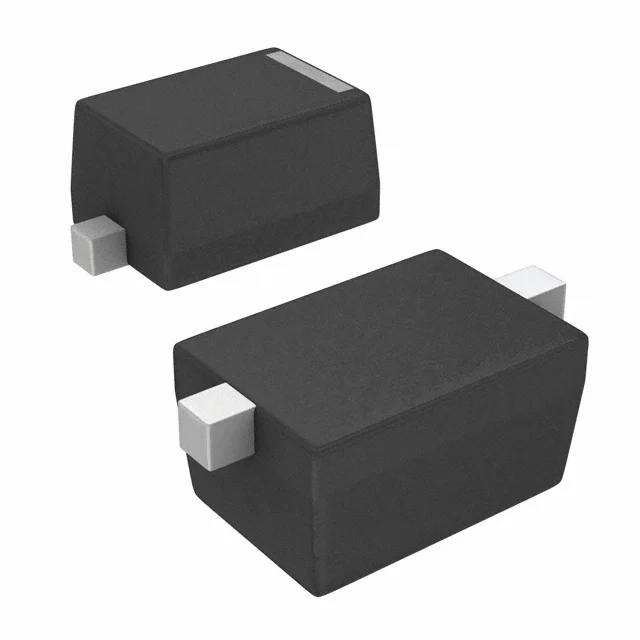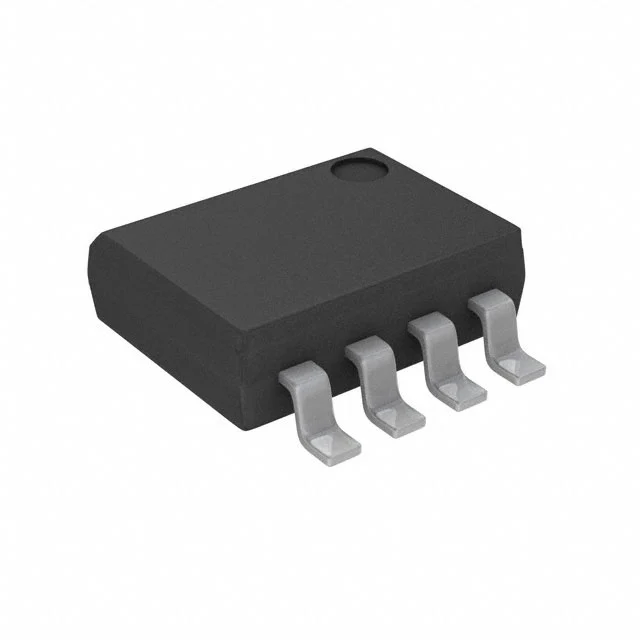

TPS62224DDCR
Brand: Texas Instruments
Texas Instruments TPS62224DDCR is a power management component designed for AI Servers & Low-Altitude Economy (Drone and UAV) and related applications. In stock at Superb Automation — request a quote for competitive pricing and fast delivery.
Product Specifications
TPS62224DDCR
Texas Instruments — Power Management & Signal Chain
Product Overview
The TPS62224DDCR from Texas Instruments is a power management / signal chain IC delivering high efficiency, precision regulation, and robust protection. Texas Instruments (TI) is a global leader in analog ICs, power management solutions, and embedded processors.
Superb Automation partners with leading brands including Qorvo, TI, ADI, XILINX, NVIDIA, Intel, ST, MACOM, Renesas, and Coilcraft to provide complete BOM and supply-chain solutions.
Key Features
- High-efficiency power conversion with low quiescent current
- Wide input voltage range with precision output regulation
- Integrated over-current, over-temperature, and short-circuit protection
- Small footprint packaging for space-constrained designs
- AEC-Q100 qualified options available for automotive applications
- Flexible sequencing and soft-start control
Key Specifications
| Input Voltage | V |
| Output Voltage | V |
| Output Current | A |
| Switching Frequency | kHz |
| Efficiency | % |
| Quiescent Current | µA |
| Topology | — |
| Package | — |
| Operating Temp | °C |
| Protection | — |
Applications
Industrial Automation
Automotive Electronics
Telecom Infrastructure
Server & Data Center Power
Medical Devices
Consumer Electronics
Request Quote — In Stock, 100% New & Original, Full Warranty
TPS62224DDCR fixed 1.6 V at 400 mA, one of nine voltages in one body
The TPS62224DDCR is the 1.6 V member of the TPS6222x family, a synchronous step down converter rated at 400 mA in a 6 pin SOT-23-THIN body of 1.6 mm by 2.9 mm. The family carries nine output voltages in the same body and the same document, from 1.2 V through 1.5 V, 1.6 V, 1.7 V, 1.8 V, 1.875 V, 2.2 V and 2.3 V, plus an adjustable member, and every fixed version removes the feedback divider from the board. That is the point of the part: one board serves a product family with several rails, and the voltage is chosen at purchase rather than at assembly.
The electrical core is shared with the rest of the family. Switching is a fixed 1.25 MHz, the P-channel current limit sits between 600 mA and 880 mA, quiescent current is 15 microamp typical, shutdown current is 0.1 microamp typical, and the undervoltage lockout is between 1.5 V and 2 V. The input range is 2.5 V to 6 V and the absolute maximum on the supply pin is 7 V. The operating ambient range is minus 40 to 85 degrees for the whole family, which is the commercial and industrial band rather than the automotive one.
At 1.6 V the output is aimed at a memory rail or a processor core that has a narrow tolerance. The internal divider is trimmed at test, so the initial accuracy is set by the reference alone, and the part holds that accuracy while the load moves because the loop is internally compensated. Nothing on the board sets the voltage, which also means nothing on the board can drift with temperature.
Key parameters from the TPS6222x document
| Input range | 2.5 V to 6 V, absolute maximum 7 V on the supply pin |
| Output | 1.6 V fixed on this member, 400 mA rated, marking ALQ |
| Switching frequency | 1.25 MHz typical, with a 0.8 MHz to 1.85 MHz spread over production |
| Current limit | P-channel limit from 600 mA minimum to 880 mA maximum |
| Quiescent current | 15 microamp typical and 25 microamp maximum with the enable pin at ground |
| Shutdown current | 0.1 microamp typical and 1 microamp maximum |
| Undervoltage lockout | Between 1.5 V and 2 V on a falling input |
| Siblings in the same body | 1.2 V, 1.5 V, 1.7 V, 1.8 V, 1.875 V, 2.2 V, 2.3 V fixed and one adjustable |
| Ambient range | Minus 40 to 85 degrees for every fixed voltage option |
| Package | 6 pin SOT-23-THIN, 1.6 mm by 2.9 mm, DDC body, 3000 pieces on a large reel with the R suffix |
Choosing between nine fixed voltages and one adjustable part
The fixed part wins on parts count and on accuracy, and it loses on flexibility. A product that ships in three versions, at 1.5 V, 1.6 V and 1.8 V, can carry one board and three reels, and the assembly does not change. A product that has to trim a rail against a measured load, or that has to move the voltage during operation, needs the adjustable member and two resistors, and should accept the extra leakage and the extra tolerance.
The marking is what makes the strategy work, and it is also what breaks it. 1.6 V is ALQ, 1.5 V is ALO, 1.8 V is APP, 1.2 V is BRZ. A warehouse that stores the family by part number is fine; one that stores by description will mix them, and the mix is invisible until a board comes up at the wrong core voltage. Every receipt should be verified against the marking rather than against the label.
There is a second reason to prefer the fixed versions: the feedback node. On the adjustable part the FB pin is a high impedance input that runs next to a switching node, and a long trace to the divider picks up noise that shows up as jitter and as a DC offset. The fixed part has no such node on the board, so the same board cannot go wrong that way.
Where this part fits
Memory rails, processor cores, sensor supplies and any single cell product that needs 1.6 V at up to 400 mA in a 1.6 mm by 2.9 mm body. The fixed voltage makes it the right choice for a family of boards that share one outline. Our desk keeps the voltage table and the marking list for this family, see power management cross reference and how to verify a drop in replacement.
What to check before a purchase order
Check the order code letter by letter against the voltage table. TPS62224 is 1.6 V and TPS62221 is 1.5 V, and one character separates them. Check the reel suffix as well: R is 3000 pieces on a large reel, T is 250 on a small one, and a prototype line that orders the R by habit will end up cutting reels.
Check the load against 400 mA at 85 degrees ambient, and check the input capacitor against a 6 V rail with transients, since the absolute maximum is 7 V and a 6 V adapter that rings on plug in can pass it. Check the inductor against the 880 mA maximum of the current limit rather than the 400 mA rating, because a short at the load drives the inductor to the limit before the part folds back. See incoming inspection plan for the goods inwards check on this body.
Questions that come up on this part
Is the 1.6 V option still active, is a question that comes up on long life products. The family document lists it as an active orderable option with its own marking, and the reel quantities are the same as the rest of the family. A customer who is told otherwise is being told about a distributor stock position, not about the device status.
The second question is whether the part can be replaced by the adjustable member in a shortage. It can, at the cost of two resistors and the leakage they add, and the loop is the same. The one thing to check is that the divider is placed close to the FB pin with a short return, because the pin is high impedance and the switching node is next to it.