
TPS3839A09DBZR
Brand: Texas Instruments
Texas Instruments TPS3839A09DBZR is a power management component designed for AI Servers & Low-Altitude Economy (Drone and UAV) and related applications. In stock at Superb Automation — request a quote for competitive pricing and fast delivery.
Product Specifications
TPS3839A09DBZR
Texas Instruments — Power Management & Signal Chain
Product Overview
The TPS3839A09DBZR from Texas Instruments is a power management / signal chain IC delivering high efficiency, precision regulation, and robust protection. Texas Instruments (TI) is a global leader in analog ICs, power management solutions, and embedded processors.
Superb Automation partners with leading brands including Qorvo, TI, ADI, XILINX, NVIDIA, Intel, ST, MACOM, Renesas, and Coilcraft to provide complete BOM and supply-chain solutions.
Key Features
- High-efficiency power conversion with low quiescent current
- Wide input voltage range with precision output regulation
- Integrated over-current, over-temperature, and short-circuit protection
- Small footprint packaging for space-constrained designs
- AEC-Q100 qualified options available for automotive applications
- Flexible sequencing and soft-start control
Key Specifications
| Input Voltage | V |
| Output Voltage | V |
| Output Current | A |
| Switching Frequency | kHz |
| Efficiency | % |
| Quiescent Current | µA |
| Topology | — |
| Package | — |
| Operating Temp | °C |
| Protection | — |
Applications
Industrial Automation
Automotive Electronics
Telecom Infrastructure
Server & Data Center Power
Medical Devices
Consumer Electronics
Request Quote — In Stock, 100% New & Original, Full Warranty
TPS3839A09DBZR 150 nA supervisor for a 0.9 V threshold
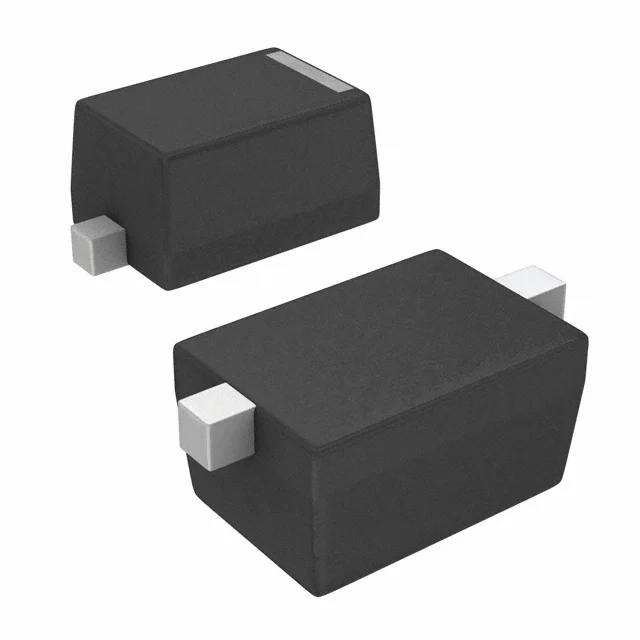
The TPS3839A09DBZR is a single channel voltage monitor in a 3 pin SOT-23 with a 0.9 V threshold, 150 nA of typical supply current and a fixed 200 millisecond reset delay. It runs from 0.9 V to 6.5 V and keeps a defined output state down to a 0.6 V supply, which is what makes it usable on a rail that has already collapsed below the level where most supervisors stop being specified.
The output is push pull and active low, so it drives a reset pin or an enable pin directly. There is no manual reset and no adjustable threshold on this member, which is why the body has only three pins and why the part is chosen for the rails that have no room for anything else.
Key parameters taken from the TPS383x document
| Threshold | 0.9 V nominal on this option, from a family that also carries 1.1 V, 1.52 V, 1.67 V, 2.325 V, 2.63 V, 2.93 V, 3.08 V and 4.38 V options |
| Threshold accuracy | 1 per cent at 25 degrees on the family, with the per option window printed in the negative going threshold table |
| Hysteresis | 54 mV on this option, which is the widest in the family because the threshold is the lowest |
| Supply range | 0.9 V to 6.5 V operating, with the output correct down to a 0.6 V supply |
| Supply current | 150 nA typical, which is the lowest in the TPS383x line |
| Reset delay | 200 milliseconds typical after the supply rises above the threshold plus the hysteresis |
| Output | Push pull active low, driving 120 microamp at 0.9 to 1.2 V and 2 mA at 2.8 to 6.5 V |
| Manual reset | Not fitted on this member, which is the difference from the TPS3831 sibling in the same document |
| Fast transients | The vendor states the parts are made to ignore fast transients on the supply pin, which is what keeps a switching rail from resetting the board |
| Body | 3 pin SOT-23 DBZ, with a 4 pin 1 by 1 millimetre option on the TPS3831 sibling only |
| Reel and marking | 3000 pieces on a large reel, body marking PZDI, moisture level 1 at 260 degrees with unlimited floor life |
| Temperature | Minus 40 to plus 85 degrees C |
The 54 mV hysteresis is worth a second look. On a 0.9 V threshold that is 6 per cent of the trip point, which is what stops a comparator from chattering when the monitored rail is a single cell that sags under load. On the higher threshold options the same table prints 11 to 44 mV, so the widest hysteresis belongs to the lowest rail, where a cell has the largest internal resistance and the largest sag.
Where the numbers matter in a real build
The vendor documents this option in an application where it disables a boost converter when a single cell reaches 0.9 V. That is the whole purpose of a threshold this low: the boost converter that runs the rest of the board keeps pulling current until the cell is flat, and a supervisor that cannot work below 1 V cannot stop it in time. The 0.9 V threshold and the 0.6 V valid output together define the window in which the part still protects the cell, and a part with a 1.6 V minimum supply would have already released its output by then.
The 150 nA supply current is 1.5 per cent of the current that a typical 10 microamp supervisor would draw, and on a product that spends its life asleep that difference is the whole budget. The trade is response speed and drive: at 120 microamp of output current on the low rail the part can drive an enable pin and not much else, so an output that has to pull a gate low through a divider is the wrong application for this body.
The fixed 200 millisecond delay is long compared with the 25 microsecond response to a falling rail. That asymmetry is deliberate. A falling rail has to be caught immediately so that the boost converter stops before the cell is damaged, while a rising rail can wait 200 milliseconds for the cell to be replaced or the source to recover. A board that must start within 20 milliseconds of power being applied needs a different member of the family rather than a different external capacitor, since the delay is fixed in silicon.
What to check before a purchase order is released
- The threshold option, because the family prints nine thresholds in the same 3 pin body and the letter block is the only difference.
- The body, since the 4 pin 1 by 1 millimetre option belongs to the TPS3831 sibling and not to this order code.
- The output current at the actual rail, because 120 microamp at 0.9 V is the figure that applies at the bottom of the range and not the 2 mA quoted at 2.8 V.
- The hysteresis on a rail with a large load step, since 54 mV is generous for a cell and may be too much for a regulated rail.
- The absence of a manual reset, because a board that expects a reset button needs the TPS3831 member instead.
Which projects this part fits
Single cell products that run a boost converter are the main case, and the vendor example is a boost that is disabled at 0.9 V so the cell is not over discharged. Metering, wearables, glucose monitors and battery backed sensors are the other applications the vendor lists, all of them rails below 2 V and all of them sensitive to a supervisor that draws microamps rather than nanoamps.
Questions that come up before a purchase order is released
Does the part work below its threshold?
The supply can go down to 0.9 V for operation, and the output stays defined down to 0.6 V, which is the figure that matters when a cell is being replaced and the rail is collapsing.
Is the delay adjustable?
No. The 200 millisecond delay is fixed in this family, and the parts with a selectable delay are in a different family with a CT pin.
Can the threshold be moved with a divider?
Only downwards in effect, by dividing the rail before it reaches the supply pin, and that also divides the supply the part runs from. On this member the threshold is intended to be used as printed.
How SUPERB handles this line
Nano power supervisors in a 3 pin body are bought in reels for production and in strips for prototypes, and the reel split is usually the only commercial question. Our power management cross reference shows what this part replaces on a board that currently uses a comparator and a reference, and the incoming inspection plan covers what is checked on a mixed analogue reel before it goes to the line. Where the original part is no longer available, the obsolete part cross reference hub is where the search starts.