
TPS3306-18DR
Brand: Texas Instruments
Texas Instruments TPS3306-18DR is a power management component designed for AI Servers & Low-Altitude Economy (Drone and UAV) and related applications. In stock at Superb Automation — request a quote for competitive pricing and fast delivery.
Product Specifications
TPS3306-18DR
Texas Instruments — Power Management & Signal Chain
Product Overview
The TPS3306-18DR from Texas Instruments is a power management / signal chain IC delivering high efficiency, precision regulation, and robust protection. Texas Instruments (TI) is a global leader in analog ICs, power management solutions, and embedded processors.
Superb Automation partners with leading brands including Qorvo, TI, ADI, XILINX, NVIDIA, Intel, ST, MACOM, Renesas, and Coilcraft to provide complete BOM and supply-chain solutions.
Key Features
- High-efficiency power conversion with low quiescent current
- Wide input voltage range with precision output regulation
- Integrated over-current, over-temperature, and short-circuit protection
- Small footprint packaging for space-constrained designs
- AEC-Q100 qualified options available for automotive applications
- Flexible sequencing and soft-start control
Key Specifications
| Input Voltage | V |
| Output Voltage | V |
| Output Current | A |
| Switching Frequency | kHz |
| Efficiency | % |
| Quiescent Current | µA |
| Topology | — |
| Package | — |
| Operating Temp | °C |
| Protection | — |
Applications
Industrial Automation
Automotive Electronics
Telecom Infrastructure
Server & Data Center Power
Medical Devices
Consumer Electronics
Request Quote — In Stock, 100% New & Original, Full Warranty
TPS3306-18DR: a dual supply supervisor with a watchdog and a power fail comparator for a 3.3 V and 1.8 V processor
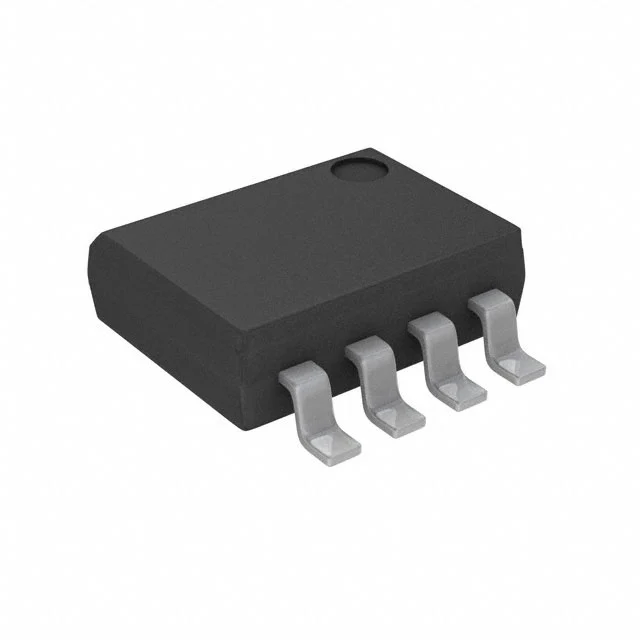
TPS3306-18DR is a two rail supervisory circuit that watches 3.3 V and 1.8 V at the same time and adds a watchdog and a power fail warning in a SOIC (D) body of 8 pins. It compares the 3.3 V rail and the 1.8 V rail against their own thresholds, holds the open drain RESET output low while either rail is out of window, and releases it after a 100 ms delay once both are good. A watchdog input has to be toggled inside a 0.8 second window or the reset is asserted again, and a separate comparator with its own input pin drives a power fail output for a low battery warning. Supply current is 15 microamps typical, the reset is defined from 1.1 V of supply, and the body is the 8 pin SOIC.
Order code and package
| TPS3306-18DR | the option that supervises 3.3 V and 1.8 V in the 8 pin SOIC body on tape and reel, which is the combination used by processors that run their core at 1.8 V |
| TPS3306-15, -20, -25, -33 | the other threshold pairs in the family, covering 3.3 V with 1.5 V, 2.0 V, 2.5 V and 3.3 V, so the choice is made by the core voltage rather than by the part number shape |
| MSOP-8 body | the same die in the 8 pin MSOP, which is the smaller option for a board where the supervisor sits next to the processor |
| Watchdog | 0.8 second time out in the standard members, reset asserted when the watchdog input is not toggled inside that window |
| Power fail comparator | a separate input pin and a separate open drain output, so a divider from the unregulated input can warn the processor before the regulated rails start to fall |
| RESET output | open drain, which lets the same signal pull a 1.8 V or a 3.3 V logic input without a level shifter |
Electrical parameters that decide the application
| Monitored rails | 3.3 V on the first sense input and 1.8 V on the second, both compared against internal references rather than against a divided supply |
| Reset delay | 100 ms from the moment both rails are inside their windows, generated internally with no external capacitor |
| Watchdog time out | 0.8 seconds typical, with the watchdog input requiring a transition inside that window rather than a level |
| Supply current | 15 microamps typical, which is a figure that lets the supervisor stay powered from the rail it watches |
| Outputs | open drain RESET and open drain power fail, both able to sink current from a pull-up on any rail inside the absolute maximum |
| Reset validity | the reset output is defined from 1.1 V of supply, so the processor is held in reset before its own core is alive |
| Threshold accuracy | the sense thresholds carry the usual two to three per cent window of this class, which is why a rail at the edge of its tolerance needs the threshold checked against the worst case |
| Power fail input | a comparator input with its own threshold, used with a divider from the incoming supply to warn of a falling input before the regulator drops out |
| Temperature | minus 40 C to 85 C, which covers an industrial controller but not an automotive underhood position |
| Body | 8 pin SOIC of 4.9 mm by 3.9 mm, and the same die in an 8 pin MSOP |
Threshold options and the second body
| TPS3306-18DR | this order code, 3.3 V and 1.8 V supervised in the 8 pin SOIC body on tape and reel |
| TPS3306-15, -20, -25, -33 | the other threshold pairs, covering 3.3 V with 1.5 V, 2.0 V, 2.5 V and 3.3 V, chosen by the core voltage |
| MSOP-8 body | the same die in a smaller body for a board where the supervisor sits beside the processor |
| Watchdog | 0.8 second window, so the service has to come from the fastest firmware loop rather than from the main task |
| Power fail | a separate comparator input and output, fed from a divider ahead of the regulator so it warns before the rail falls |
| Reset | 100 ms internal delay, open drain output, defined from 1.1 V of supply |
| Temperature | minus 40 C to 85 C, which is an industrial window rather than an automotive one |
Points to check before this part goes on a BOM
Two rails means two thresholds, not one divided supply. A supervisor that watches only the 3.3 V rail cannot see a 1.8 V core rail that has failed, and a processor with a dead core rail and a healthy input rail looks powered. The second sense input is the whole point of this part, and it is the line that gets left unconnected on a rushed board.
The watchdog is a separate function from the reset. If the firmware stops toggling the watchdog input the part asserts reset, which is a recovery mechanism rather than a supply monitor. A product that disables the watchdog in software to avoid nuisance resets has removed the only protection against a hung loop.
0.8 seconds is short for a slow loop. A firmware task that runs a long conversion or a flash erase can miss the window and reset the processor in the middle of the operation. The watchdog has to be serviced from the fastest loop in the firmware, not from the main task.
The power fail comparator is the early warning. Its input comes from a divider on the unregulated supply, so it trips before the regulator loses regulation and gives the firmware time to store state. A board that connects it to the regulated rail instead gets a warning at the same moment the rail fails, which is no warning at all.
Open drain outputs need pull-ups. Both the reset and the power fail output are open drain, and the pull-up can go to a rail inside the absolute maximum. A missing pull-up gives a reset line that never releases, which looks exactly like a supervisor that has tripped.
The temperature range stops at 85 C. This is an industrial part, not an automotive one. A board that runs the supervisor near a hot regulator needs the ambient derating checked, because the threshold accuracy is only specified inside the stated window.
What a two rail supervisor catches that a single rail one does not
On a processor with a 3.3 V input and a 1.8 V core, the two rails come up in a defined order and can fail independently. A shorted core regulator leaves the input rail healthy and the processor unresponsive, and a supervisor watching only the input rail reports everything as fine. The second sense input catches that case and holds the processor in reset, which is what turns an intermittent boot failure into a repeatable fault.
The same part also catches a slow rail. A regulator that comes up in 300 ms against a supervisor that releases after 100 ms would let the processor start before its core is stable, and the second sense input with the internal delay prevents that by construction.
Using the power fail comparator properly
The comparator input has to be fed from a divider on the incoming supply, ahead of the regulator, so that it crosses its threshold while the regulator still has headroom. The output then goes to a non maskable interrupt or a dedicated input on the processor, which gives the firmware a few milliseconds to write its state to non volatile memory before the rails fall.
A divider that is set too close to the nominal input trips on every brownout and produces nuisance warnings; one that is set too low trips after the regulator has already dropped out. The usable window is a few hundred millivolts wide and is worth measuring on the bench rather than calculating once.
Where this order code fits
a processor board with a 3.3 V input and a 1.8 V core, a DSP based instrument, or an embedded controller where a hung firmware loop has to force a reset Teams comparing it with a neighbouring part start from our Power Management Cross Reference page, and teams replacing a part that has gone end of life start from the Obsolete Part Cross Reference Hub page.
Questions buyers ask
Which rails does this option watch? 3.3 V and 1.8 V. The other family members cover 3.3 V with 1.5 V, 2.0 V, 2.5 V or 3.3 V, so the option is chosen by the core voltage of the processor.
How long is the reset delay? 100 ms from the moment both rails are inside their windows, generated internally with no external capacitor. The watchdog is a separate 0.8 second window.
Does the watchdog need a clock? No, it needs a transition on the watchdog input inside the 0.8 second window. A firmware loop that toggles a port pin is enough, and a missed window asserts reset.
Can the outputs drive a 1.8 V logic input? Yes, both outputs are open drain, so the pull-up sets the logic level and can sit on either rail inside the absolute maximum.
What happens below 1.1 V of supply? The reset output is defined from 1.1 V upwards, which is below the point where the processor core is alive. Below that the output is undefined and the processor is not running either.
How does SUPERB supply this family? By exact threshold pair and body, with the date code and the country of origin on the offer, because the five threshold options share a data sheet and differ only inside the part number.
SUPERB holds and sources this line for production and repair demand, quoted against the exact ordering string with date codes, packing and country of origin stated on the offer. When a part is moving, the Incoming Inspection Plan page sets out the checks that keep a substitute from failing on the bench.