


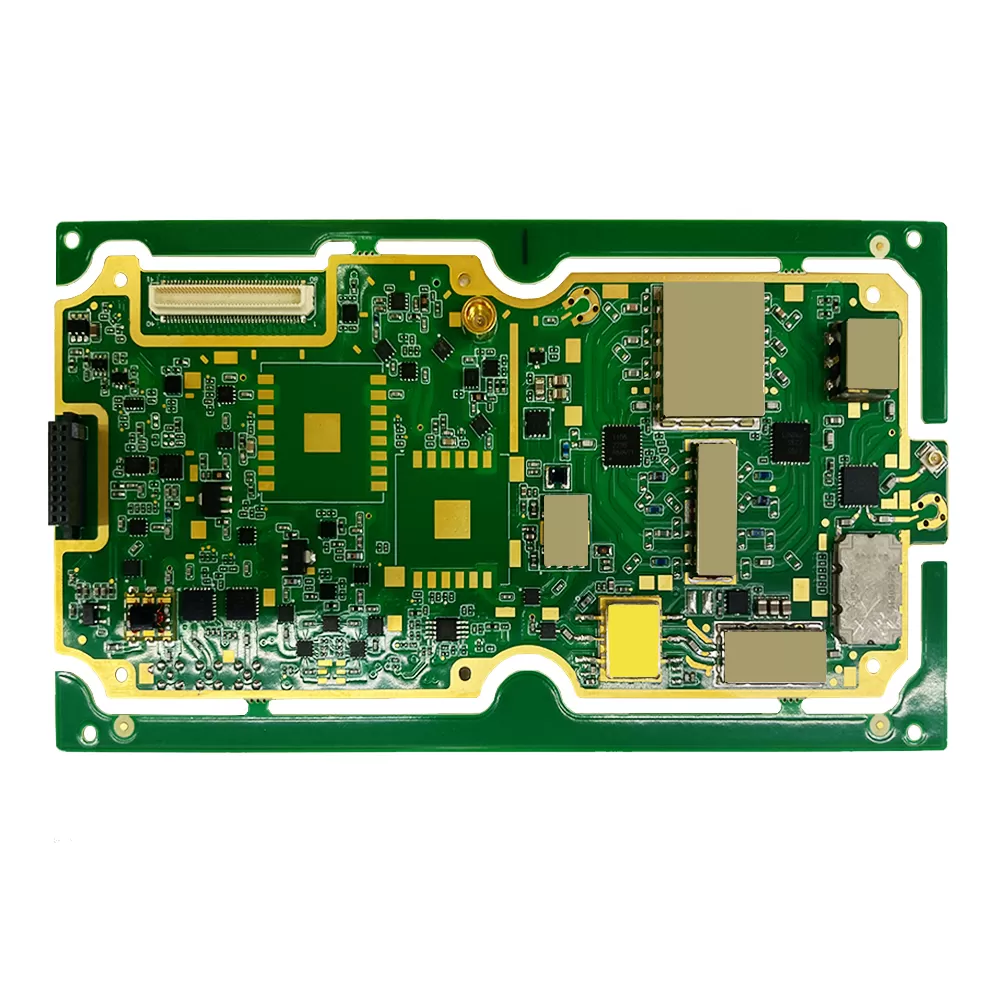

TMS5701114BZWTQQ1
Brand: Texas Instruments
Texas Instruments TMS5701114BZWTQQ1 is a power management component designed for general electronics and related applications. In stock at Superb Automation — request a quote for competitive pricing and fast delivery.
Product Specifications
TMS5701114BZWTQQ1
Texas Instruments — Power Management & Signal Chain
Product Overview
The TMS5701114BZWTQQ1 from Texas Instruments is a power management / signal chain IC delivering high efficiency, precision regulation, and robust protection. Texas Instruments (TI) is a global leader in analog ICs, power management solutions, and embedded processors.
Superb Automation partners with leading brands including Qorvo, TI, ADI, XILINX, NVIDIA, Intel, ST, MACOM, Renesas, and Coilcraft to provide complete BOM and supply-chain solutions.
Key Features
- High-efficiency power conversion with low quiescent current
- Wide input voltage range with precision output regulation
- Integrated over-current, over-temperature, and short-circuit protection
- Small footprint packaging for space-constrained designs
- AEC-Q100 qualified options available for automotive applications
- Flexible sequencing and soft-start control
Key Specifications
| Input Voltage | V |
| Output Voltage | V |
| Output Current | A |
| Switching Frequency | kHz |
| Efficiency | % |
| Quiescent Current | µA |
| Topology | — |
| Package | — |
| Operating Temp | °C |
| Protection | — |
Applications
Industrial Automation
Automotive Electronics
Telecom Infrastructure
Server & Data Center Power
Medical Devices
Consumer Electronics
Request Quote — In Stock, 100% New & Original, Full Warranty
TMS5701114BZWTQQ1: 180 MHz lockstep Cortex-R4F safety microcontroller in the 337 ball BGA body
TMS5701114BZWTQQ1 is the same 180 MHz safety device in the 337 ball body, for boards that need the wider pin count and the shorter thermal path of a ball grid array in a BGA body of 337 pins. The ZWT body is the 337 ball NFBGA measuring 16 by 16 mm, and it exposes the full pin set of the LS1114: 1MB of ECC flash, 128K bytes of ECC RAM, 64K bytes of emulated EEPROM, seven ePWM modules, six capture modules, two encoder interfaces, two N2HET blocks and two 12 bit ADCs with 24 inputs. The B is the silicon revision and the Q1 marking is the automotive grade, specified from minus 40 to 125 C.
Order code and package
| Order code | TMS5701114BZWTQQ1 |
| Core | dual Cortex-R4F in lockstep, FPU, up to 180 MHz |
| Package | NFBGA, 337 balls, body code ZWT, 16 by 16 mm |
| Flash | 1MB with ECC |
| RAM | 128K bytes with ECC |
| Emulated EEPROM | 64K bytes |
| PWM | seven ePWM modules |
| Timers | two N2HET, 32 and 18 channels |
| ADC | two MibADC, 24 inputs |
| Serial | three DCAN, three MibSPI, two SPI, LIN, SCI, I2C |
| Supply | 1.14 to 1.32 V core, 3.0 to 3.6 V I/O |
| Datasheet | SPNS188B, revised February 2015 |
Electrical parameters that decide the application
| Silicon revision | B |
| Ball count | 337, giving the full I/O set of the device |
| Thermal path | balls under the die carry heat into the board |
| DMA | 16 channels |
| Capture and encoder | six eCAP, two eQEP |
| Interrupts | 128 channel vectored module |
| CRC | two channel checker |
| Self test | CPU and RAM BIST, ECC, parity |
| Error output | nERROR pin |
| Clock | FMPLL with slip detector |
| Inspection | X ray required, joints are not visible |
| Grade | Q1 automotive, minus 40 to 125 C |
Points to check before this part goes on a BOM
The ball grid array is chosen for pin count and for thermal path, and it is paid for in inspection. A 337 ball array cannot be inspected optically, so every board needs X ray sampling at minimum and the assembly house has to be qualified for the reflow profile. On a safety board that cost is real and it belongs in the quotation.
Heat leaves the die through the balls, which is an advantage at 125 C ambient and 180 MHz. The flip side is that the board has to carry the heat away: thermal vias under the die, copper on the inner layers and a plane that can spread the load. A BGA on a two layer board with no thermal vias runs hotter than the same device in a QFP.
Moisture handling is stricter than on a leaded package. The 337 ball body is thin and the die is large, so a skipped bake shows up as delamination after the second reflow. The seal date, the floor life and the bake are part of the process, not paperwork, and we ship these parts in the original dry pack.
The wider pin count is what the ZWT body buys. A drive that needs several gate driver interfaces, two encoders, three CAN channels and a parallel host port at the same time runs out of pins on the 144 pin package, and the 337 ball part makes all of them available at once.
The B revision identifies the errata set. Firmware workarounds are written against a revision, and on a mixed shelf a C part can behave differently from a B part in exactly the place where the workaround was needed. We keep the revisions separate and state the revision on the offer.
Debug access on a BGA board needs planning. The JTAG pins are on the array, so a header or a test point set has to be placed on the board for production programming and for fault finding. Boards that only provide a socket for the QFP variant end up unable to program the BGA build.
Service access on a ball grid array needs a plan. A programming header and a debug port should be on the board from the first prototype, because the alternative is a flying lead fixture that damages the array. Boards moved from the QFP version to the BGA without those points end up programmed through a bed of nails that was never planned for.
The 337 ball part is also the one that carries the full set of converter and timer pins, so a board that needs two encoders and two converters with 24 inputs at once should plan those signals before the package is chosen. Moving from the QFP to the BGA after the netlist is done costs a re-spin rather than a footprint change.
Where this order code fits
Multi stage power control on a dense board, traction inverters with several gate driver interfaces, and any safety controller that needs more parallel I/O than a 144 pin package can carry, particularly where the board area is fixed and the pin count is not. Boards comparing it with a neighbouring part start from our Supplier Quality Audit page, and boards replacing a part that has gone end of life start from the MCU Cross Reference page.
Questions buyers ask
Why choose the 337 ball body over the 144 pin package? Pin count and thermal path. The BGA exposes the full I/O set, which matters when several power stages, encoders and communication interfaces are used at once, and the balls carry heat into the board better than a leaded package of the same size.
How is a 337 ball part inspected? By X ray, on a sample basis at incoming and on a process monitor at assembly. Visual inspection is not possible, so the assembly house, the stencil and the reflow profile have to be qualified for this body.
Is the silicon the same as the QFP version? Yes. Same die, same revision, same peripheral set and the same data sheet. Only the package and the number of pins brought out change, and the firmware does not care which body it runs in.
SUPERB holds and sources this Texas Instruments line for production and repair demand, quoted against the exact ordering string with date codes, packing and country of origin stated on the offer. When a line is moving, the Incoming Inspection Plan page sets out the checks that keep a substitute from failing on the bench.


