
TMS470R1A288PGET
Brand: Texas Instruments
Texas Instruments TMS470R1A288PGET is a power management component designed for general electronics and related applications. In stock at Superb Automation — request a quote for competitive pricing and fast delivery.
Product Specifications
TMS470R1A288PGET
Texas Instruments — Power Management & Signal Chain
Product Overview
The TMS470R1A288PGET from Texas Instruments is a power management / signal chain IC delivering high efficiency, precision regulation, and robust protection. Texas Instruments (TI) is a global leader in analog ICs, power management solutions, and embedded processors.
Superb Automation partners with leading brands including Qorvo, TI, ADI, XILINX, NVIDIA, Intel, ST, MACOM, Renesas, and Coilcraft to provide complete BOM and supply-chain solutions.
Key Features
- High-efficiency power conversion with low quiescent current
- Wide input voltage range with precision output regulation
- Integrated over-current, over-temperature, and short-circuit protection
- Small footprint packaging for space-constrained designs
- AEC-Q100 qualified options available for automotive applications
- Flexible sequencing and soft-start control
Key Specifications
| Input Voltage | V |
| Output Voltage | V |
| Output Current | A |
| Switching Frequency | kHz |
| Efficiency | % |
| Quiescent Current | µA |
| Topology | — |
| Package | — |
| Operating Temp | °C |
| Protection | — |
Applications
Industrial Automation
Automotive Electronics
Telecom Infrastructure
Server & Data Center Power
Medical Devices
Consumer Electronics
Request Quote — In Stock, 100% New & Original, Full Warranty
TMS470R1A288PGET: 288K byte ARM7TDMI flash microcontroller in the 144 pin body, T grade to 105 C
TMS470R1A288PGET is the 105 C version of the 288K byte device, the grade that covers most industrial and under hood work without paying for the 125 C part in a LQFP body of 144 pins. The T grade is the middle of the three temperature windows in this family: minus 40 to 105 C, twenty degrees below the Q grade and twenty above the narrow industrial part. The device is the A288 in the 144 pin body, with 288K bytes of flash in two banks of eight sectors, 16K bytes of SRAM, two SCC CAN controllers, three I2C modules, a twelve channel HET lite and the 42 pin expansion bus.
Order code and package
| Order code | TMS470R1A288PGET |
| Core | ARM7TDMI, 24 MHz, 48 MHz pipeline |
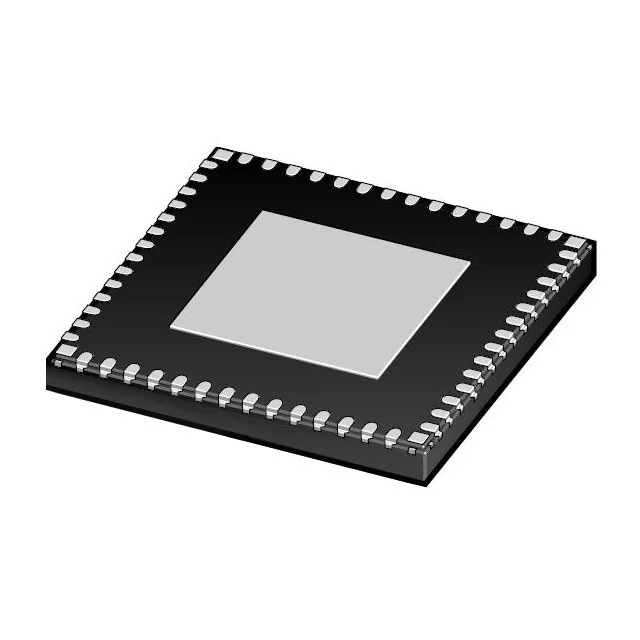
| Package | LQFP, 144 pins, body code PGE |
| Flash | 288K bytes, two banks of eight sectors |
| SRAM | 16K bytes |
| CAN | two SCC controllers |
| High end timer | HET lite, 12 channels |
| ADC | 10 bit, 12 channels, 64 word FIFO |
| Expansion bus | 42 pins, 8 and 16 bit |
| Core supply | 1.8 V nominal |
| Temperature | minus 40 to 105 C, T grade |
| Datasheet | SPNS106B, revised August 2006 |
Electrical parameters that decide the application
| Temperature grade | T, minus 40 to 105 C |
| Junction limit | minus 40 to 150 C |
| Flash endurance | 50 000 cycles |
| Flash banks | two, code can run from one while the other erases |
| DMA | 16 channels, 32 control packets |
| General purpose I/O | 50 dedicated plus 43 shared |
| I2C | three modules |
| Memory security | MSM readout protection |
| Watchdog | digital and analog |
| Clock module | zero pin PLL |
| Low power | STANDBY and HALT |
| I/O supply | 3.3 V |
Points to check before this part goes on a BOM
The T grade is the sensible default for industrial work and the code most often bought in volume. The Q grade adds twenty degrees that most cabinets never reach and it costs more; the narrow industrial parts stop at 85 C, which a sealed box in a warm plant will exceed on a summer afternoon. Check the measured cabinet temperature before choosing the grade, not the room temperature.
The two bank flash arrangement is what makes this device usable as a gateway. An update over CAN can erase and program one bank while the application runs from the other, so the network stays up. On a single bank part the same update stops the application for the length of the erase, which on a 288K byte array is measured in seconds.
Twelve analogue channels is fewer than the sixteen on the A256, and on the 144 pin body they share pins with the expansion bus. A board that uses the bus for external memory and also wants twelve analogue inputs will find the two compete, so the channel count in the block diagram has to be checked against the pin mux before the netlist is frozen.
The expansion bus gives 8 and 16 bit access to external devices, and it is the difference between this body and the 100 pin PZ. Boards that need a second memory, a display controller or a bus interface take the 144 pin part; boards that only need the core, the CAN ports and the timer take the smaller body and save the board area.
The memory security module exists on this device and it is usually enabled in production. That protects the code but it also means a returned board cannot be read, so a replacement has to be programmed from the customer's file. We keep the binary and the security setting on file for every programmed order so that a repair does not depend on the customer finding the file again.
The analog watchdog resets the device when the software stops servicing it, through an external RC network. It is a safety feature and it is worth testing at the top of the temperature range, because the timeout moves with the leakage of the pin and the tolerance of the capacitor.
The temperature windows in this family are not interchangeable on a bill of materials. A board released on the T grade can be re-sourced inside the same window without requalification, but moving to the Q grade or down to a narrow industrial part is a change that has to be assessed, because the failure at the top of the range is intermittent and rarely reproduces on a bench.
Where this order code fits
Industrial gateways, motor and actuator controllers, outdoor telecom and metering equipment, and automotive body modules that are mounted away from the exhaust and the gearbox, where 105 C covers the worst case with margin to spare. Boards comparing it with a neighbouring part start from our MCU Cross Reference page, and boards replacing a part that has gone end of life start from the Component Lead Time Solutions page.
Questions buyers ask
Which grade should a sealed industrial cabinet use? The T grade covers 105 C ambient, which is the usual worst case for a sealed enclosure in a plant. Measure the inside of the box at full load in summer before deciding, because the room temperature is not the number the part sees.
Is the expansion bus available at this grade? Yes. The 42 pin expansion bus belongs to the 144 pin PGE body, and it is present in all three temperature grades. The 100 pin body does not carry it in any grade.
Does the part need external memory for a 288K byte application? No, the 288K bytes of flash hold the application, and the 16K bytes of SRAM hold the working set. External memory is only needed for logging, a large buffer or a second processor interface, and that is when the expansion bus earns its pins.
SUPERB holds and sources this Texas Instruments line for production and repair demand, quoted against the exact ordering string with date codes, packing and country of origin stated on the offer. When a line is moving, the Pin to Pin Cross Reference page sets out the checks that keep a substitute from failing on the bench.