
SN65LVDS9638DR
Brand: Texas Instruments
Texas Instruments SN65LVDS9638DR is a power management component designed for AI Servers & Low-Altitude Economy (Drone and UAV) and related applications. In stock at Superb Automation — request a quote for competitive pricing and fast delivery.
Product Specifications
SN65LVDS9638DR
Texas Instruments — Power Management & Signal Chain
Product Overview
The SN65LVDS9638DR from Texas Instruments is a power management / signal chain IC delivering high efficiency, precision regulation, and robust protection. Texas Instruments (TI) is a global leader in analog ICs, power management solutions, and embedded processors.
Superb Automation partners with leading brands including Qorvo, TI, ADI, XILINX, NVIDIA, Intel, ST, MACOM, Renesas, and Coilcraft to provide complete BOM and supply-chain solutions.
Key Features
- High-efficiency power conversion with low quiescent current
- Wide input voltage range with precision output regulation
- Integrated over-current, over-temperature, and short-circuit protection
- Small footprint packaging for space-constrained designs
- AEC-Q100 qualified options available for automotive applications
- Flexible sequencing and soft-start control
Key Specifications
| Input Voltage | V |
| Output Voltage | V |
| Output Current | A |
| Switching Frequency | kHz |
| Efficiency | % |
| Quiescent Current | µA |
| Topology | — |
| Package | — |
| Operating Temp | °C |
| Protection | — |
Applications
Industrial Automation
Automotive Electronics
Telecom Infrastructure
Server & Data Center Power
Medical Devices
Consumer Electronics
Request Quote — In Stock, 100% New & Original, Full Warranty
SN65LVDS9638DR: two LVDS drivers in an eight pin body
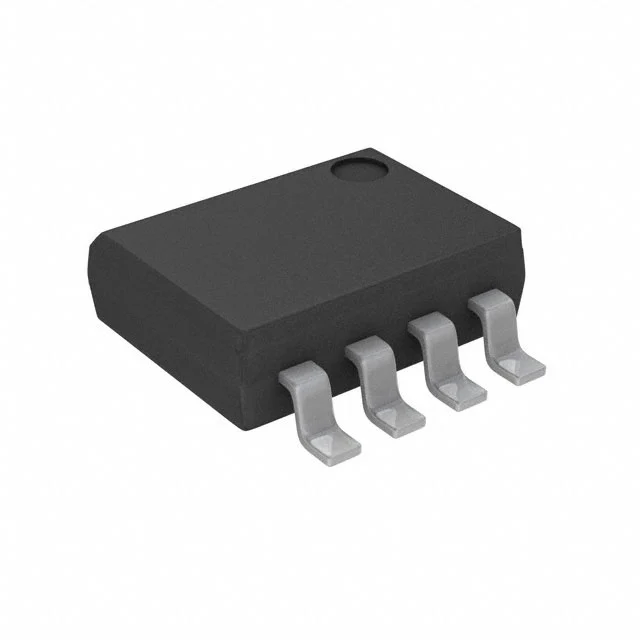
The SN65LVDS9638DR is the two channel member of the LVDS31 driver group. Both outputs are current mode differential drivers that deliver at least 247 mV into a 100 ohm load, typically 350 mV, with edges of roughly 500 ps and a propagation delay of 1.7 ns. It runs from a single 3.3 V rail, keeps the LVTTL inputs at 5 V tolerant levels, and puts both outputs into a high impedance state when the enables are low or when the supply has collapsed.
The eight pin body is the reason this part exists next to the quad driver. A link that carries one clock and one data pair needs two drivers, not four, and the smaller package sits closer to the connector on a dense board. The pinout is compatible with the A9638, so a board that was laid out for that device can usually take this part without moving traces.
Key data for the SN65LVDS9638DR
| Function | Two differential drivers with independent enable inputs |
| Rate | 400 Mbps, output rise and fall times 500 ps typical |
| Levels | 350 mV typical into 100 ohm, 247 mV minimum when enabled |
| Delays | 1.7 ns typical propagation delay per driver |
| Power | 3.3 V supply, about 25 mW per driver at 200 MHz |
| Protection | Bus terminal ESD beyond 8 kV, high impedance outputs when disabled or unpowered |
Body, marking and reel data
| Body | HVSSOP DGN, 8 pins, 3.0 mm by 3.0 mm, with SOIC and VSSOP options in the same group |
| Reel | 2500 pieces on a large reel on the plain and .B rows |
| Marking | L38 printed on the HVSSOP body |
| Handling | Moisture level 1, 260 C peak, unlimited floor life |
| Temperature | Minus 40 C to 85 C |
Two drivers is often exactly the right number
A camera link with a clock pair and one data pair, a serialiser that needs a spare pair for a second lane, and a board to board interconnect that carries a strobe and a data line all fit two drivers. In those cases the quad part wastes two channels, two enable pins and four package pins that the routing would rather use for ground.
The high impedance state is what makes a shared pair work. Two cards that drive the same backplane pair have to be able to disconnect, and the enable pin does that without a series FET. Because the outputs also go high impedance with the supply at 0 V, a card that loses power does not hold the pair down while its neighbour keeps transmitting.
Before the order goes out
The first point is the package. The orderable row prints HVSSOP, and the packing table prints a 330 mm reel for an SOIC body on the same string. A board that needs the 3 mm body has to say so on the order, otherwise the acknowledgement may come back with the wider package.
The second is the load. The 100 ohm figure assumes a single termination, and a doubly terminated bus needs a driver rated for 30 to 50 ohm, which is the M-LVDS group rather than this one. The third is the marking: L38 is the code to check on incoming goods, and it does not resemble the part number, so a visual inspection that looks for the part number will not find it.
Buying two drivers at a time
Two channel driver quantities are small, and the reel is large, so most orders are partial. We quote a cut tape or a partial reel with the remaining quantity stated, and we keep the balance in a sealed bag with its date code. For a customer who builds in weekly batches, that arrangement is cheaper than buying a full reel and letting the floor life run out.
The package question comes up more often than the quantity. This string prints an HVSSOP body on the orderable row and an SOIC body in the packing table, and a board that was routed for one will not accept the other. We ask for the footprint from the drawing, not from the part number, and we confirm the body on the acknowledgement before the goods ship.
Where a 5 V differential driver is being replaced, the comparison is on the pin to pin cross reference page. Where a second source has to be qualified before the line runs, the audit route is on our supplier quality audit page.For a customer who has been buying the SOIC body for years, we compare the two footprints on the drawing before the first order and send a sample set so that the assembler can confirm the stencil aperture and the paste volume on the 0.65 mm pitch body. The body choices are listed in the orderable table, and a customer who needs the SOIC footprint can ask for it by name rather than by suffix.